
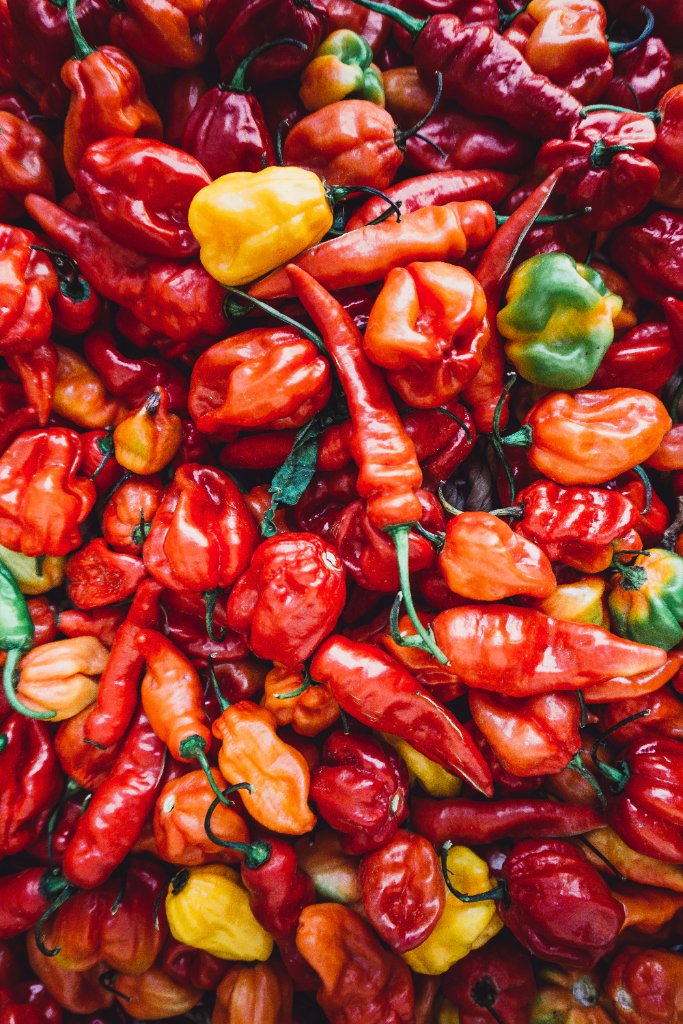
Peppers
Peppers belong to the genus Capsicum and span an extraordinary range — from sweet, crisp bell peppers with zero heat to superhot ghost peppers exceeding one million Scoville units. Indigenous to western South America, they are now cultivated worldwide and are foundational ingredients in Mexican, Indian, Southeast Asian, and Mediterranean cuisines.
Heat is measured on the Scoville Heat Unit (SHU) scale, which quantifies the concentration of capsaicin. Whether you want sweet, mild, or searingly hot, there's a pepper for every palate and every dish.
The Scoville scale, developed in 1912 by pharmacist Wilbur Scoville, measures chile heat by quantifying the concentration of capsaicinoids — the chemical compounds responsible for the burning sensation. A bell pepper scores 0 SHU; pure capsaicin scores 16 billion.
Modern measurement uses high-performance liquid chromatography (HPLC) for accuracy, but the scale remains named after Scoville. Interestingly, birds are completely immune to capsaicin — the heat evolved specifically to deter mammals while allowing birds to eat the fruit and spread seeds.
From sweet and crisp to dangerously hot — click any variety to explore its flavor, uses, and cooking tips.
Bell Pepper
0 SHU — No HeatSweet, crisp, and completely heat-free — the most widely used pepper in cooking
Shishito
50–100 SHU — Very MildSmall Japanese peppers mostly mild but occasionally fiery — a fun blistered appetizer pepper
Banana Pepper
0–500 SHU — MildSweet and tangy with a curved yellow shape — a sandwich and pizza shop staple, excellent pickled
Pepperoncini
100–500 SHU — MildMediterranean sweet Italian pepper with subtle tang — most commonly found pickled in jars
Anaheim
500–2,500 SHU — MildLong, mild California chile — the classic canned green chile used in enchiladas and salsas
Cubanelle
~1,000 SHU — MildSweet Cuban frying pepper with thin walls and rich flavor — perfect sautéed in olive oil
Poblano / Ancho
1,000–2,000 SHU — MildMild heat with an earthy, rich flavor — fresh as poblano, dried as ancho
Jalapeño
2,500–8,000 SHU — MediumThe most popular hot pepper in the US — versatile heat for salsas, nachos, and pickling
Serrano
10,000–23,000 SHU — Medium-HotSharper and hotter than jalapeño with a bright, grassy flavor — great for fresh salsas
Cayenne
30,000–50,000 SHU — HotA workhorse spice pepper — dried and ground into powder or used whole in cooking
Thai Bird's Eye
50,000–100,000 SHU — Very HotSmall, fiery peppers essential to Southeast Asian cooking — intense heat with fruity undertones
Habanero
100,000–350,000 SHU — Extremely HotLantern-shaped with tropical, fruity flavor behind intense heat — a Caribbean staple
Ghost Pepper
1,000,000+ SHU — ExtremeOnce the world's hottest pepper — use with extreme caution, a tiny amount goes a very long way
Hot peppers are staple vegetables in Mexican, Indian, Southeast Asian and Italian cuisines. They can be used raw in salads and as toppings, roasted, stewed, pureed, stuffed and grilled. Dried chiles have a depth of flavor very different from fresh versions and are usually toasted over a flame and soaked in water before using. Various types of dried peppers are ground into powder and used as spices like paprika and cayenne.
To diminish the intensity of chiles' fiery burn, remove the ribs (the 'placenta') and seeds with a sharp knife before cooking. Wear gloves when working with hot varieties to avoid skin burns from capsaicin oils. Wash cutting boards and knives thoroughly with warm soapy water. To relieve the burn, consume dairy like milk, sugar or something sweet, rice, or ice water — avoid carbonated or alcoholic beverages.
Unwaxed peppers can be stored in the refrigerator for up to a week. Make sure the pepper's skin is totally dry before storing — moisture causes rapid deterioration. Many commercially grown peppers are coated in wax, which extends storage life to sometimes up to three weeks.
Hot peppers are easily preserved by freezing without blanching beforehand. Seed and de-rib, slice or dice, freeze on a cookie sheet, then transfer to freezer-safe bags. Frozen peppers lose crisp texture but work well in cooked dishes. Roasted red peppers freeze beautifully. Certain varieties like cayenne and Basque Espelette are easy to dry: hang by stems in a cool dry place, then grind into chile flakes. They also pickle well.
Hot peppers are excellent sources of Vitamin C. The chemical compound capsaicin found in chiles has anti-inflammatory qualities that may reduce the risk of heart disease. Capsaicin stimulates nerve endings and has been shown to have anti-bacterial properties, supporting ancient Mayan use as a remedy for bacterial infections.
The Scoville scale, developed in 1912, measures chile 'hotness' by measuring capsaicin content, ranging from 0 (sweet bell peppers) to 16 billion. Tabasco sauce falls between 3,500 and 8,000 on the scale. The chile pepper's heat developed as an evolutionary method to discourage mammals from eating the fruit, but birds are immune to the burn and help distribute seeds. There is speculation that chiles cause mild euphoria due to endorphins released from the pain, explaining why chile-eaters keep coming back for more. The ancient Mayans used chiles as a remedy for bacterial infections, which modern laboratory studies have confirmed.
In-Season Recipes with Pepper
Seasonal recipes featuring Pepper right now
Coming Soon
All Other Recipes with Pepper
Coming Soon