
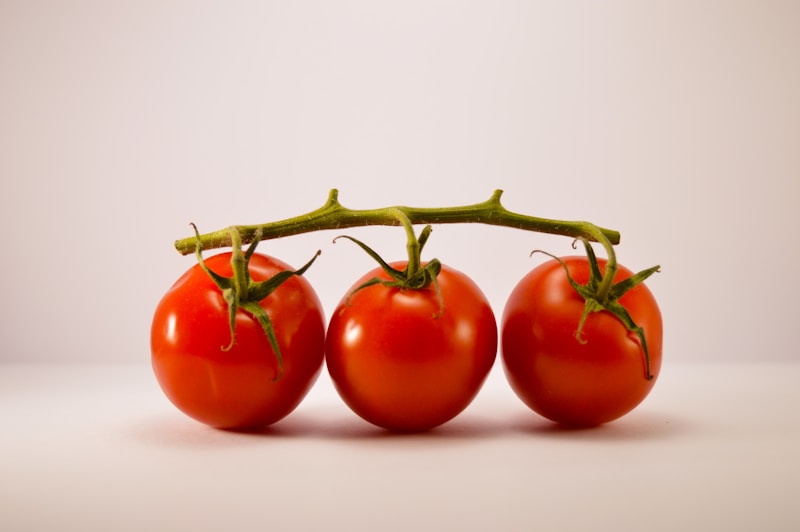
Tomatoes
Tomatoes are fruit, botanically speaking — berries, to be exact — though they are culinarily treated like vegetables. Tomatoes left the Americas for the first time in the 16th century; by the 19th, Italy was canning tomatoes in large amounts and the U.S. had solidified its love of ketchup. They are native to South America, descended from a tiny berry that grew wild in the Andes Mountains, and were domesticated by the Indigenous peoples of Mesoamerica.
Juicy fruits used as vegetables, available in countless varieties from cherry to beefsteak.
Tomatoes come in a staggering variety of shapes, sizes, colors, and flavors. Each type has its own ideal uses — click any variety to explore its full profile.
Roma (Plum)
Meaty with low moisture and few seeds — ideal for sauces, canning, and pastes
San Marzano
Sweet, low-acid plum tomatoes prized for marinara and pizza sauce
Cherry & Grape
Sweet and juicy — perfect raw in salads, roasted whole, or quick pan sauces
Beefsteak
Large and firm — ideal for thick slices on burgers, sandwiches, or stuffing
Heirloom
Varied colors and rich flavors — best fresh in salads, caprese, or sandwiches
Vine-Ripened
Sold still on the vine for enhanced flavor — versatile for roasting, salads, or sauces
Green Tomatoes
Unripe tomatoes excellent for Southern-style frying or pickling
Refrigeration causes tomatoes to become mealy, so they are best stored on the counter. Once ripe, they are best eaten within three to four days. (An exception is smaller tomato varieties, like cherry, which do just fine stored in the fridge and will keep for more than a week.)
Tomatoes are equally tasty raw or cooked and are extremely versatile in the kitchen, shining in everything from sauces to salads to soups to savory baked goods. They can be stuffed, sautéed, roasted or, especially for green tomatoes, fried. Their natural culinary mates are other edible members of the nightshade family like peppers and eggplant, and they also pair well with eggs, cheese, meat and fatty fish. To quickly peel a large batch of tomatoes, score a very shallow 'X' in the base with a sharp paring knife. Drop in boiling water for 10 to 15 seconds, then transfer to an ice bath to cool. The skins will slip off easily.
To extend their shelf life, you can make tomato sauce and can in a water bath or turn them into jam or tomato paste. If you want to keep them more whole, tomatoes are great pickled, dried or oven-roasted and stored in oil.
Tomatoes are a relatively good source of Vitamin C. The fruit is also rich in antioxidants called carotenoids, including beta-carotene, which converts to Vitamin A in the body, and lycopene, which has been studied for possible anti-cancer activity.
The word 'tomato' comes from 'tomatl,' the word for the fruit in Nahuatl, which was spoken by the Aztecs. It may be related to the verb 'tomana,' meaning 'to swell.'
When tomatoes first arrived in Europe, many there were wary of eating them because they are members of the nightshade family, which includes some deadly plants like belladonna. Tomatoes were also linked to the mandrake, another nightshade and a traditional aphrodisiac, which is why the original English term for the fruit was 'love-apple.'
The very first genetically engineered food marketed for human consumption was the goofily named 'Flavr Savr' tomato, first sold in 1994. It didn't catch on.
Tomatoes rank No. 13 on the 2023 Shopper's Guide from the Environmental Working Group for pesticide residue. Tomato production has been impacted by the water crisis in the West and in Mexico. In addition to the risks of pesticide exposure, tomato pickers often work in terrible conditions to harvest this labor-intensive crop. Tomatoes are available in the supermarket year-round due to hothouse varieties, but in most places in the U.S., the very best tomatoes are found at the farmers' market in summer and early fall.
In-Season Recipes with Tomato
Seasonal recipes featuring Tomato right now
Coming Soon
All Other Recipes with Tomato
Coming Soon