Fruit · Summer
Melons
Melons (Cucumis melo) are an ancient and diverse group of fruits — encompassing cantaloupes, honeydews, muskmelons, and more — with origins debated among Persia, Afghanistan, and Africa. Highly perishable and intensely seasonal, the best melon is one eaten at its absolute peak of ripeness, when the flesh is sweet, honeyed, and perfumed.
Look for a melon free of nicks or cuts in the rind and any mold on the blossom end. Avoid melons with soft or mushy spots. Give it a tap — it should sound a bit like a drum and feel heavy in your hand.
The best sign of ripeness is scent: most varieties should have a strong floral, honey-like fragrance when ripe. Muskmelons (cantaloupes) have a distinctive netted or webbed exterior; honeydews and their relatives are smooth-skinned with pale white, yellow, or green flesh.
As gastronome Brillat-Savarin wrote in 1825, melons are truly good only at their peak moment of ripeness — "as soon as they have reached all the perfection to which they are destined." Don't buy underripe melons hoping they'll ripen well; they won't develop much more sugar after harvest.
From intensely musky cantaloupes to delicate honeydews, melons range widely in flavor, texture, and sweetness. Here are the most beloved varieties:
Cantaloupe
The quintessential American summer melon — netted orange skin, salmon-orange flesh, intensely sweet and musky. Named after Cantalupo near Rome.
Honeydew
Smooth pale green or white skin with sweet, pale green flesh. Milder and less aromatic than cantaloupe but delicately sweet at peak ripeness.
Galia
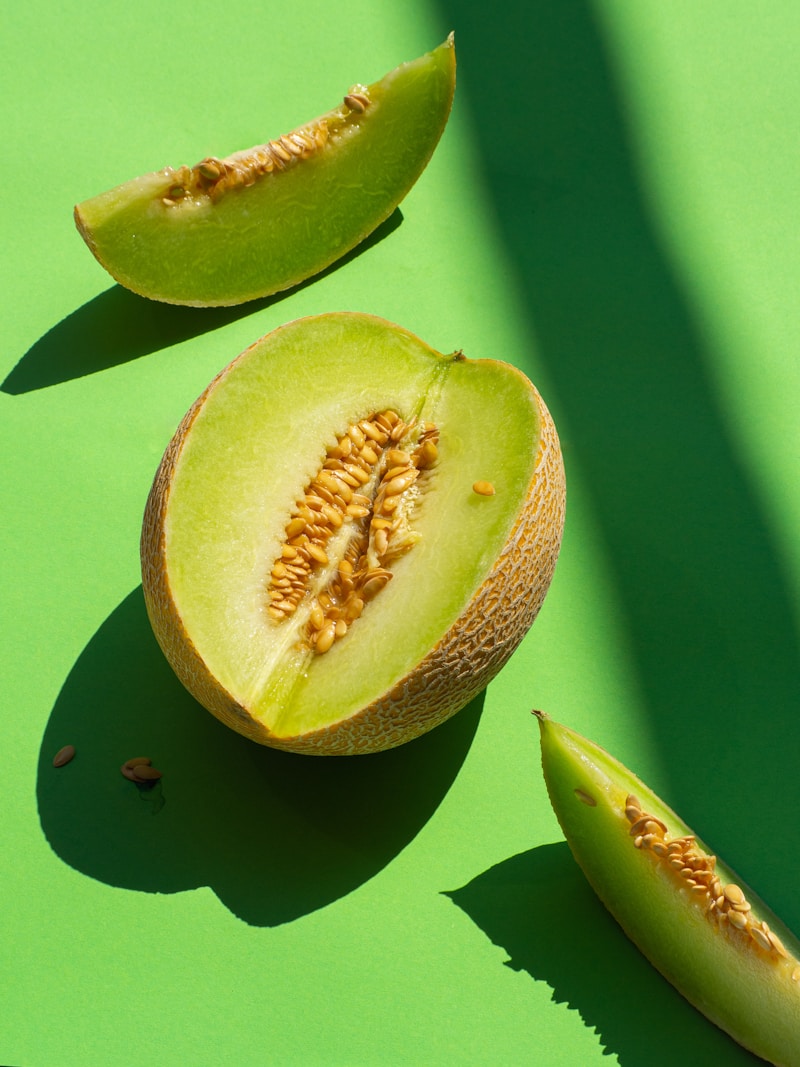
An Israeli-bred cross between cantaloupe and honeydew — netted skin like a cantaloupe but pale green flesh like a honeydew. Intensely aromatic and sweet.
Crenshaw
A large, wrinkled hybrid melon with yellow-green skin and salmon-pink flesh. One of the sweetest and most flavorful melons available — a true connoisseur's choice.
Canary
Bright yellow, elongated melon with ivory-white flesh. Mild, sweet flavor with a slight tang. Also called Juan Canario — popular in Spain and increasingly in the US.
Casaba
Wrinkled golden-yellow skin with creamy white flesh. Subtle, mild sweetness with a hint of cucumber. Excellent shelf life — stays good well into winter.
Keep whole melons at room temperature, especially if they need another day or two to ripen. Melons have a tendency to mold, so wash the exterior under running water only just before eating — washing in advance hastens decay.
Cut melon should be refrigerated promptly in an airtight container. The safest approach is to remove all rind before storing, to minimize any cross-contamination risk from the surface. Use within 3–4 days.
Act Fast: Melon is highly perishable and can morph from honeyed perfection to an off-smelling fermented mess in an afternoon. Don't let a ripe melon sit — eat it or use it immediately.
Savory Pairings: The classic Italian pairing of prosciutto and cantaloupe is a masterclass in flavor contrast — sweet, salty, savory. A few grinds of black pepper and flaky salt elevate a simple melon slice dramatically. A first-century Roman recipe by Apicius calls for melon simmered with vinegar, honey, pepper, parsley, and fish sauce.
Smoothies & Agua Fresca: Melon is over 90% water by weight, making it an outstanding base for smoothies, agua fresca, and granitas.
Roasting: Roasted muskmelon is a surprising revelation — the Joy of Cooking recommends it served over ice cream or with other roasted fruits.
Cantaloupe Pickles: Swap cantaloupe for cucumbers in a ginger and cinnamon-scented brine for a surprising and delicious preserve that extends your melon's shelf life significantly.
Freezing: Cut melon into cubes or balls, freeze in a single layer, then bag. Frozen melon is ideal for smoothies and blended drinks, though it won't hold its texture for fresh eating after thawing.
Cantaloupe is an excellent source of Vitamin A and a good source of Vitamin C. Its high water content (over 90%) makes it very hydrating and low in calories. The orange flesh of cantaloupe gets its color from beta-carotene, a precursor to Vitamin A that supports eye health and immune function.
The cantaloupe is named after Cantalupo, a town near Rome, where melon seeds from Armenia were first grown on papal estates around the early 16th century.
The first century Roman cookbook De Re Coquinaria by Apicius includes a savory recipe for melon simmered with vinegar, honey, ground pepper, parsley, and Liquamen — the ancient Roman equivalent of fish sauce.
Culinary historians cannot agree on the melon's exact point of origin — sources have suggested Persia, Afghanistan, or Africa as the birthplace of this ancient fruit.
Pesticides: US-grown cantaloupe has a relatively low pesticide load and earns the Environmental Working Group's "Clean 15" designation — meaning it's one of the least pesticide-contaminated fruits. Honeydews and smooth-skinned melons are considered even lower risk.
Food Safety: Cantaloupe has been the source of major foodborne illness outbreaks, including a deadly 2011 listeria outbreak. The netted rind of muskmelons can harbor pathogens — always scrub the exterior thoroughly under running water before cutting, and keep cut melon refrigerated in a sealed container with all rind removed.
Geography & Seasonality: China is the world's top melon producer, followed by Turkey and Iran. In the US, California supplies about three-quarters of commercial output. Melons need intense heat and dry conditions — in four-season climates they're a mid-to-late summer fruit, and once autumn rains arrive, the season is over.
In-Season Recipes with Melons
Seasonal recipes featuring Melons right now
Coming Soon
All Other Recipes with Melons
Coming Soon