
Melon Variety · Late Summer–Fall
Casaba Melon
Cucumis melo var. inodorus · Named after Kasaba, Turkey
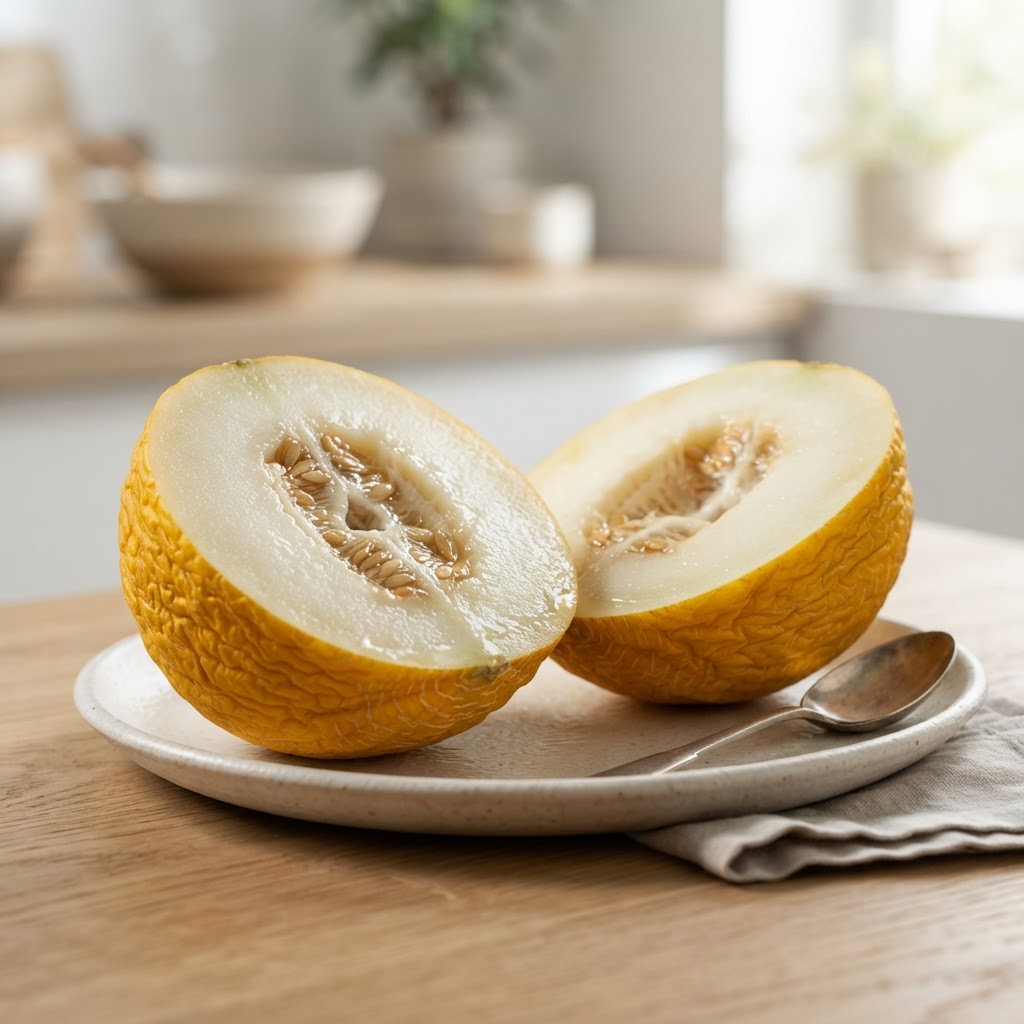
One of the oldest and most distinctive melons in cultivation, the Casaba originated near Kasaba (now Turgutlu) in Turkey and arrived in the US via California in the late 19th century. It has a wrinkled, bright golden-yellow exterior and creamy white flesh with a subtle, mild sweetness and a hint of cucumber. Its most remarkable quality is its extraordinary shelf life — it keeps well into fall and even winter.
Choose a Casaba with golden-yellow skin — a greenish tint means underripe. The surface should be deeply wrinkled and ridged. Press the blossom end for slight give. Note that Casabas have virtually no fragrance even when ripe — color and texture are your guides.
Available August through October at specialty grocery stores and farmers' markets in the Western US, where most commercial Casaba production occurs.
The Casaba is the most subtly flavored of all melons — creamy white flesh with mild sweetness and a pleasant hint of cucumber or spice. Its texture is firm and not as juicy as cantaloupe or honeydew. The flavor is understated rather than intense, making it a good canvas for other flavors. Fans appreciate its delicacy; others find it too mild.
With Bold Flavors: Casaba's mild flavor pairs well with strong partners — aged cheeses, prosciutto, chili flakes, lime, and fresh herbs all bring out the best in it.
Chilled Soups: The cucumber-like quality makes Casaba excellent in chilled gazpacho-style soups.
Late Season Fruit Salads: Its long shelf life makes it a valuable component in fall fruit arrangements when other melons have disappeared.
The Casaba's most prized quality is its exceptional shelf life. Whole melons keep 2–4 weeks at room temperature and up to 2 months refrigerated — far longer than any other melon. This is why it's sometimes called a "winter melon." Cut Casaba should be wrapped and refrigerated; use within 5 days.
The Casaba takes its name from the city of Kasaba (now Turgutlu) in western Turkey, from where it was exported to Europe and eventually to California. In the late 19th century, California growers popularized it in the US market. It's one of the only melons that can be stored for months without refrigeration — historically this made it extremely valuable as a source of sweetness in late autumn and winter when other fruits were unavailable.
In-Season Recipes with casaba melon
Seasonal recipes featuring casaba melon right now
Coming Soon
All Other Recipes with casaba melon
Coming Soon