
Melon Variety · Summer
Honeydew
Cucumis melo var. inodorus
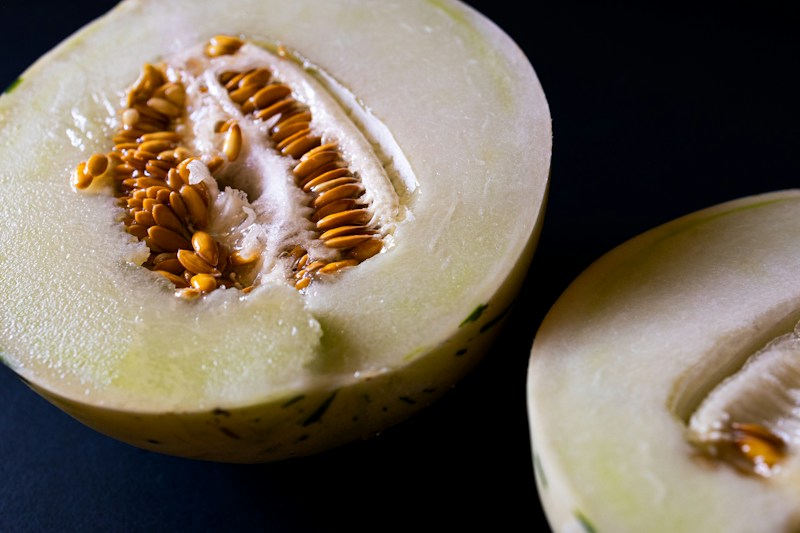
The cool, understated counterpart to the exuberant cantaloupe. Smooth, pale yellow-green exterior with sweet, juicy pale green flesh. Less aromatic than cantaloupes but subtly, delicately sweet at its best. A member of the winter melon family alongside casaba and Santa Claus melons — all sharing the smooth, inodorous (low-scented) rind characteristic.
A ripe honeydew is heavier than it looks, with a skin that has turned from green to creamy yellow or white. The surface should feel slightly waxy and velvety — a tacky, sticky feel is a good sign of ripeness. Press the blossom end: it should yield slightly.
Unlike cantaloupe, honeydew has little fragrance even when ripe — rely on color and touch rather than smell. Avoid honeydews with green skin or a chalky white appearance; they're underripe and will be bland and flavorless.
Pale green to white flesh with a delicate, clean sweetness — less musky and complex than cantaloupe but refreshingly mild. The texture is crisp and firm when slightly underripe; soft and very juicy when fully ripe. A perfectly ripe honeydew is genuinely delicious — most underripe specimens have unfairly maligned the variety.
Fruit Salads: Honeydew's mild flavor and pale green color make it a beautiful visual and flavor contrast to cantaloupes, berries, and citrus.
Granita & Sorbet: Blended and frozen, honeydew makes an exceptionally elegant granita or sorbet — pure, clean, and refreshing.
Savory: Pairs beautifully with prosciutto, mint, lime, and cucumber in summer salads. The mild flavor doesn't overwhelm delicate ingredients.
Smoothies: Blend with cucumber, mint, and lime for a supremely refreshing green smoothie.
Honeydew stores better than cantaloupe — whole melons keep up to 2 weeks refrigerated. At room temperature, allow 2–3 days for a slightly underripe melon to soften. Once cut, refrigerate in an airtight container and use within 4–5 days. The smooth rind poses less food safety risk than cantaloupe's netted exterior.
Honeydew is a good source of Vitamin C and potassium. At about 60 calories per cup, it is hydrating and low in calories. Its pale flesh lacks the beta-carotene of cantaloupe but provides significant Vitamin C — about 34% of the daily value per cup.
In-Season Recipes with honeydew
Seasonal recipes featuring honeydew right now
Coming Soon
All Other Recipes with honeydew
Coming Soon