Peas
The sweet green seeds of a cool-season legume and a beloved sign of spring — eaten fresh when young, dried as split peas for winter soups, and grown worldwide from Indian matar to British mushy peas.
Fresh garden peas are a fleeting spring treasure with a sweetness that diminishes within hours of picking. Snow peas and Sugar Snaps extend pea season through summer. Dried split peas and black-eyed peas provide protein-rich sustenance year-round — each variety offering its own character and culinary role.
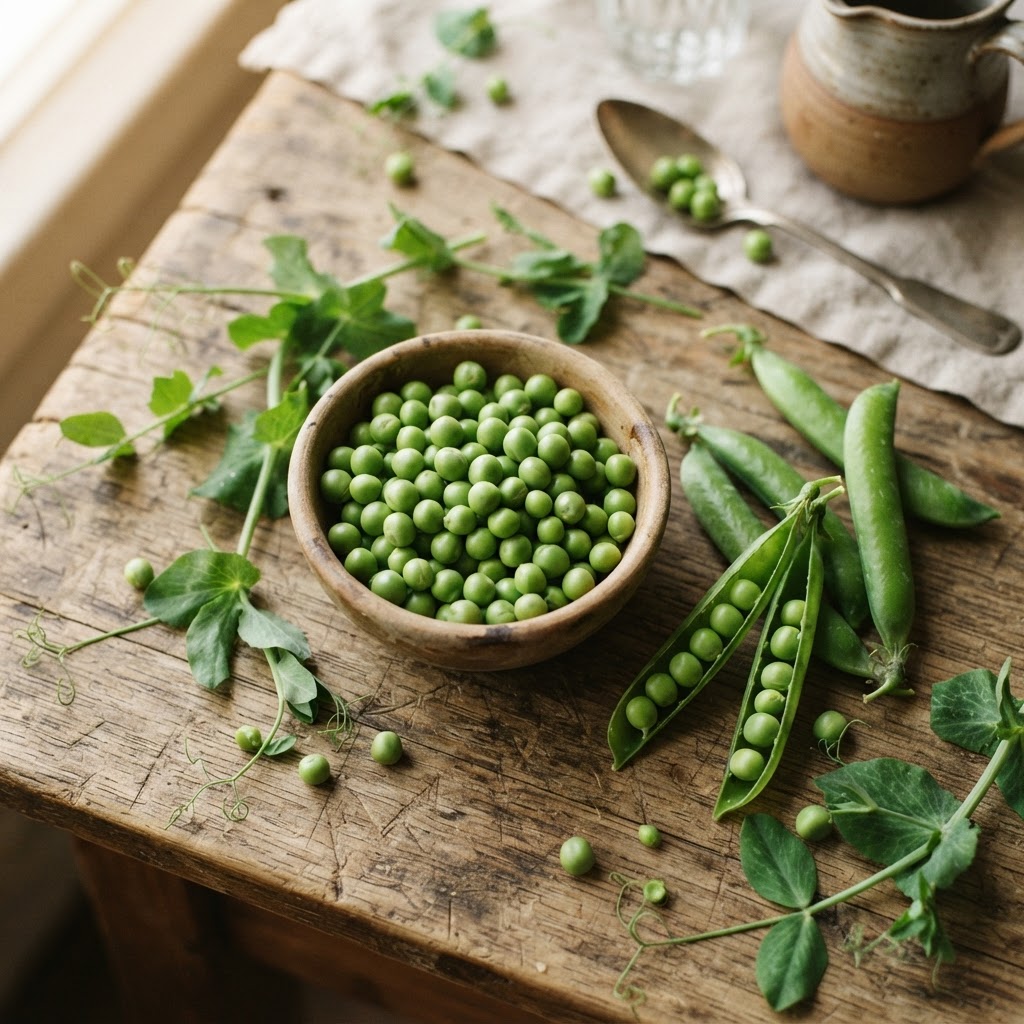
For fresh garden peas: look for bright green, plump pods that feel heavy and snap crisply. The peas inside should roll freely when you shake the pod. Avoid limp, yellowing, or overly large, tough pods. Freshness is critical — peas convert sugar to starch within hours of picking.
For Snow and Sugar Snap peas: look for crisp, flat (Snow) or plump (Snap) pods with a fresh green color. They should snap cleanly rather than bend. Smaller is sweeter. The stringy seam along the pod edge should be removed before eating.
For frozen peas: these are often sweeter than fresh supermarket peas, as they are frozen within hours of harvest at peak sweetness. Don't overcook — just thaw or heat briefly.
From the sweetest spring snap pea to the heartiest dried split pea soup — click any variety to explore its flavor, uses, and cooking tips.
Garden / English Peas
Classic shelling peas with plump, sweet seeds inside tough pods — best fresh in spring and early summer
Snow Peas
Flat, edible pods with tiny undeveloped peas — crisp, sweet, and essential in stir-fries and Asian cooking
Sugar Snap Peas
The best of both worlds — plump, edible pods with full-size sweet peas inside, crisp and incredibly sweet
Split Peas
Dried and split field peas — green or yellow — the foundation of hearty, protein-rich soups and dals
Black-Eyed Peas
A creamy, earthy field pea with a distinctive black spot — a Southern US and West African staple
Petit Pois
Extra-small, extra-sweet French garden peas — more tender and flavorful than regular garden peas
Fresh garden peas in their pods: refrigerate immediately and use within 1–2 days. Shell only right before cooking — the pods protect the peas from drying out. If you have too many, blanch and freeze within a day of picking for the best flavor.
Snow and Sugar Snap peas: refrigerate in a perforated bag for up to 5 days. They're less perishable than shelling peas due to the protective pod.
Dried peas (split peas, black-eyed peas): store in an airtight container in a cool, dark pantry for up to 1 year. Older dried peas take longer to cook; fresher dried peas will cook faster and have better texture.
Blanching
Blanch fresh or frozen peas for 60–90 seconds in boiling salted water then shock in ice water — locks in the brilliant green color.
Stir-Frying
Snow peas and Snap peas are ideal for high-heat stir-fries — add in the last 2 minutes to preserve crunch.
Raw
Fresh garden peas and snap peas are delicious raw — straight from the pod or tossed in salads.
Puréeing
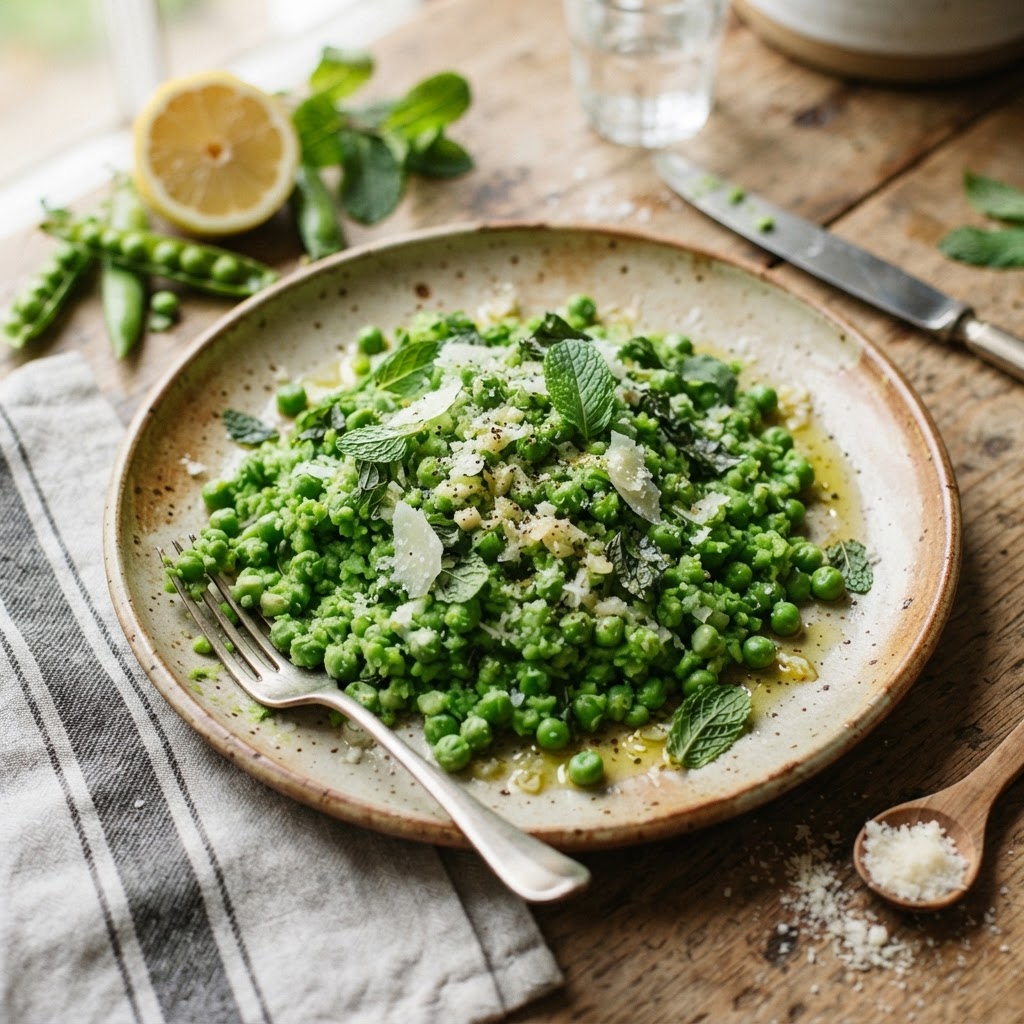
Blend cooked garden peas with mint, butter, and a little stock for a vivid green, sweet purée — a classic English spring preparation.
Soups
Split peas and black-eyed peas simmer into thick, protein-rich soups and stews. No soaking required for split peas.
Pasta & Risotto
Stir fresh or frozen peas into pasta and risotto at the very end — just enough heat to warm through.
Peas are unusually nutritious for a vegetable — they contain significantly more protein than most vegetables (5g per half cup), along with fiber, vitamins A, C, K, and folate, plus iron, zinc, and manganese. They're one of the best plant sources of thiamine (vitamin B1).
Dried peas (split peas, black-eyed peas) are even more nutrient-dense — excellent sources of plant protein, complex carbohydrates, and soluble fiber that feeds beneficial gut bacteria and helps regulate blood sugar and cholesterol levels.
Gregor Mendel's foundational experiments on genetics in the 1860s used garden peas (Pisum sativum). By tracking traits like seed color, pod shape, and plant height across thousands of pea plants over eight years, Mendel discovered the fundamental laws of inheritance — establishing the entire field of modern genetics. Peas, quite literally, changed science.
In 17th-century France, a craze for fresh green peas swept Versailles. King Louis XIV's court was so obsessed with early garden peas that courtiers reportedly ate them before bed and then again immediately upon waking. The fashion was called "la mode des petits pois" and was considered extraordinary and slightly scandalous by the court.
In-Season Recipes with Pea
Seasonal recipes featuring Pea right now
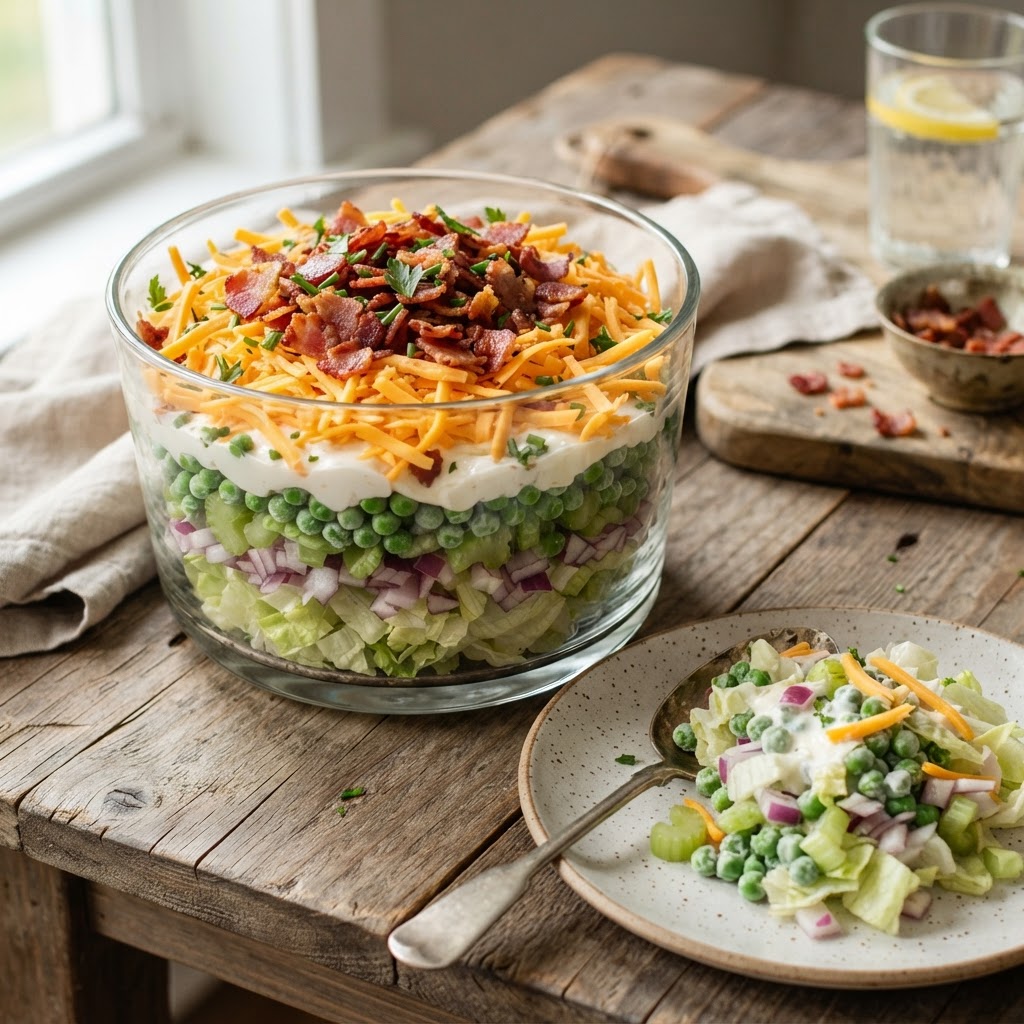
7-Layer Salad
Celebrate every gathering with this vibrant, crunchy 7-Layer Salad! Perfectly crisp veggies meet savory bacon and a touch of sweetness for a timeless crowd-pleaser that shines in every season.
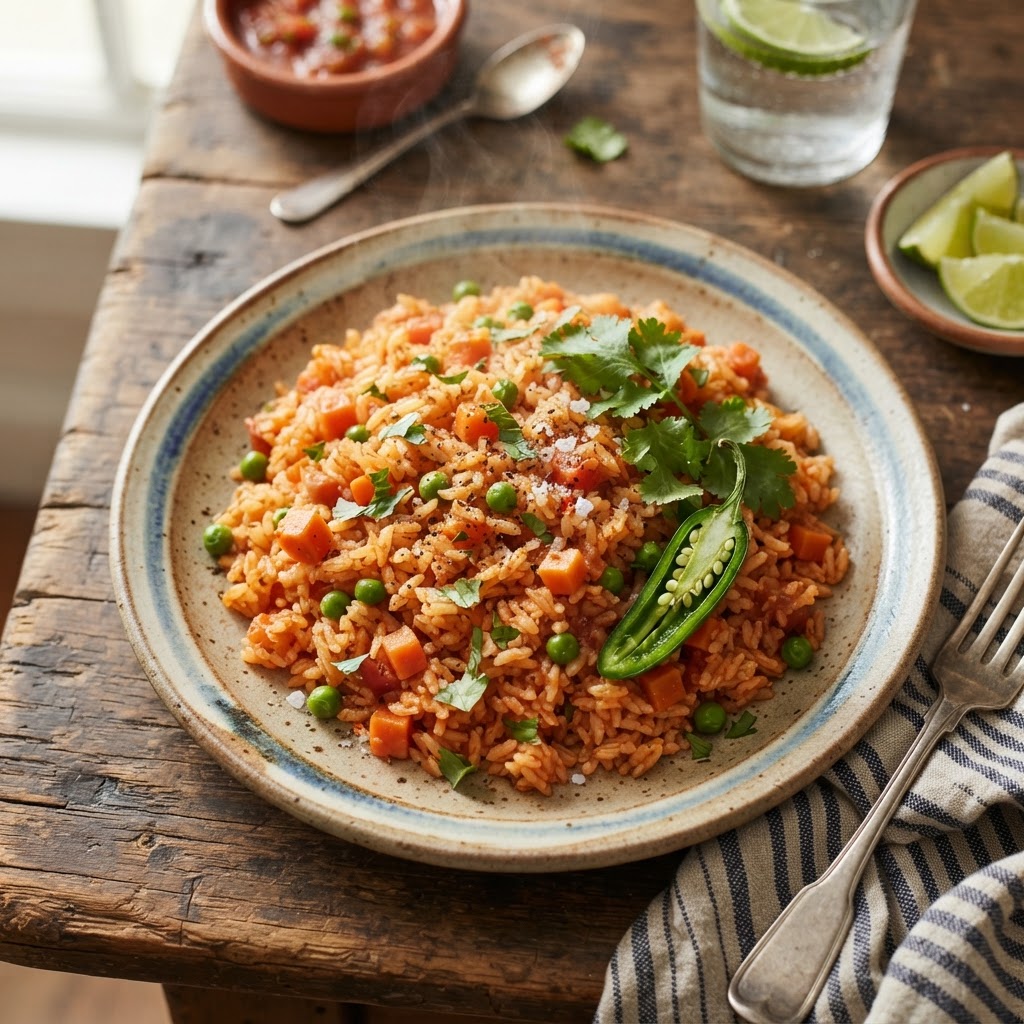
Arroz Rojo (Red Rice)
Bring a warm, festive glow to your table with this vibrant Arroz Rojo. Perfectly toasted rice simmered in a savory tomato-garlic broth creates a comforting side dish that celebrates every season.
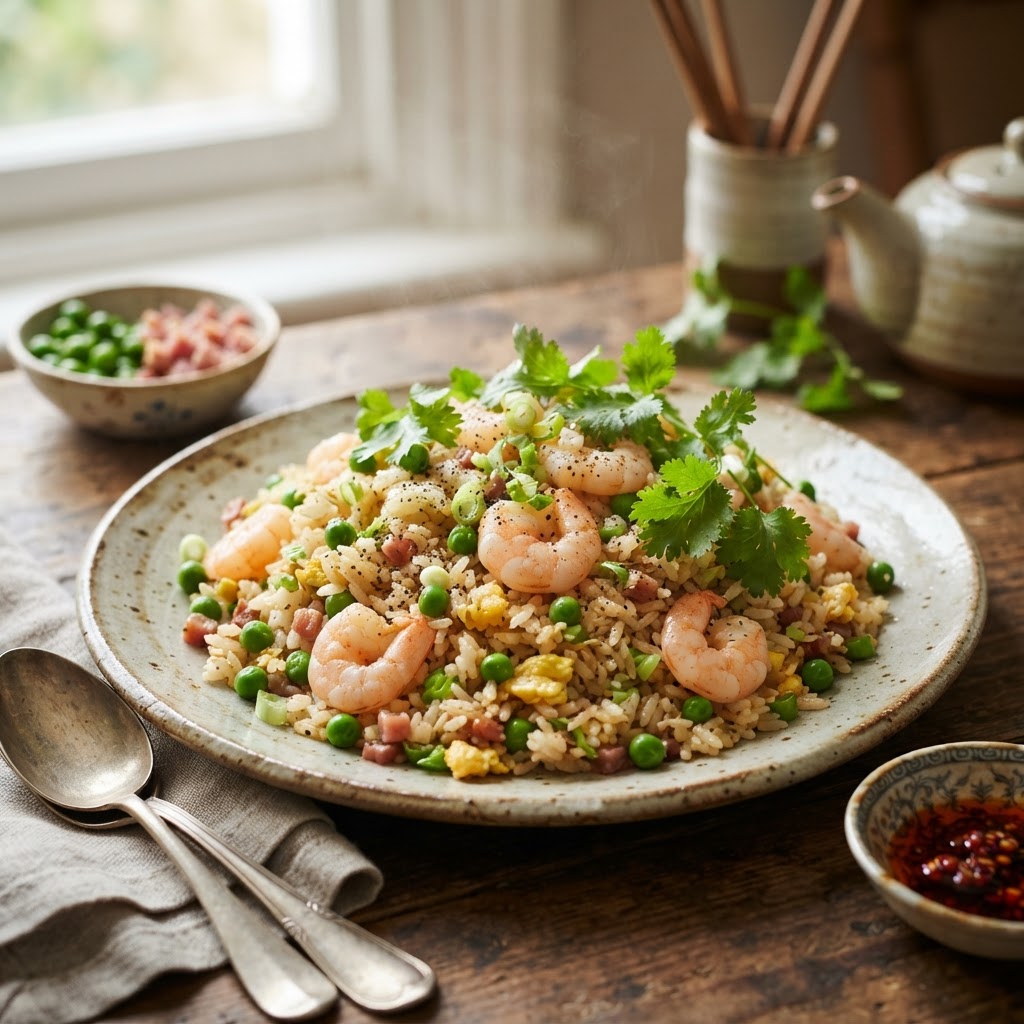
Yangzhou Fried Rice
Celebrate every season with this vibrant Yangzhou fried rice, where succulent shrimp and crisp peas dance in perfectly seasoned grains. It is a festive, savory bowl that brings pure kitchen joy to your table.