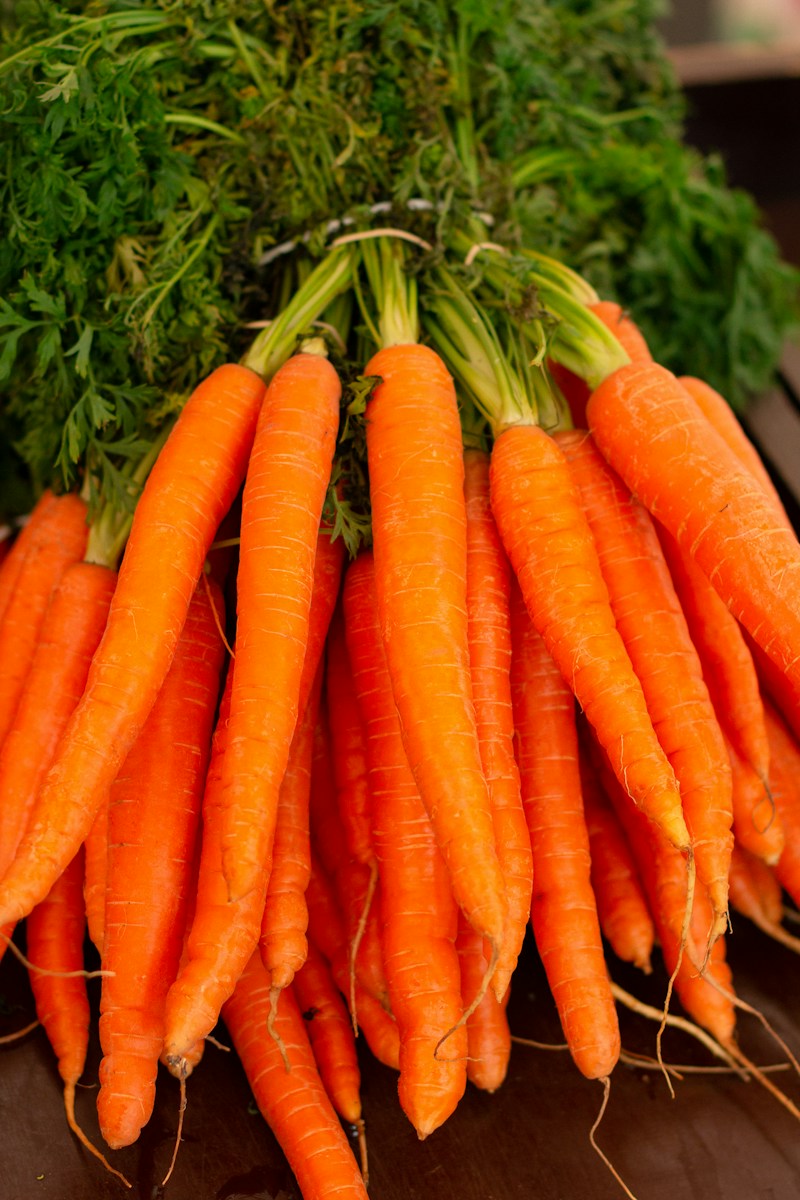
Carrots
Sweet root vegetables available in orange, purple, yellow, and white varieties.
Equally at home raw as a snack, roasted to caramelized perfection, puréed into silky soups, or pickled as a condiment — the humble carrot is one of the most versatile vegetables in any kitchen.
Carrots come in all shades of purple, red, white, yellow and of course, orange. If they have the greens attached, look for feathery, perky leaves with no wilting, black spots or yellowing. The carrot roots should be firm, never limp, and free of mushy spots or brown-black blemishes. Smaller carrots tend to be sweeter and juicier.
Carrots come in a surprising spectrum of shapes, sizes, and colors. Each variety has its own unique flavor profile and best uses — click any to explore further.
Imperator Carrots
The classic long, tapered supermarket carrot — sweet, crunchy, and widely available year-round
Nantes Carrots
Cylindrical, blunt-tipped, and exceptionally sweet — considered the gold standard for flavor
Chantenay Carrots
Short, thick, and broad-shouldered with a rich, sweet flavor — ideal for roasting and cooking
Danvers Carrots
Medium-length, triangular, and reliable — a versatile all-purpose carrot with good storage life
Baby Carrots Carrots
Either true baby varieties or cut-and-peeled mature carrots — sweet, convenient, and snack-ready
Purple Carrots
Ancient heirloom variety with anthocyanin-rich purple skin and sweet orange or purple flesh
Yellow Carrots
Golden-yellow carrots with a mild, fruity sweetness and lower beta-carotene than orange varieties
White Carrots
Pale, mild-flavored carrots with a subtle sweetness — the original carrot before orange was bred
Carrot greens will only keep for a day or two. Remove them immediately after you get home and store separately by wrapping the greens in a paper towel and placing in a zip-top bag in your crisper drawer. Carrot roots are champions at surviving long-term: Stored loose or in a paper bag, most will keep in the crisper for at least a month.
Carrots are an integral part of many cultures' cooking, often as part of a flavor base for dishes. Roasting carrots plays up their natural sweetness. Carrots are also wonderful pureed into soup or made into oven-baked 'fries.' A favorite way to serve them is raw: coarsely grated, tossed with the juice of half a lemon, extra virgin olive oil and salt and pepper. Don't toss those carrot tops, either! They can be added to veggie stocks and soups, and the leaves can be made into a carrot-top pesto, perfect for pasta or to spoon over roasted carrots.
Carrots preserve beautifully in different ways, whether making carrot jam or pickled carrots (Moroccan-style, Mexican-style, American-style). Carrots can also be easily canned and frozen.
Carrots are loaded with beta-carotene, which is converted into Vitamin A in the body: One serving provides well over the recommended daily value. (Vitamin A is important for vision, immune function and reproduction.) Cooking carrots makes the beta-carotene more bioavailable. These vegetables also contain good amounts of Vitamin K, Vitamin B6 and fiber.
The now-ubiquitous orange carrot was likely first bred by the Dutch around the 17th century. According to a popular (and likely false) story, they were considered a symbol of the House of Orange during the fight for Dutch independence from Spain.
Did your mom ever tell you that eating carrots would help you see in the dark? Beta-carotene is good for vision, but this messaging actually derives from British WWII propaganda.
Baby carrots are not babies, but are instead whittled down to that shape from a carrot variety specially bred to grow long and straight.
More than 85 percent of carrots grown in the U.S. come from California. Carrots make the 'Clean 15' in the Environmental Working Group's 2023 Shopper's Guide to Pesticides in Produce, ranking 32nd of 46 fruits and vegetables tested for pesticide load. Carrots are available starting in mid-late summer through the late fall and also do well in cold storage for winter.
In-Season Recipes with Carrot
Seasonal recipes featuring Carrot right now
Coming Soon
All Other Recipes with Carrot
Coming Soon