
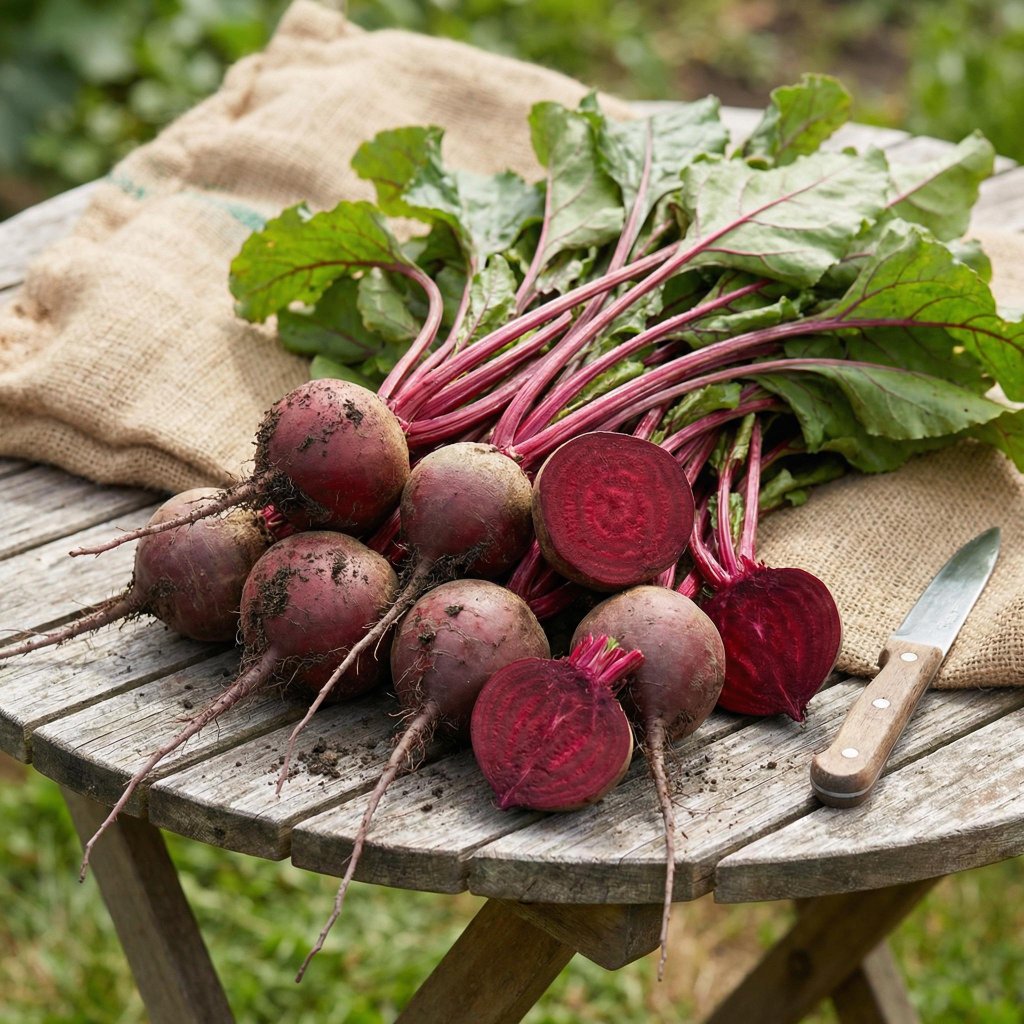
Beets
Earthy root vegetables available in red, golden, and striped varieties.
From the deep crimson Detroit Red to the candy-striped Chioggia, beets come in a remarkable range of colors and flavors. Their greens are fully edible too — sauté them like Swiss chard for a nutritious bonus.
Beets come in a beautiful spectrum of colors and flavors. Each variety has its own unique character and best culinary uses — click any to explore further.
Red/Detroit Beets
The classic deep crimson beet — earthy, sweet, and the most widely available variety
Golden Beets
Milder and sweeter than red beets with a buttery yellow flesh — won't stain your hands
Chioggia Beets
Italian candy-cane beet with stunning pink and white concentric rings — beautiful raw in salads
Cylindra Beets
Long, cylindrical shape ideal for uniform slicing — same rich flavor as the classic red beet
White Beets
Creamy white flesh with a mild, sweet flavor and no staining — elegant in refined dishes
Baby Beets
Harvested young for tender texture and concentrated sweetness — perfect roasted whole or in salads
Bull's Blood Beets
Deep burgundy-red variety with striking dark leaves used as a microgreen and salad green
Beetroot can be stored loose in your fridge's veggie drawer for at least two to three weeks, or longer. The greens are far more delicate and should be cooked within two or three days of purchase; cut greens from the roots and store in a damp towel or unsealed bag in the fridge.
Beetroot can be eaten raw, roasted, boiled, steamed, sautéed and even made into chips. They are excellent paired with salty or creamy cheese (like feta, goat, ricotta), nuts and citrus. They are wonderful roasted whole, which concentrates the sweet and earthy flavors. After letting roasted beets cool slightly, rub the skins off with a paper towel - the skins will come right off with very minimal effort. The leaves are excellent raw, boiled, steamed and sautéed. Add them to any recipe calling for spinach or chard. The stems can be cooked the same way you'd cook chard stems or bok choy.
Pickling beets is a great way to preserve them, and making them from scratch outshines the canned variety. They can also be lacto-fermented; beet kvass is a healthy drink made from lactofermented beets. Beets can also be canned and frozen.
Beetroot is high in fiber, folate and manganese, and is a decent source of Vitamin C, potassium and magnesium. The greens are nutritionally almost identical to chard, high in fiber, Vitamin A, Vitamin C, Vitamin K, riboflavin, calcium, iron, magnesium, copper, manganese. The pigments responsible for both red and yellow varieties, betalains, are antioxidants and may also be cancer-preventatives.
The Chioggia (frequently called 'candy cane' in the U.S.), beautifully striped hot pink and white, is named after Chioggia, a fishing town in the province of Venice.
A little over half of the sugar produced in the U.S. comes from sugarbeets, which are bred for their high sugar content. However, sugarbeets are not directly consumed by people and need to be processed to produce white sugar.
As a root vegetable with a thick peel, table beets tend to contain very little pesticide residue. These are grown on a small scale nationwide, and they're often worked into more complex crop rotations to manage pests without too many chemicals. The peak season is generally mid-summer through late fall, but they can be cold stored or heavily mulched and are readily available through the winter.
In-Season Recipes with Beet
Seasonal recipes featuring Beet right now
Coming Soon
All Other Recipes with Beet
Coming Soon