Apples
One of the most widely cultivated tree fruits in the world, with thousands of varieties from tart Granny Smith to honeyed Fuji.
Choose apples that are firm, fragrant, and free of bruises or soft spots. The best apples feel heavy for their size — heaviness indicates density and high juice content. At farmers' markets, ask about harvest date; apples picked within the last few weeks will always outperform supermarket fruit that has been in cold storage for months.
For baking, choose varieties that hold their shape — Granny Smith, Braeburn, or Honeycrisp. For fresh eating, choose by flavor preference: sweet (Fuji, Gala), tart (Granny Smith, Pink Lady), or balanced (Honeycrisp, Braeburn).
With over 7,500 known varieties worldwide, apples range from intensely tart to honey-sweet. Here are the most widely available and beloved:
Honeycrisp
Exceptionally crisp with a perfect sweet-tart balance — the most popular fresh eating apple of the last two decades.
Granny Smith
Bright green, very tart, and firm — the gold standard for baking and pie-making; holds its shape and adds bright acidity.
Fuji
Japanese variety with dense, very sweet flesh and superb storage life — excellent fresh, good for applesauce.
Gala
Mild, sweet, and aromatic — a reliable fresh eating apple widely available year-round.
Braeburn
Complex sweet-tart flavor with aromatic spice notes — excellent fresh and very good for baking.
Pink Lady
Distinctly tart-sweet with a dense, slow-to-brown flesh — great for salads and eating out of hand.
Apples store remarkably well — they are one of the best-keeping fruits. Most varieties keep 1–2 months refrigerated in the crisper drawer. Apples emit ethylene gas, which accelerates ripening of nearby produce — store them away from other fruits and vegetables, or in a sealed bag.
At room temperature, apples keep about 1 week. For long-term storage, keep them cold and slightly humid. Heirloom and farmers' market varieties may have a shorter storage window than commercial varieties bred for shelf life.
Apples are extraordinarily versatile in the kitchen — they appear in every course from savory salads and meat dishes to desserts and drinks.
Baking: The most iconic use — pies, tarts, crisps, and crumbles. Use firm, tart varieties (Granny Smith, Braeburn) that hold their shape and balance added sugar. Mix varieties for complexity.
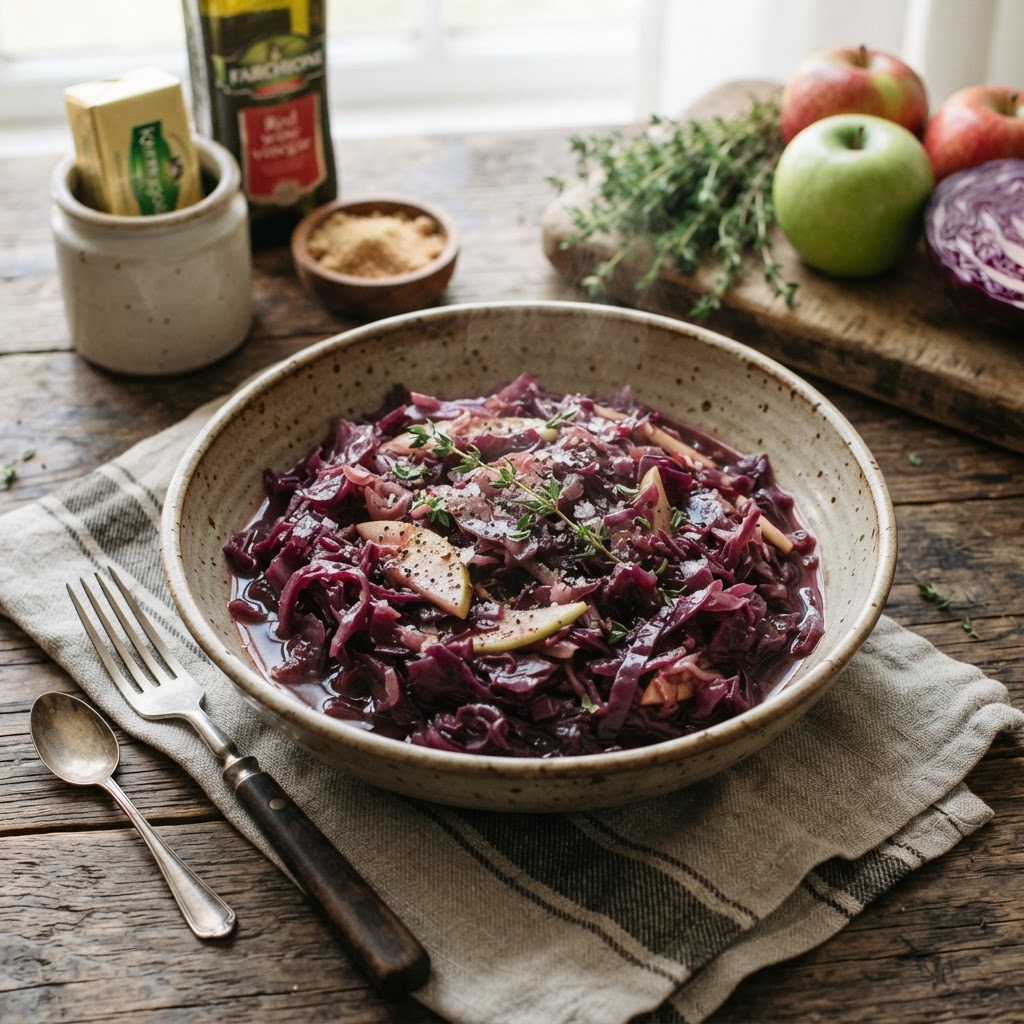
Sautéing & Caramelizing: Slice and cook in butter with sugar and cinnamon until golden — a classic accompaniment to pork, duck, and game. The Maillard reaction creates extraordinary depth.
Applesauce: Core and cook apples with a little water until soft, then mash or blend. A simple preparation that preserves flavor. Tart apples need less added sugar.
Juicing & Cider: Fresh-pressed apple juice is incomparably better than commercial juice. Fermented into hard cider — one of the world's oldest beverages.
Raw in Salads: Thinly sliced apple with arugula, walnuts, blue cheese, and a sharp vinaigrette — a classic combination where the apple's sweetness balances bitter and salty elements.
Jam & Jelly: Apple jelly is one of the most classic preserves — apples are naturally high in pectin, making them excellent for setting. Apple butter, cooked down for hours until deeply caramelized and spiced, is a pantry treasure.
Dehydrating: Apple slices dehydrated with cinnamon are an excellent snack and baking ingredient. Use tart varieties for the best flavor concentration.
Freezing: Core and slice, toss with lemon juice to prevent browning, freeze on a sheet pan then bag. Excellent for smoothies and cooking; texture will be soft when thawed.
Pickling: Apple cider vinegar pickled apples with spices are a traditional condiment for cheese boards and charcuterie. The acidity and sweetness complement cured meats beautifully.
Apples are a nutritional powerhouse — the phrase 'an apple a day keeps the doctor away' has a genuine basis in their remarkable health profile. A medium apple provides about 4g of fiber (primarily pectin), vitamin C, potassium, and a range of antioxidant polyphenols.
Pectin — the soluble fiber in apple flesh — is a prebiotic that feeds beneficial gut bacteria, lowers LDL cholesterol, and slows sugar absorption. The antioxidants quercetin and catechin in apple skins are associated with reduced risk of heart disease, type 2 diabetes, and certain cancers.
The skin contains the majority of the fiber and antioxidants — always eat apples unpeeled when possible. A medium apple is about 95 calories, making it one of the most satisfying and nutrient-dense low-calorie foods available.
There are over 7,500 named apple varieties worldwide, but only about 100 are grown commercially. The US produces about 240 million bushels per year, with Washington State growing more than half of all commercially sold apples.
Apples are a member of the rose family (Rosaceae), along with pears, quinces, cherries, plums, and peaches. If you look closely at an apple blossom, the resemblance to a rose flower is unmistakable.
The apple originated in the mountains of Kazakhstan — the city of Almaty (formerly Alma-Ata) means 'father of apples' in Kazakh. Wild ancestors of the modern apple, Malus sieversii, still grow in the forests of Central Asia and represent an extraordinary repository of genetic diversity.
Johnny Appleseed (John Chapman, 1774–1845) was a real person who planted apple orchards across Ohio, Indiana, and Illinois — though the apples he planted were primarily used for hard cider, not fresh eating.
Apple production is relatively sustainable compared to many crops — apple trees are perennial, meaning they don't need to be replanted annually, which reduces soil disturbance and erosion. A well-managed orchard can produce fruit for 50+ years.
However, conventional apple production uses significant pesticide applications — apples consistently rank among the most pesticide-laden produce in environmental working group studies. Organic apples are worth seeking out, especially for children. Washing apples thoroughly removes surface residues but not systemic ones.
Buying locally grown and in-season apples dramatically reduces the carbon footprint compared to apples flown from New Zealand or South America in spring.
Available Near You
Enter your ZIP code to find farms with apples near you.