Legumes, Beans & Nuts · Spring
Peas
Pisum sativum · Also: Garden Pea, Green Pea, English Pea
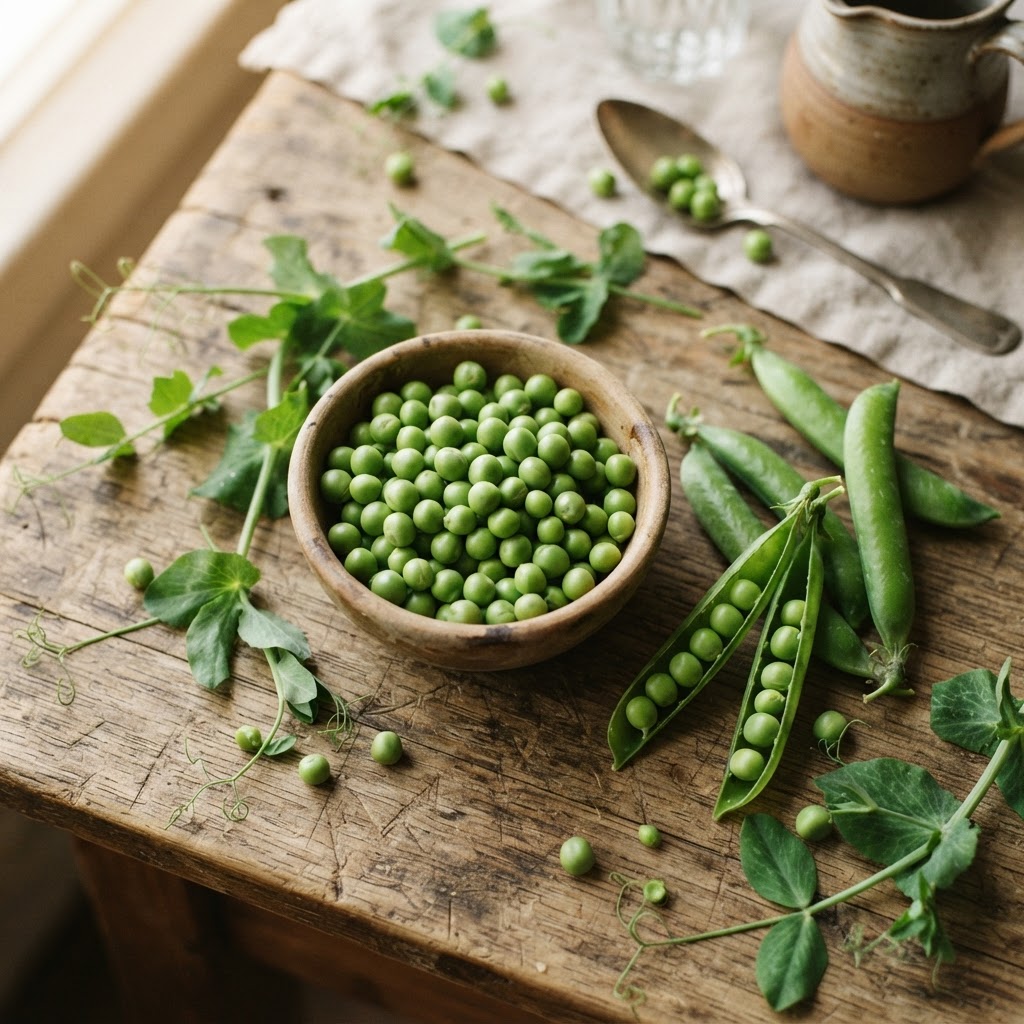
Peas are the sweet green seeds of a cool-season legume, one of the oldest cultivated crops and a beloved signal of spring. Fresh garden peas are shelled from plump pods, eaten raw by the handful or briefly cooked — at their peak their sugars turn to starch within hours of picking, which is why the freshest pea tastes the sweetest.
Native to the Mediterranean and Near East, peas travelled the world and took many forms: tender green shell peas, edible-pod snow and snap peas, and dried split peas that thicken the classic soups of Europe. From British mushy peas and Indian mattar paneer to Chinese stir-fried snow peas and split-pea soup, the pea is a global spring staple — eaten fresh when young, and dried to nourish through winter.
Garden (Shell) Peas
Classic green peas grown for the seeds inside plump pods — shelled and cooked, the sweet 'English pea' of spring. Pods themselves are tough and discarded.
Snow Peas
Flat, thin-podded peas eaten pod and all — the crisp, mild pea of stir-fries and Asian salads, harvested before the peas inside swell.
Sugar Snap Peas
A cross of garden and snow peas — plump, sweet peas inside a crisp, edible pod. Eaten whole, raw, or lightly cooked; the best of both worlds.
Petit Pois
Small, young, extra-tender and sweet garden peas — a French delicacy harvested before full maturity, prized for their delicate flavor and texture.
Split Peas
Dried garden peas with the skins removed and split in half — yellow or green, the base of split-pea soup and pease pudding, a winter pantry staple.
Marrowfat Peas
Large, starchy mature green peas dried for traditional British 'mushy peas' and the marrowfat of fish-and-chip shops — soft, mealy, and deeply pea-flavoured.
Fresh pea pods should be plump, firm, and bright green with no yellowing or limpness — give one a squeeze; it should feel full of peas, not hollow. The stem end should snap cleanly, a sign of freshness.
Peas begin converting sugar to starch the moment they're picked, so the sweetest peas are the freshest — buy local, in-season, and shell them the day you buy them. Out of season, frozen peas are often sweeter than fresh-shipped, since they're frozen within hours of harvest.
For snow and snap peas, choose glossy, crisp pods with no soft spots or browning; avoid puffy or bulging pods, which mean the peas inside have grown too large and tough.
Keep fresh peas in their pods in a paper bag in the fridge and use within 2–3 days — they lose sweetness quickly once picked. Shelled peas keep a day or two in an airtight container in the fridge. To preserve, blanch and freeze: shell the peas, drop in boiling water for 1 minute, cool in ice water, drain, and freeze in bags for up to a year. Dried split peas keep for a year or more in an airtight jar.
Shelling: Snap the stem end of a garden pea pod and pull down to unzip the string, then run a thumb along the seam to pop it open and tip out the peas. Discard empty pods to the compost.
Stringing (snow & snap): Snap peas may need the tough string along the seam pulled off; snow peas usually need it only if large. Young, tender pods need no stringing at all.
Drying (for split peas): Leave garden peas on the vine until pods brown and the peas rattle dry, then shell and spread on a tray to fully dry — the skins slip off and the cotyledons split naturally when hulled.
Steamed or Boiled
Briefly cook shelled garden peas — just 2–3 minutes — until tender-crisp; overcooking dulls the colour and sweetness. Toss with butter and mint.
Raw & Shelled
The freshest sweet peas are eaten raw by the handful — in salads, atop crostini, or scattered over risotto, their sugars and crunch intact.
Stir-Fried (Snow & Snap)
Toss snow or snap peas in a hot wok for 1–2 minutes with garlic and ginger — the classic Chinese treatment, keeping pods crisp and bright green.
Split Pea Soup
Simmer split peas with ham, onion, and carrot into the thick, comforting soup of cold weather — a tradition from England to Scandinavia.
Matar Paneer
Indian green peas simmered with paneer cheese in a spiced tomato gravy — a beloved North Indian dish at the heart of winter 'matar' cooking.
Mushy Peas
British dried marrowfat peas soaked and simmered into a soft, vivid-green mash — the classic accompaniment to fish and chips.
Freezing: Blanch shelled peas for 1 minute, chill in ice water, drain, and freeze on a tray before bagging — the best way to capture spring sweetness; they keep a year.
Drying: Mature peas left on the vine dry into split peas and marrowfat — shelf-stable for a year or more, the pantry backbone of winter soups and stews.
Canning & pickling: Canned garden peas are a long shelf-staple, and pickled peas pods (a tangy relish) preserve the snap of summer pods for the colder months.
Peas are a good source of plant protein (about 5 g per cup), fiber, vitamin K, vitamin C, and folate, with a modest amount of iron — more nutrient-dense than most vegetables thanks to their legume nature.
They're rich in antioxidants including lutein and zeaxanthin (good for eye health) and provide a notable amount of vitamin B1 (thiamine) and manganese.
Dried split peas are even more concentrated — about 16 g of protein and 16 g of fiber per cooked cup, making split-pea soup a filling, low-cost, high-protein meal.
Peas were among the first cultivated crops — archaeological finds date domesticated peas to nearly 10,000 years ago in the Near East, making them older than wheat.
Gregor Mendel used garden peas in the 1860s to discover the laws of inheritance — the pea plant's clear traits made it the unlikely hero of modern genetics.
A pea's sugars turn to starch within hours of picking, which is why frozen peas — frozen within hours of harvest — are often sweeter than 'fresh' peas shipped across a continent.
The annual world pea harvest exceeds 10 million tonnes; India is by far the largest producer of green peas, and Canada leads the world in dried field-pea exports.
Spring's first peas are celebrated wherever they grow — a sign that winter has truly ended:
Pea Shoot Festival
Hillsboro, Oregon, USA
🗓 April 2026 (spring)
A small-farm celebration of the first tender pea shoots of the year — tasting tables of pea-shoot salads, pestos, and stir-fries, plus pick-your-own pea vines at local market gardens.
Järva Pea Festival
Gotland & rural Sweden
🗓 June–July 2026 (midsummer)
Swedish midsummer tables groan with the first new potatoes and fresh-shelled green peas — a national tradition of eating the year's first sweet peas straight from the pod with butter and dill.
Matar Pantheon — Matar Village Fairs
Uttar Pradesh & Bihar, India
🗓 February–March 2026 (Rabi harvest)
Winter 'matar' (pea) harvest fairs across North India celebrate the green pea crop that fills markets and street food — from matar paneer to spicy matar chaat — each late winter.
Nitrogen-fixing: Like all legumes, peas fix atmospheric nitrogen through root nodules, enriching soil and reducing the need for synthetic fertilizer — an excellent rotation and cover crop.
Cool-season & low-input: Peas thrive in cool weather with modest water needs and a short growing season, making them a low-carbon spring crop in temperate climates and a winter crop in the subtropics.
Global range: Peas grow across the temperate world — major producers include Canada, Russia, China, India, the U.S., and France — with fresh green peas a spring and early-summer crop, and dried field peas a global commodity harvested in summer.
In-Season Recipes with Peas
Seasonal recipes featuring Peas right now
Coming Soon
All Other Recipes with Peas
Coming Soon