Peanut Oil
Peanut oil (groundnut oil) is pressed from peanuts and prized for its high smoke point and clean, neutral flavor, making it the classic oil for deep-frying. Refined peanut oil is neutral and high-heat; unrefined peanut oil has a roasted peanut flavor. It is a staple of Chinese, Southeast Asian, and Southern American frying.
Choose refined peanut oil for high-heat frying — it is neutral, with a smoke point around 450°F, and the classic choice for deep-frying turkey, fries, and tempura. Choose unrefined or roasted peanut oil for its nutty peanut flavor, used as a finishing oil in Asian cooking.
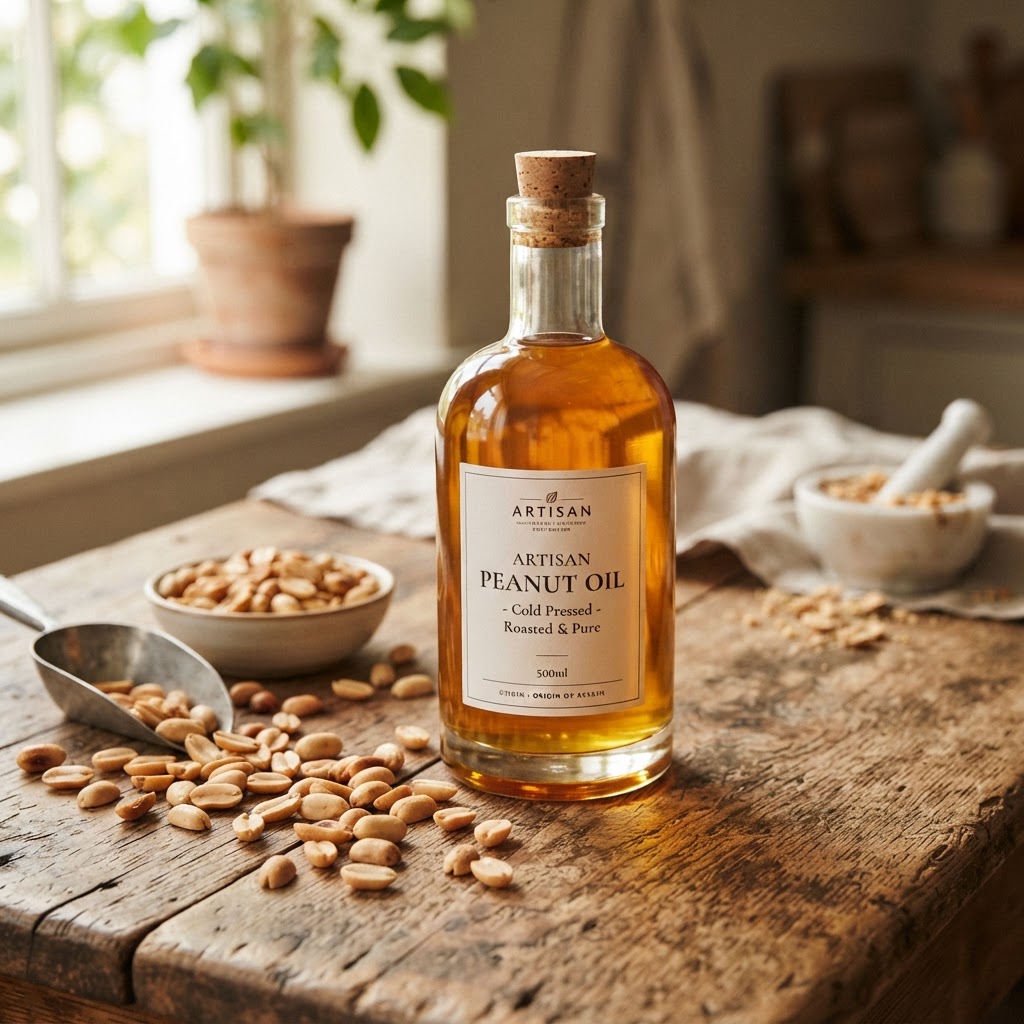
Gourmet peanut oils (often roasted) are golden and aromatic; use them for flavor, not frying. Check the label — highly refined peanut oil is typically safe for those with peanut allergies (the proteins are removed), but unrefined oil is not.
Peanut oil is relatively stable. Store refined peanut oil in a cool, dark place for up to a year; unrefined oil for 6–9 months. Refrigeration extends its life.
Used frying oil should be strained, cooled, and stored in the refrigerator for reuse a few times, then discarded. If it smells rancid or smokes at a lower temperature than before, discard it.
Peanut oil is the classic frying oil.
Deep-Frying: Refined peanut oil's high smoke point (450°F) and neutral flavor make it the choice for fries, fried chicken, turkey fries, and tempura — it produces crisp, clean results.
Stir-Frying: A traditional oil for Chinese and Southeast Asian stir-fries, where high heat and clean flavor are essential.
Roasting & Sautéing: Good for high-heat roasting of vegetables and meats.
Finishing: Roasted peanut oil drizzled over finished dishes adds a nutty, aromatic finish — use sparingly.
Baking: Rarely used in baking, but can add a nutty note to some recipes.
Peanut oil's stability makes it suitable for oil-preserved foods and confit. Its high smoke point and resistance to oxidation mean it can be reused for frying a few times before discarding, reducing waste.
Peanut oil is high in monounsaturated fat (oleic acid), similar to olive oil, with some polyunsaturated and saturated fat. A tablespoon provides about 120 calories and 14g of fat.
The monounsaturated fats in peanut oil are associated with heart health. Refined peanut oil is low in free fatty acids, which contributes to its high smoke point and stability.
Highly refined peanut oil is typically safe for those with peanut allergies because the allergenic proteins are removed during refining, but unrefined or cold-pressed peanut oil retains the proteins and is not safe for those with allergies.
Peanuts are not nuts but legumes, related to beans and peas — they grow underground, which is why they are also called groundnuts. Peanut oil has been used for cooking for thousands of years in South America, where peanuts originated.
Peanut oil is the traditional oil for deep-frying a whole Thanksgiving turkey — a Southern American tradition that became popular in the late 20th century.
Refined peanut oil is one of the few frying oils approved as safe for those with peanut allergies, because the refining process removes the allergenic proteins. It is widely used in commercial frying for this reason.
Peanut oil was the original oil used by George Washington Carver in his promotion of the peanut, which transformed Southern agriculture.
Peanuts are nitrogen-fixing legumes that improve soil, making them a relatively sustainable crop. They are often grown in rotation with other crops to replenish soil nitrogen.
However, conventional peanut farming uses significant pesticides. Choosing organic peanut oil reduces the environmental impact. Peanut oil is a byproduct of peanut production, using the crop efficiently.
Because it can be reused for frying a few times, peanut oil can be relatively efficient, though it should be discarded responsibly (not poured down drains).
Available Near You
Enter your ZIP code to find farms with peanut oil near you.
Recipes with Peanut Oil
1 recipe featuring Peanut Oil