
Citrus · Year-Round
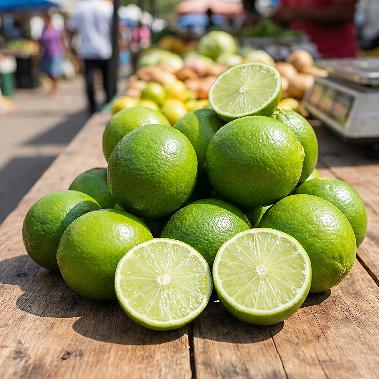
Lime
More floral and slightly more bitter than lemon, limes are essential in Mexican, Thai, Vietnamese, and Caribbean cooking. They provide a bright, aromatic acidity that defines tropical and Southeast Asian cuisine. Fresher, more delicate than lemons with a distinctive aromatic profile.
Buying: Choose limes heavy for their size and with firm, smooth skin. Look for bright color — Persian limes are the most common in supermarkets. Key limes are smaller and have a more floral juice but are harder to find. Avoid soft spots or dull skin.
Storage: Store at room temperature up to 1 week, or refrigerate for 2–3 weeks. Limes have thinner skin than lemons and don't keep quite as long. Zest and juice before the fruit starts to deteriorate.
Ceviche: Fresh lime juice 'cooks' raw fish through acid denaturation — the proteins turn opaque without heat. A foundation of Latin American cuisine.
Southeast Asian Cooking: Lime juice is essential in Thai, Vietnamese, and Laotian cuisine — in soups, salads, curries, and dipping sauces. The floral notes complement complex spice blends.
Cocktails & Beverages: Margaritas, mojitos, and countless tropical drinks depend on lime juice and zest. The bright acidity cuts through spirits and sweetness.
Marinades & Dressings: Lime juice tenderizes and flavors meats and seafood while brightening fresh salads and vegetable dishes.
Frozen Juice & Zest: Freeze lime juice in ice cube trays and zest separately for year-round use. Frozen zest retains virtually all aromatic compounds.
Preserved Limes: Dry whole limes (loomi) is a Middle Eastern ingredient used in stews and rice dishes. Can be made at home by drying fresh limes in the sun or low oven.
Dehydrating: Lime slices dehydrated until dry make striking cocktail garnishes and decorations.
Limes are rich in vitamin C for immune support and collagen synthesis. They contain citrus bioflavonoids with anti-inflammatory and antioxidant properties. The juice and zest provide bright, aromatic flavor with minimal calories.
Lime's acidity can enhance iron absorption from plant-based foods when consumed together, making it especially valuable in vegetarian and vegan cooking.
Persian Lime: The most common supermarket lime — larger, thin-skinned, seedless, with balanced acidity and mild flavor.
Key Lime: Smaller, rounder, more floral and aromatic — traditional for Key lime pie. Harder to find fresh but worth seeking out.
Mexican Lime (Sevillano): Smaller and more acidic than Persian limes with a distinctive aroma. Preferred in traditional Mexican and Thai cooking.