
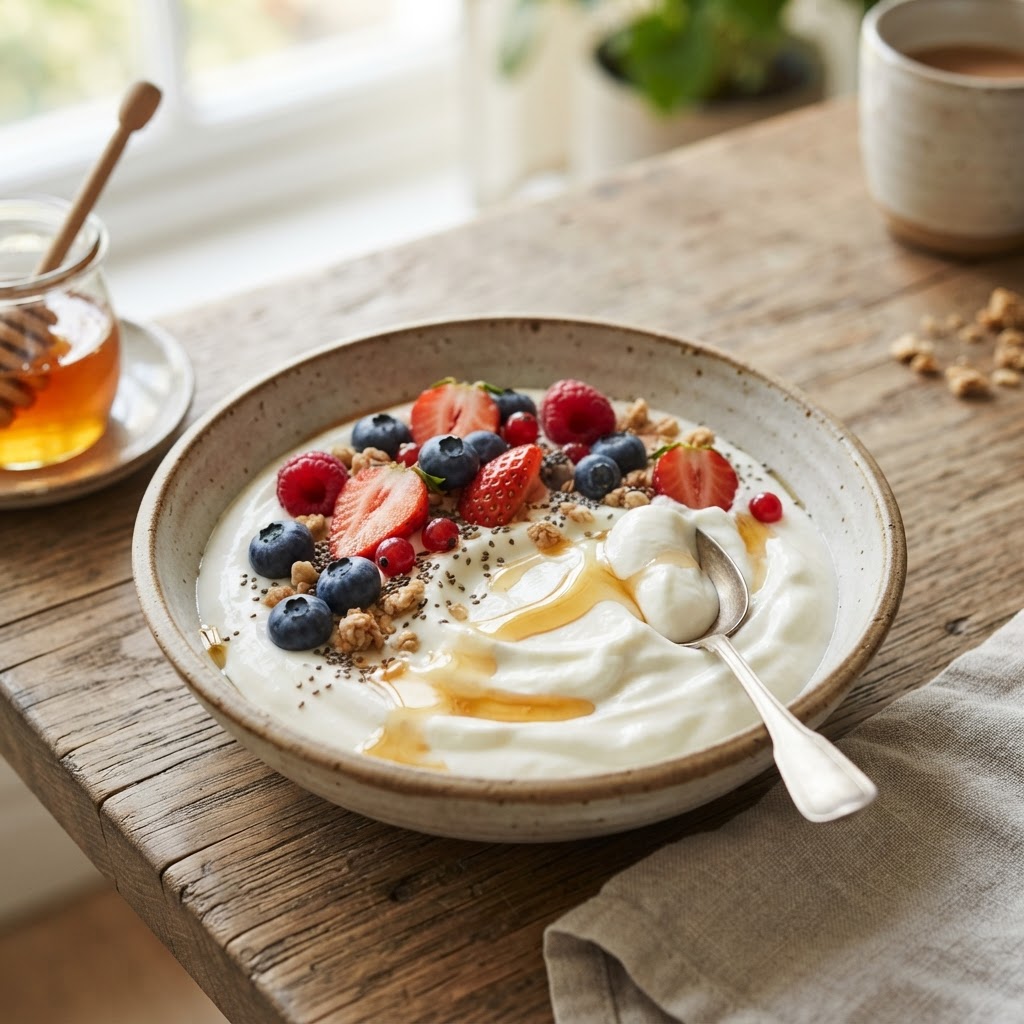
Yogurt
Yogurt is milk cultured with beneficial bacteria — Lactobacillus and others — that thicken it and give it a tangy flavor. One of the oldest cultured foods, yogurt has been made for at least 4,000 years and is prized worldwide for both its taste and its probiotic benefits. Greek yogurt, strained to remove whey, is especially rich and creamy.
Read the label — the best yogurt contains only milk and live cultures. Avoid products thickened with gums, pectin, or gelatin, and those loaded with added sugar. Plain, whole-milk yogurt offers the best flavor and versatility.
Look for 'live and active cultures' on the label to ensure you are getting the probiotic benefit. Yogurt with a clean, tart flavor and a smooth, set texture is a sign of careful culturing.
Greek yogurt is strained to remove whey, producing a thick, protein-rich yogurt. Labneh, strained further, becomes a soft cheese.
From plain and Greek to strained labneh and Icelandic skyr — the cultured milks of the world:
Plain Yogurt
The original cultured yogurt — tangy, smooth, and versatile for both sweet and savory dishes.
Greek Yogurt
Strained to remove whey — thick, protein-rich, and creamy; the modern favorite for breakfast and dips.
Labneh
Yogurt strained until thick enough to spread — a Middle Eastern staple, drizzled with olive oil and za'atar.
Skyr
Icelandic cultured dairy — thick, mild, and protein-dense, technically a cheese but eaten like yogurt.
Keep yogurt refrigerated and use within 1–2 weeks of opening. The cultures remain active, so yogurt keeps longer than fresh milk.
Store yogurt covered to prevent it from absorbing odors and to keep the surface from drying out. Always use a clean spoon to avoid introducing spoilage organisms.
A little leftover yogurt can culture a fresh batch — warm milk to 110°F, stir in a spoonful of yogurt, and hold warm for 6–8 hours.
Yogurt is versatile across sweet and savory dishes.
Breakfast & Parfaits: Layered with fruit, granola, and honey — a nourishing, probiotic-rich start to the day.
Marinades: Yogurt tenderizes meat while adding tang — the foundation of tandoori chicken and many Middle Eastern dishes.
Sauces & Dressings: The base for tzatziki, raita, and creamy dressings — lighter and tangier than mayonnaise or sour cream.
Baking: Yogurt adds moisture and a tender crumb to cakes, muffins, and breads; its acidity reacts with baking soda for lift.
Culturing: Yogurt is itself a preserved form of milk — the lactic acid produced by the cultures inhibits spoilage, so yogurt keeps far longer than fresh milk. Homemade yogurt is easy and rewarding.
Straining: Labneh is yogurt strained until it becomes a soft cheese, which keeps even longer and can be rolled into balls and preserved in oil.
Freezing: Frozen yogurt is a lighter alternative to ice cream; the texture is best when churned. Plain yogurt can be frozen for smoothies, though the texture separates on thawing.
Yogurt provides high-quality protein, calcium, phosphorus, and B vitamins. A cup of plain yogurt has about 8–12g of protein; Greek yogurt has up to 20g per cup.
The live cultures in yogurt are beneficial probiotics that support gut health, immune function, and may improve lactose digestion — many lactose-intolerant individuals tolerate yogurt better than milk.
Plain, unsweetened yogurt is the healthiest choice — flavored yogurts often contain as much added sugar as a dessert. Choose whole-milk yogurt for satiety and the best absorption of fat-soluble vitamins.
Yogurt has been made for at least 4,000 years, with origins in Central Asia and the Middle East, where milk stored in animal skins naturally cultured. The word 'yogurt' comes from the Turkish yoğurtmak, meaning 'to thicken.'
Greek yogurt is not actually Greek in origin — the straining technique is traditional across the Eastern Mediterranean and Middle East. It simply became widely known as 'Greek' through its commercial popularity.
Labneh, yogurt strained until it is thick enough to spread, is a staple of Lebanese and Middle Eastern breakfasts, often drizzled with olive oil and served with za'atar.
Yogurt is one of the more sustainable dairy products because culturing extends the shelf life of milk, reducing waste. It also requires no additional ingredients beyond milk and cultures.
Choosing yogurt from grass-fed and organic dairies lowers the environmental impact. Buying larger tubs rather than single-serve cups reduces packaging waste significantly.
Making yogurt at home from milk and a starter culture is simple, economical, and eliminates packaging entirely.
Available Near You
Enter your ZIP code to find farms with yogurt near you.
Recipes with Yogurt
2 recipes featuring Yogurt
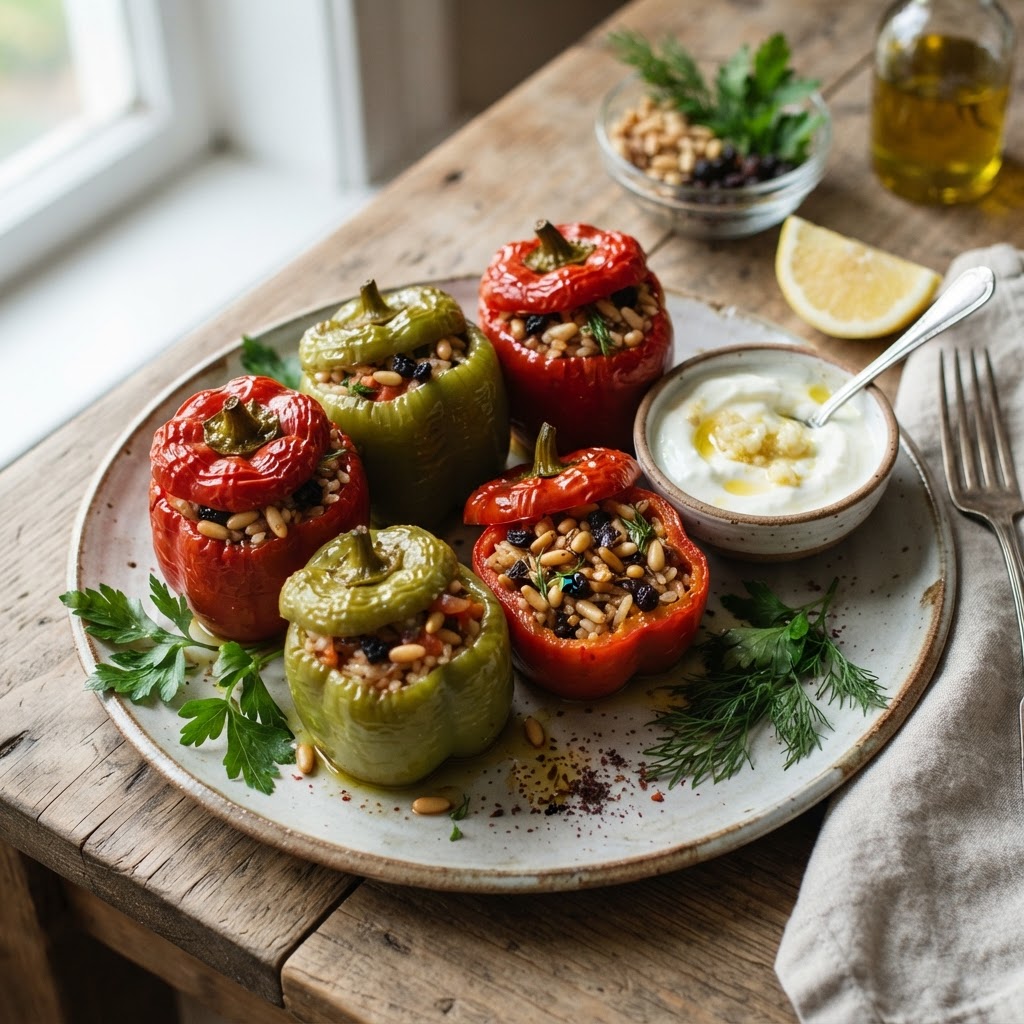
Bell Peppers Stuffed with Rice, Raisins, and Pine Nuts
Celebrate the vibrant Mediterranean harvest with these jewel-toned peppers. Each bite bursts with the perfect harmony of aromatic spices, sweet currants, and toasted pine nuts, all brightened by a creamy garlic yogurt dip.

Roasted Radish and Potato Salad with Black Mustard and Cumin Seeds
Golden roasted potatoes and crisp, peppery radishes unite in this vibrant dish, kissed by the aromatic warmth of toasted mustard and cumin seeds. It is a joyful, tangy celebration of textures perfect for any table.