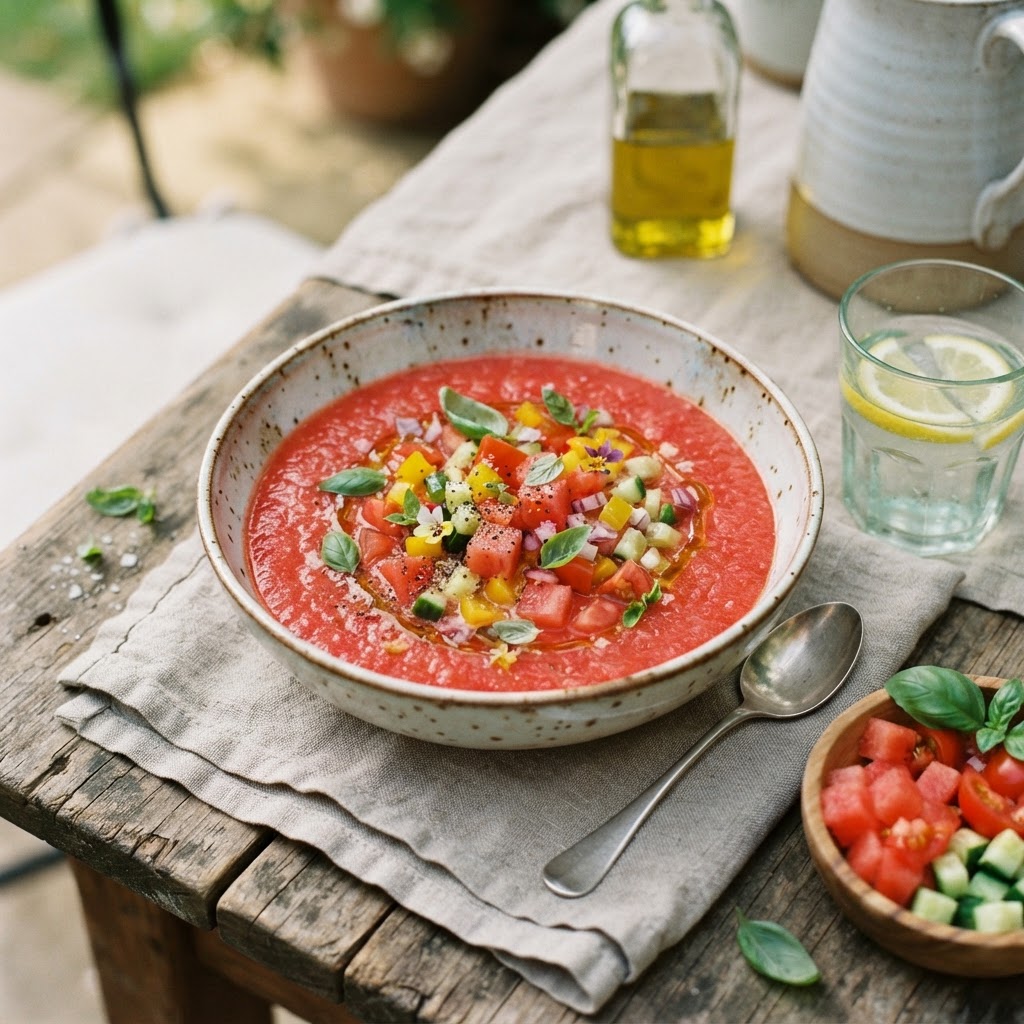
Watermelon
Summer's most refreshing fruit — 92% water, sweet and crisp, with both flesh and rind having culinary uses.
Choose a watermelon that is symmetrical and heavy for its size — heaviness indicates water content and ripeness. Look for a creamy yellow or pale yellow 'field spot' (where it rested on the ground). A white or green field spot means underripe. The skin should be dull, not shiny.
The thump test: knock firmly with your knuckles — a ripe watermelon produces a deep, hollow thump. A dull, flat thud suggests overripe; a high-pitched sound suggests underripe. For cut watermelons, the flesh should be deeply red (or yellow for yellow varieties) with visible seeds and no white streaks.
Store whole watermelon at room temperature up to 10 days. Research has shown that storing watermelon at room temperature actually maintains higher lycopene content than refrigeration — so there is a nutritional reason not to refrigerate whole melons.
Once cut, cover tightly and refrigerate; use within 5 days. A pinch of salt on watermelon intensifies sweetness by suppressing bitterness receptors — a bartender's and chef's trick worth knowing.
Fresh & Salads: Cubed with feta cheese, fresh mint, and lime juice — the classic summer salad where sweet and salty create magic. Add thinly sliced red onion and a drizzle of balsamic for complexity.
Grilling: Cut into thick slabs, brush with oil, grill on high heat until lightly charred — concentrates sweetness and adds smokiness. Serve with flaky salt, tajín, lime, or balsamic glaze.
Agua Fresca: Blend watermelon with lime juice and a pinch of salt then strain — the most refreshing summer drink. No added sugar needed. The salt suppresses bitterness and amplifies sweetness.
Pickled Rind: The white rind simmered in spiced vinegar brine — a traditional Southern American preparation. The rind has a mild, slightly sweet flavor that takes on pickling spices beautifully.
Juice & Cocktails: Fresh watermelon juice is the base for countless summer cocktails and mocktails. Combines beautifully with mint, lime, tequila, and rum.
Watermelon does not preserve well through traditional canning — the high water content makes it mushy. However several preparations work well:
Pickled Rind: The green-white rind pickled in sweetened vinegar brine with cinnamon and cloves — a traditional Southern preserve. The rind retains its texture through pickling.
Freezing Juice/Puree: Blend and strain, then freeze in ice cube trays — excellent for cocktails and smoothies. The flesh itself freezes poorly (too much water, becomes mushy).
Dehydrating: Watermelon can be dehydrated into chips — the result is intensely sweet, chewy, and concentrated. A surprising and delicious snack.
Watermelon is 92% water — one of the highest water content foods available — making it exceptional for hydration. Despite being so watery, it delivers meaningful nutrition: one cup provides 21% of the daily value for lycopene, 18% for vitamin C, and 5% for potassium.
Lycopene — the red pigment in watermelon — is a powerful antioxidant associated with reduced risk of prostate cancer, heart disease, and sun damage. Watermelon has higher lycopene content than tomatoes by weight. The lycopene is more bioavailable from room-temperature watermelon than refrigerated.
Watermelon also contains citrulline — an amino acid that converts to arginine in the body, which supports cardiovascular health and may improve exercise performance. The rind has higher citrulline content than the flesh.
Watermelon is native to West Africa, where wild species still grow in the Kalahari Desert. Archaeological evidence of watermelon cultivation in Egypt dates back 5,000 years — seeds were found in King Tutankhamun's tomb.
Every part of the watermelon is edible: the sweet flesh, the white rind (pickled, stir-fried, or candied), and even the seeds (roasted like pumpkin seeds, or ground into watermelon seed flour used in West African cooking).
China produces about 70% of the world's watermelons — over 70 million metric tons annually. The US is the 7th largest producer. Japan produces premium square watermelons (grown in boxes to fit in refrigerators) that sell for $100+.
Watermelon is a relatively water-efficient crop compared to many fruits and vegetables — it gets much of its water from its own flesh, requiring less irrigation than, say, almonds. However, it is still grown in water-stressed regions like California and Arizona.
Watermelon is typically a single-season annual crop requiring significant inputs. However, it is one of the fastest-growing fruits and can be produced in large quantities per acre, making it relatively efficient in terms of land use.
The enormous volume of watermelon rind that is discarded represents a significant food waste opportunity. Cooking with rind, pickling, or composting it reduces food waste substantially.
Available Near You
Enter your ZIP code to find farms with watermelon near you.