
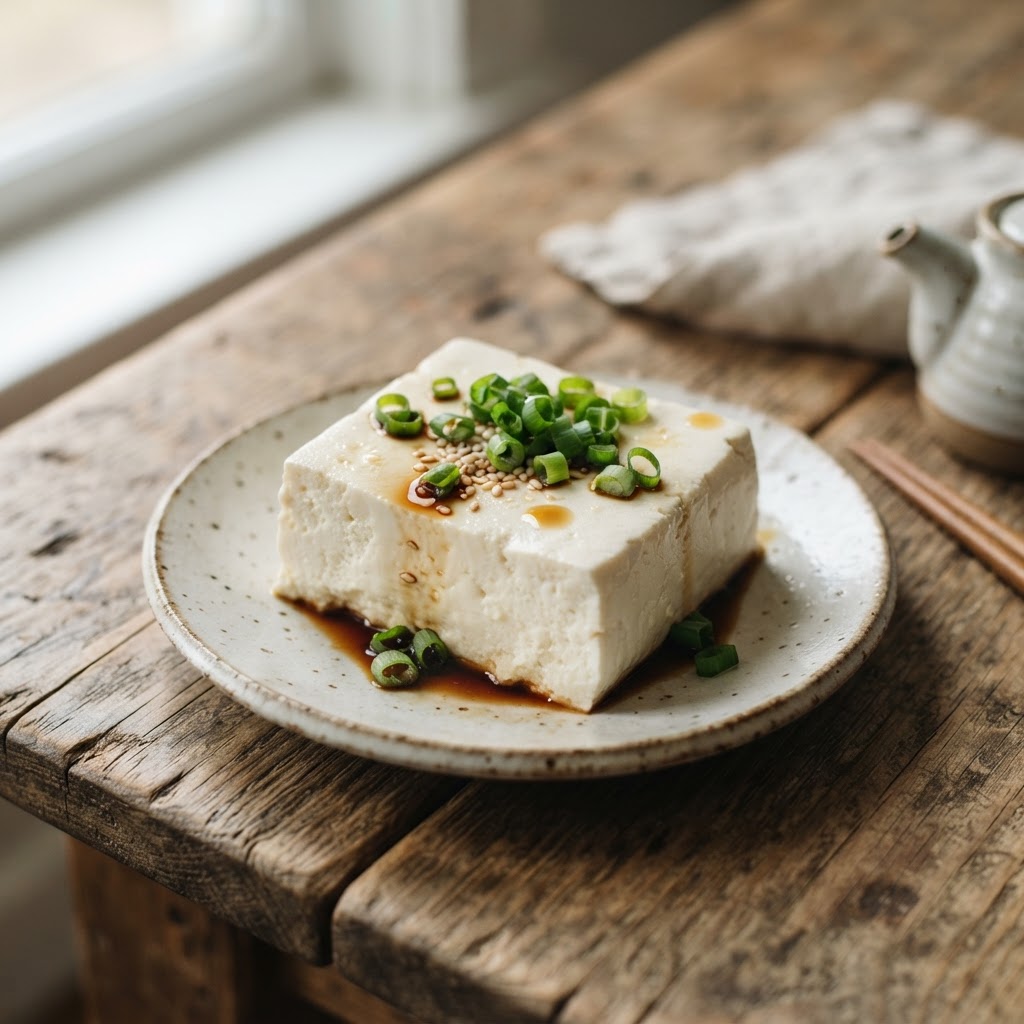
Tofu
Tofu, also known as bean curd, is a versatile protein made by curdling fresh soy milk and pressing it into blocks. Originating in China over 2,000 years ago, tofu is prized for its mild flavor, remarkable ability to absorb seasonings, and extraordinary adaptability — it appears in everything from silky soups to crispy stir-fries across Asian and Western cuisines.
Choose tofu based on how you plan to cook it. Freshness matters — look for tofu with a clean, slightly sweet aroma and a firm, intact texture. Avoid tofu with any sour or off smell, which indicates it is past its prime.
Tofu comes in several firmness levels — silken, soft, medium, firm, and extra-firm — each suited to different uses. Silken tofu is custardy and delicate; firm and extra-firm tofu hold their shape for stir-frying and grilling.
At Asian markets, seek out fresh tofu made the same day — it is dramatically better than supermarket tofu. Shelf-stable silken tofu (in aseptic cartons) is convenient and reliably good for soups and desserts.
Keep refrigerated tofu submerged in water in an airtight container; change the water daily and use within 3–5 days of opening. Once opened, tofu exposed to air dries out and absorbs off-flavors quickly.
Shelf-stable silken tofu (aseptic cartons) keeps for months unopened at room temperature; refrigerate after opening and use within a few days.
Tofu freezes well — freezing changes the texture, making it chewier and more porous, which is excellent for absorbing marinades. Press thawed frozen tofu to remove water before cooking.
Tofu is extraordinarily versatile — its mild flavor and varied textures make it a chameleon in the kitchen.
Pan-Frying & Searing: Pressed firm or extra-firm tofu, pan-fried until golden and crispy, is the foundation of countless stir-fries and rice bowls. A hot pan and dry, pressed tofu are key to a good crust.
Deep-Frying: Cubes of firm tofu deep-fried until puffed and golden are a restaurant favorite — crispy outside, custardy within.
Silken Soups: Silken tofu, gently warmed in broths like miso soup and sundubu jjigae, adds delicate creaminess without cooking further.
Scrambling: Crumbled firm tofu sautéed with turmeric and seasonings makes a classic vegan scramble reminiscent of scrambled eggs.
Grilling & Broiling: Thick slabs of pressed tofu marinated and grilled develop smoky char and satisfying chew.
Freezing: Freezing tofu transforms its texture, making it chewier and more sponge-like — ideal for absorbing marinades. Freeze whole or sliced, then thaw and press before cooking. Frozen tofu keeps for up to 3 months.
Fermenting: Fermented tofu (furu or sufu) is a traditional Chinese condiment — cubes of tofu fermented in brine, rice wine, and salt into a pungent, creamy, cheese-like product. It keeps for months and adds depth to congee and stir-fries.
Drying: Freeze-dried tofu and dried tofu skin (yuba) are shelf-stable forms that rehydrate into various textures — traditional preservation methods from East Asia.
Tofu is a nutritional powerhouse — a complete plant protein containing all nine essential amino acids. A half-cup of firm tofu provides about 10–20g of protein (more in extra-firm), along with calcium, iron, manganese, and selenium.
Tofu made with calcium sulfate (the most common coagulant) is an excellent source of calcium — a half-cup can provide 25–40% of the daily value, making it one of the best plant-based calcium sources.
Soy foods like tofu contain isoflavones, plant compounds with mild estrogen-like activity. Research shows moderate soy consumption is associated with heart health, bone health, and may reduce the risk of certain cancers. Tofu is naturally low in calories and saturated fat.
Tofu originated in China over 2,000 years ago — legend attributes its invention to Liu An, a Han dynasty prince, around 164 BCE. It spread throughout East Asia and is now a global staple.
The process of making tofu — curdling soy milk with a coagulant and pressing it — is remarkably similar to cheesemaking, which is why tofu is sometimes called 'bean cheese.'
Silken tofu is so delicate it is often eaten cold with soy sauce and ginger, or blended into creamy desserts and smoothies — its neutral flavor and creamy texture make it a remarkable dairy substitute.
Tofu comes in an extraordinary range of textures, from spoonable silken to dense and chewy extra-firm — each suited to different dishes, which is why a well-stocked Asian kitchen often has several types on hand.
Tofu is one of the most sustainable proteins available — soybeans are efficient to grow, producing far more protein per acre than animal sources, with dramatically lower greenhouse gas emissions, land use, and water requirements.
However, the environmental impact depends on how the soy is grown. Choosing organic and non-GMO tofu ensures the soybeans were grown without heavy pesticide use and supports more sustainable farming practices.
Most soy grown globally is used for animal feed and oil, not direct human consumption — tofu and other whole-soy foods are an efficient, low-impact way to use this crop. Choosing tofu over meat even a few times a week meaningfully reduces the carbon footprint of your diet.
Available Near You
Enter your ZIP code to find farms with tofu near you.
Recipes with Tofu
Coming Soon