
Zucchini & Summer Squash
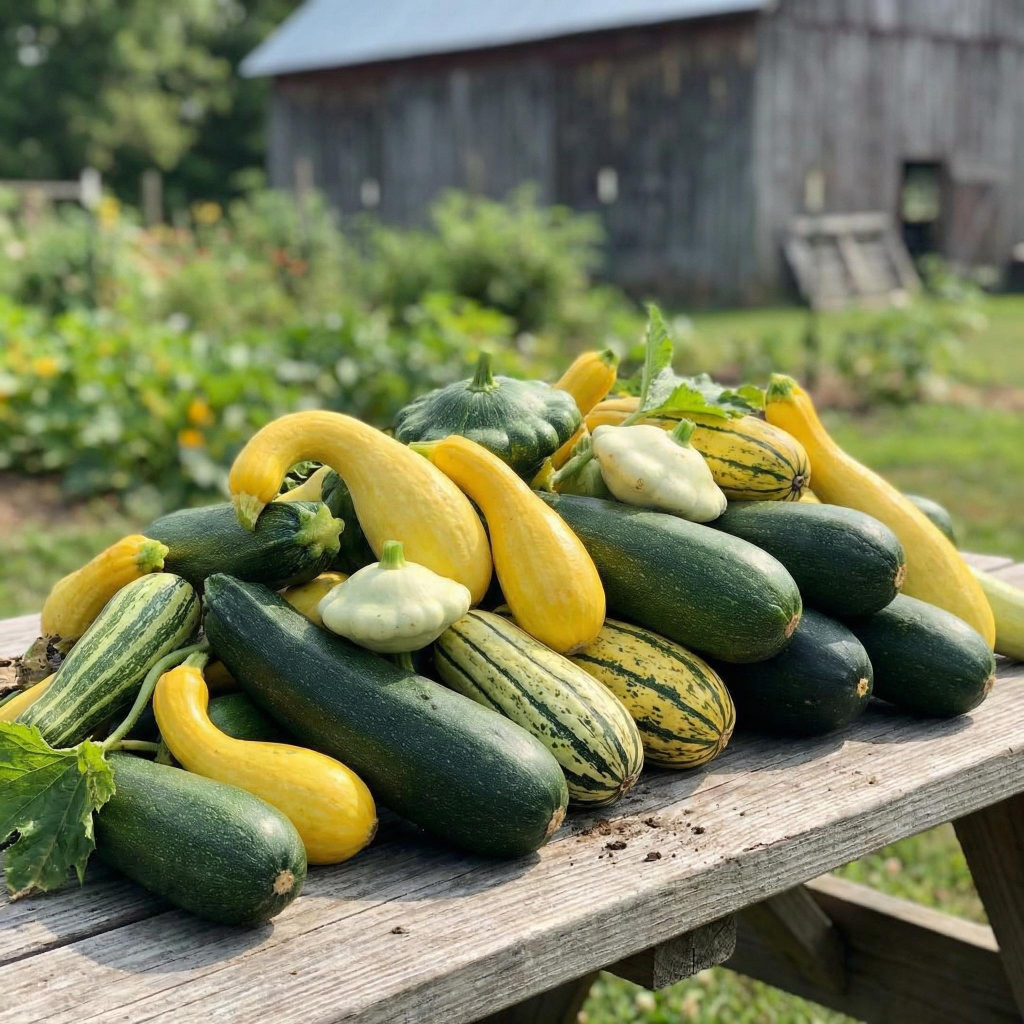
Summer squash varieties are harvested while immature with tender, edible skin. Zucchini is the most common, but yellow squash, pattypan, and other varieties offer unique shapes and flavors. All are prolific producers that flood farmers' markets from June through August — quick to cook and endlessly adaptable.
What It Is
The most common summer squash — a tubular green vegetable with mild flavor, tender edible skin, and high water content. Incredibly versatile and can be eaten raw, grilled, sautéed, baked, or spiralized.
Best Qualities
Smaller zucchini (6–8 inches) have the best flavor. The thin, edible skin requires no peeling. Mild flavor absorbs other seasonings beautifully, making it perfect for bold spice profiles. Excellent for both quick cooking and baking.
Summer squash is harvested while immature, before the skin has hardened. This means the entire squash — skin, flesh, and seeds — is edible, with no peeling required. It's one of the most prolific garden vegetables, and a single plant can produce dozens of fruits throughout the season.
Unlike winter squash, summer squash doesn't store for long. Its high water content means it cooks quickly but should be used within a few days of purchase. It doesn't need much dressing up — a few minutes on the grill or in a frying pan with olive oil and salt is often all it takes.
Summer squash is one of the most prolific types of produce in summer, bursting into harvest and flooding markets throughout the season. Click any variety to explore its full profile.
Zucchini
The most common summer squash — tubular, green, and incredibly versatile
Yellow Squash
Straightneck or crookneck, with a mild flavor interchangeable with zucchini
Pattypan
Flying-saucer shaped with a squat, flat bottom — great for stuffing
Round Zucchini
Also known as Eight Ball squash — perfectly round and ideal for stuffing
Zephyr
Two-toned hybrid with yellow top and pale green end — striking and tender
Mirliton
Also called chayote — a Southern favorite with a mild, crunchy flesh
Grilling
Slice lengthwise and grill over high heat for beautiful char marks and smoky flavor
Sautéing
The quickest method — cubed or sliced, 3–4 minutes in a hot pan with olive oil
Roasting
High heat roasting (425°F) evaporates moisture and concentrates sweetness
Raw
Thinly sliced or shaved on a mandoline — great in salads with lemon and Parmesan
Stuffing
Hollow out and fill with meat, grains, or cheese before baking
Spiralizing
Turn into 'zoodles' as a low-carb pasta substitute
Store unwashed summer squash in a perforated plastic bag in the refrigerator crisper drawer for up to 5 days. Unlike winter squash, summer squash does not keep well at room temperature for more than a day or two.
Avoid washing until just before use, as moisture accelerates decay. If you have an overabundance from the garden, blanch and freeze for up to 3 months — though the texture will soften, it's perfect for soups and baked goods.
Squash blossoms — the edible flowers of any squash plant — are a prized seasonal delicacy. Both summer and winter squash produce them, and they're as beautiful as they are delicious. Look for them at farmers' markets in summer and early fall.
Male vs. Female Blossoms
Male blossoms grow on long, thin stems and are more abundant — ideal for harvesting. Female blossoms sit closer to the plant on a tiny embryonic squash; harvesting them sacrifices the fruit.
Flavor
Squash blossoms have a delicate, mildly sweet, slightly vegetal flavor reminiscent of the squash itself — subtle enough to let fillings and batters shine.
Stuffed & Fried
The most classic preparation — fill with ricotta, herbs, and a sliver of mozzarella, then dip in a light tempura batter and fry until golden and crispy.
Sautéed
Simply sauté in olive oil with garlic and a pinch of salt for 1–2 minutes until wilted. Toss into pasta, eggs, or risotto.
Quesadillas & Tacos
A popular Mexican preparation — sauté blossoms with epazote and add to quesadillas or tacos with cheese and salsa.
Raw in Salads
Young, freshly picked blossoms can be torn and scattered over salads for a pop of color and delicate flavor.
Tips for Handling
- • Harvest in the morning when blossoms are fully open
- • Use the same day — they wilt within hours of picking
- • Gently rinse and check for insects hiding inside
- • Remove the stamen from male flowers before using
- • Store briefly in the fridge, stem-end in a little water, like cut flowers
In-Season Recipes with Squash
Seasonal recipes featuring Squash right now
Coming Soon
All Other Recipes with Squash
Coming Soon