Grains & Seeds · Summer & Fall
Sorghum
Sorghum bicolor · Also: Jowar, Milo, Durra, Great Millet, Gaoliang, Sweet Sorghum
Sorghum is the great grain of the dry lands — an ancient African cereal that thrives where the heat is fierce and the rains are few, feeding hundreds of millions across Africa, India, and the semi-arid world. Domesticated in the Sudan region of Africa some 5,000 years ago, sorghum spread along trade routes to India, the Middle East, and China, becoming the staple grain of the Sahel, the Deccan plateau, and the dry north — a hardy, drought-resistant grass that grows where wheat and rice cannot, and that carries the food security of some of the hottest, driest places on Earth.
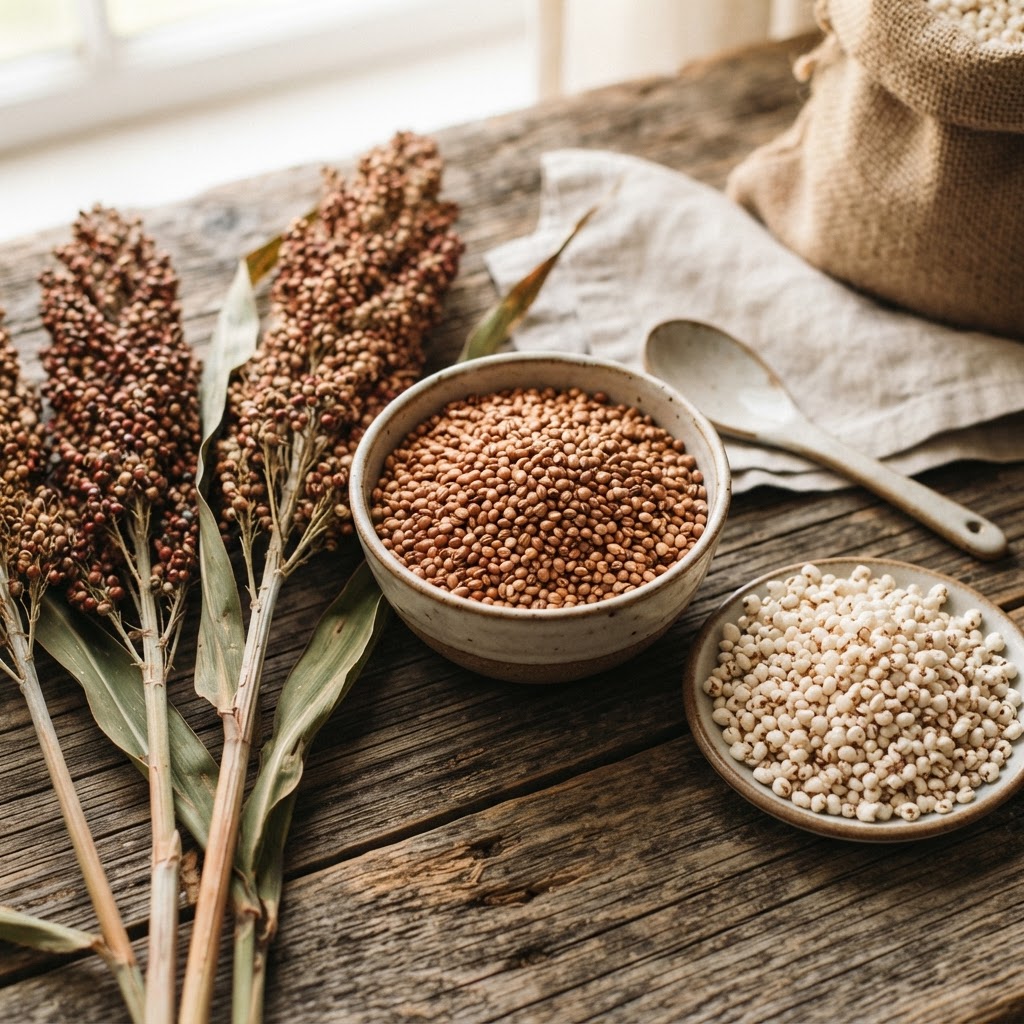
The round, reddish-tan grains cook into a chewy, nutty porridge or are milled into flour for flatbreads — the jowar roti of Maharashtra, the tô of the Sahel, the injera-like breads of the Horn of Africa. Some varieties are sweet and tall, pressed for a golden syrup (sorghum molasses) that was the sweetener of the American South before sugar cane. Sorghum can be popped like popcorn, brewed into beer (the sorghum beer of Africa and the baijiu spirits of China), fed to livestock, or eaten whole as a chewy, satisfying grain. Naturally gluten-free and rich in fiber and antioxidants, sorghum is both an ancient staple and a modern discovery — a grain of remarkable resilience and quiet depth, the grain of the dry lands and the people who have farmed them for millennia.
Whole Grain Sorghum (Pearled & Unpearled)
The round, reddish-tan grains sold whole — pearled sorghum cooks in 25–30 minutes like rice or barley into a chewy, nutty grain; unpearled (whole grain) keeps the bran and more nutrition. Use in pilafs, grain bowls, salads, and soups, or as a gluten-free substitute for barley or rice.
Sorghum Flour (Jowar Flour)
Milled whole grain sorghum — a fine, pale flour used for jowar roti and bhakri in India, and as a gluten-free flour in baking; mild, slightly sweet, and dense, it is often blended with other gluten-free flours and a binder for pancakes, breads, and cookies.
Popped Sorghum
Whole sorghum grains popped like tiny popcorn — small, crunchy, hull-free puffs that make a low-hull, whole-grain snack; popular in India and increasingly in the West as a popcorn alternative, with no hard hulls to stick in the teeth.
Sweet Sorghum & Sorghum Syrup
Tall, sweet-stalked sorghum varieties pressed and boiled into golden sorghum syrup (sorghum molasses) — the traditional sweetener of the American South, drizzled over biscuits and pancakes; darker and earthier than maple syrup, with a grassy, caramel sweetness.
Sorghum Beer & Baijiu
Sorghum fermented into traditional African sorghum beer (opaque beer, umqombothi) and distilled into Chinese baijiu (Maotai and other premium spirits); the grain's high starch and flavor make it one of the great brewing grains of Africa and East Asia.
Red, White & Black Sorghum
Sorghum varieties range in color from white and pale tan to deep red, brown, and near-black; red and black sorghums are higher in antioxidant tannins and have a deeper, earthier flavor, while white sorghum is milder and preferred for flour and brewing; heirloom varieties preserve the grain's color diversity.
For whole grain cooking, look for pearled sorghum (faster-cooking, lighter) or whole grain sorghum (more nutritious, longer-cooking); both are increasingly available at health-food stores, online, and at African and Indian grocers. Choose plump, clean grains with no dust or musty smell.
For gluten-free baking, sorghum flour (jowar flour) is sold at Indian grocers and health-food stores; it is mildly sweet and works best blended with a starch (tapioca or potato) and a binder (xanthan gum) for baking. For sorghum syrup, seek out pure, single-ingredient sorghum syrup from the American South — different from cane molasses, with a grassy, caramel flavor.
Season: sorghum is a warm-season cereal planted in spring and harvested in late summer to fall; the dried grains and flours are available year-round, while fresh sorghum syrup is pressed and bottled in autumn at sorghum festivals and farms.
Keep whole sorghum grains in an airtight container in a cool, dry, dark place for up to a year — a stable, long-keeping grain. Sorghum flour keeps several months at room temperature or up to a year refrigerated or frozen, since the bran oils can go rancid. Sorghum syrup keeps well at room temperature for a year or more (like honey), and cooked sorghum keeps 4–5 days refrigerated and freezes well.
Harvesting: Sorghum is a warm-season cereal planted in spring and harvested in late summer to fall when the grain heads turn from green to golden or red; the tall stalks are cut, the compact grain heads threshed to release the round grains, and the grains dried for storage — sorghum is one of the most drought-tolerant cereals, surviving heat and dry spells that would kill maize.
Milling & pearling: The outer hull may be left on (whole grain, more nutritious) or pearled off (faster-cooking, lighter); the grain is milled into flour for flatbreads and baking, cracked into grits, or left whole for pilafs and porridge. Red and black sorghums retain more tannins and antioxidants than white.
Pressing & fermenting: Sweet sorghum stalks are crushed and the green juice boiled down into syrup, a labor-intensive tradition of the American South; sorghum grain is fermented into African opaque beer and distilled into Chinese baijiu — the grain's high starch makes it one of the great brewing grains of the dry lands.
Boiled Whole Grain
Pearled sorghum simmered in 3 parts water for 25–30 minutes (whole grain 45–60) into a chewy, nutty grain; use like rice or barley in pilafs, grain bowls, salads, and soups; the grains stay distinct and pleasantly chewy.
Jowar Roti & Flatbreads
Sorghum flour kneaded with warm water into dough and rolled into thin flatbreads (jowar roti, bhakri) — the staple bread of Maharashtra and the Deccan; gluten-free, so the dough is delicate and cooked on a hot griddle; also used for African flatbreads and gluten-free baking.
Popped Sorghum
Whole sorghum grains popped in a hot, lightly oiled pan like tiny popcorn — small, hull-free puffs that make a whole-grain snack or salad topping; popular in India and a low-hull alternative to popcorn, with no hard hulls to stick in the teeth.
Sorghum Porridge & Grits
Cracked or whole sorghum simmered into a hearty porridge — the tô and dolo of the Sahel, the breakfast porridge of India and Africa; comforting and filling, often eaten with savory sauces, stews, or milk, a warming grain for the dry lands.
Sorghum Syrup & Sweets
Sweet sorghum syrup drizzled over biscuits, pancakes, and cornbread — the traditional sweetener of the American South; also used in baking, glazes, and dressings for its grassy, caramel sweetness, darker and earthier than maple syrup.
Sorghum Beer & Baijiu
Sorghum fermented into African opaque beer (umqombothi, a low-alcohol, sour, grainy beer) and distilled into Chinese baijiu (Maotai and other premium sorghum spirits); the great brewing grain of Africa and East Asia, with a high starch content ideal for fermentation.
Drying: Fully dried whole sorghum keeps for a year or more in a sealed, cool, dry place — the grain's hard outer layer makes it one of the best-storing cereals, a lifeline grain for the dry lands; sorghum was historically stored in granaries across Africa and India to carry communities through the hungry season before the next harvest.
Syrup & fermentation: Sweet sorghum pressed into syrup keeps for a year or more at room temperature, preserving the stalks' sugars; sorghum grain fermented into beer and distilled into baijiu preserves the grain's energy as storable, drinkable forms — fermentation is one of the oldest ways to preserve and carry the grain's value.
Milling into flour: Sorghum flour keeps several months at room temperature or up to a year refrigerated; for best freshness, mill small batches as needed or buy whole grain and grind it as you cook, preserving the bran oils.
Sorghum is a nutrient-dense whole grain — high in dietary fiber, protein, and B vitamins, and rich in minerals like iron, phosphorus, magnesium, and potassium; it has a low glycemic index, giving slow, sustained energy, which is why it is a staple for hard-working farming communities across the dry tropics.
Sorghum is naturally gluten-free, making it a safe and nutritious grain for people with celiac disease and wheat sensitivity; red and black sorghums are especially high in antioxidant tannins and anthocyanins, which give them anti-inflammatory and heart-protective benefits and a deeper, more complex flavor than white sorghum.
Sorghum is also high in phytochemicals — plant compounds associated with lower risk of chronic disease — and its waxy bran coats protect the grain's nutrients. As a whole grain, sorghum supports digestion, blood sugar control, and heart health, and is one of the most nutritious of the major cereals grown in the dry lands.
Sorghum is the fifth most important cereal crop in the world (after wheat, rice, maize, and barley) and is grown on every inhabited continent; it feeds hundreds of millions of people, especially in Africa, India, and the semi-arid world, and is one of the most drought- and heat-tolerant of all cereals — a grain built for the dry lands and the warming climate.
Sorghum can be popped like popcorn — a tradition in India and increasingly in the West; the tiny puffs have no hard hulls (unlike popcorn), making them a gentle, whole-grain snack that won't stick in your teeth, and a fun discovery for people who have never tried it.
Sweet sorghum syrup was once a major sweetener of the American South, pressed from the tall, sweet stalks at community 'sorghum squeezings' in autumn; before cheap cane sugar, sorghum syrup was drizzled over biscuits and cornbread, and the tradition survives at autumn sorghum festivals across the South and Midwest.
In China, sorghum (gaoliang) is the grain of Maotai and other premium baijiu spirits — fermented and distilled into the most prized Chinese liquor, served at state banquets and weddings; sorghum baijiu is a multi-billion-dollar industry, and the grain that feeds the dry north of China also powers its most celebrated spirit.
From American sorghum syrup festivals to Sahelian harvest feasts and Chinese baijiu, sorghum is celebrated across the dry lands:
Sorghum Festival & Sweet Sorghum Harvest
United States (the South & Midwest)
🗓 September–October 2026 (sorghum harvest)
Across the American South and Midwest, autumn is sweet sorghum pressing time — communities gather to press the stalks and boil the green juice into golden sorghum syrup, a tradition since the 1850s; towns like Blairsville (Georgia) and Wewoka (Oklahoma) hold annual sorghum festivals with music, food, and fresh-poured sorghum syrup over biscuits — a taste of the American harvest.
Millet & Sorghum Festivals of the Sahel
West Africa & the Sahel
🗓 September–October 2026 (harvest)
Across the Sahel — from Mali and Burkina Faso to Niger and Senegal — the sorghum and millet harvest marks the end of the hungry season and is celebrated with feasts, dancing, and communal meals; sorghum porridge (dolo, pâte, tô) is the staple that feeds the region, and the harvest festival is one of the most important events of the year, thanking the ancestors and the land.
Sankranti & Sorghum (Jowar) Traditions
India (Deccan & Maharashtra)
🗓 January 14, 2026 (Makar Sankranti)
In the Deccan plateau and Maharashtra, where jowar (sorghum) is a staple grain, Makar Sankranti celebrates the harvest with jowar roti (unleavened sorghum flatbread), bhakri, and sweets; jowar is the grain of the dry Deccan, prized for its hardiness and nutrition, and the harvest festival honors the grain that feeds millions in India's semi-arid heartland.
Chinese Sorghum (Gaoliang) & Baijiu Traditions
Northern China
🗓 September–October 2026 (harvest)
In northern China, sorghum (gaoliang) is the grain of the great baijiu spirits — especially Maotai and other premium Chinese liquors distilled from fermented sorghum; the grain's hardiness suits the dry north, and sorghum baijiu is served at weddings, banquets, and official functions as the spirit of Chinese celebration, a tradition centuries old.
Drought- & heat-tolerant: Sorghum is one of the most drought- and heat-tolerant of all cereals — it survives heat, dry spells, and poor soils that would kill maize, wheat, or rice; a C4 plant like maize, it uses water and sunlight very efficiently, making it a key crop for climate-adapted agriculture in the dry tropics and the warming world.
Low-input & smallholder: Sorghum needs far less water and fertilizer than maize and rice, making it a low-impact, low-cost crop for smallholder farmers in Africa, India, and the semi-arid world; supporting traditional and heirloom sorghum varieties supports the farming communities and food security of the dry lands.
Food security: Sorghum is a lifeline grain for hundreds of millions in the Sahel, the Deccan, and the dry lands — it stores well, survives drought, and provides reliable harvests in marginal climates where other grains fail; as the climate warms, sorghum's resilience makes it a grain of growing global importance.
Global range: Sorghum originated in Africa (the Sudan region) and spread to India, the Middle East, and China along trade routes; today it is grown mainly in Nigeria, India, Sudan, Ethiopia, the United States, Mexico, China, and across the Sahel — the great grain of the dry lands, feeding hundreds of millions and thriving where few other cereals can.
In-Season Recipes with Sorghum
Seasonal recipes featuring Sorghum right now
Coming Soon
All Other Recipes with Sorghum
Coming Soon