Legumes, Beans & Nuts · Spring
Snow Peas & Sugar Snaps
Pisum sativum · Also: Edible-Podded Peas, Mangetout, Hokkaido
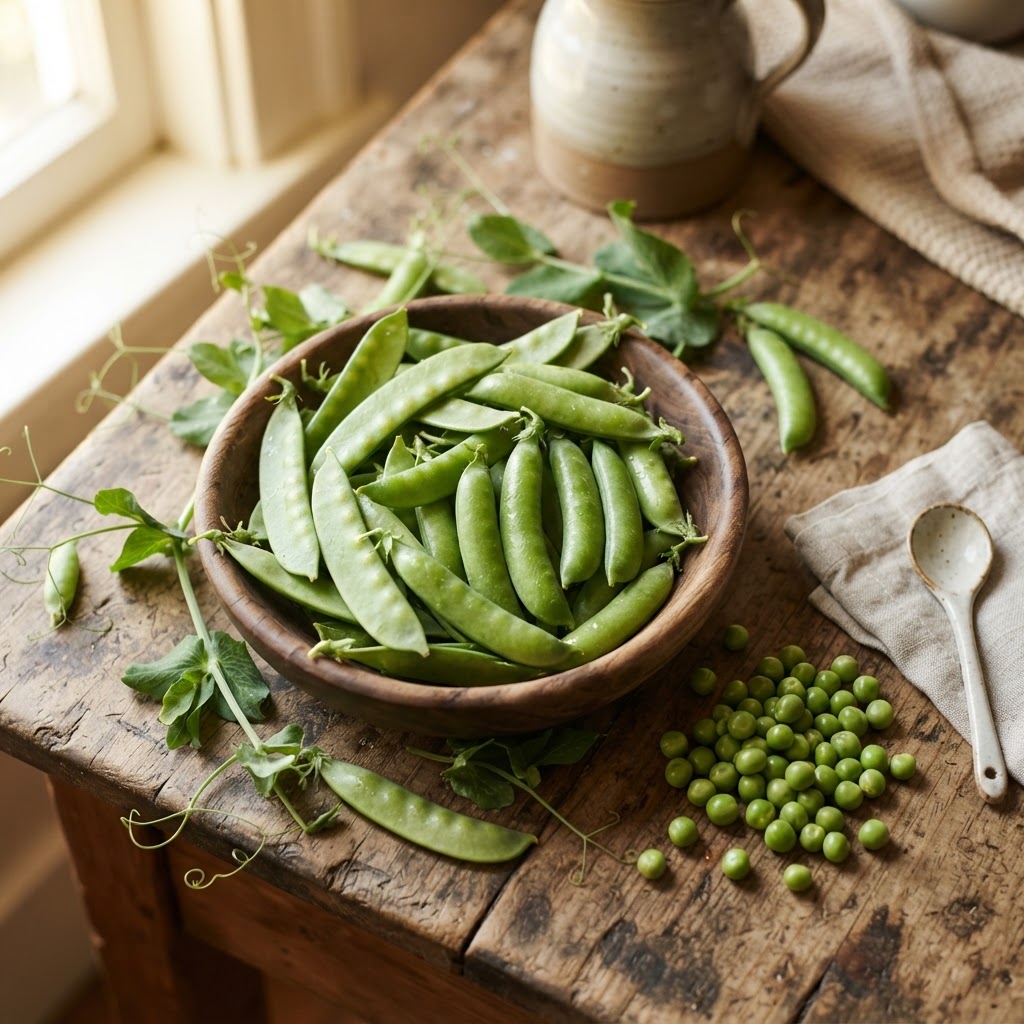
Snow peas and sugar snaps are the edible-podded cousins of the classic shelling pea — the whole pod is eaten, tender and sweet, no shelling required. Snow peas are flat and pale, with tiny immature peas inside and a delicate, crisp pod; sugar snaps are plump and rounded, a cross between snow peas and garden peas, with a satisfying crunch and the sweetness of the mature pea within.
Both are cool-season legumes that thrive in the early-spring and fall garden, maturing quickly and producing tender pods within weeks of planting. Snow peas (mangetout — "eat-all" in French) are the classic pea of Chinese and Southeast-Asian stir-fries; sugar snaps, developed in the 1970s, combine the best of snow and garden peas. Eaten raw in salads, quickly sautéed, steamed, or blanched, they are the bright, crunchy herald of spring — a fleeting, sweet pea season to be savored at its peak.
Oregon Sugar Pod (Snow)
The classic flat snow pea — large, pale-green, disease-resistant pods with tiny immature peas; mild, sweet, and crisp, the workhorse of snow-pea varieties and the home gardener's favorite.
Mammoth Melting Sugar (Snow)
A heirloom snow pea with long, broad flat pods up to 5 inches — tender, sweet, and productive; prized for stir-fries and for freezing, and a popular market variety.
Sugar Snap (Original)
The 1979 AAS-winning original snap pea — plump, round, fully edible pods with a satisfying crunch and sweet peas inside; the pea that launched the sugar-snap category.
Sugar Ann (Snap)
An early, compact sugar snap — short plants that don't need trellising and mature quickly; sweet, crisp, and ideal for small gardens and early-spring harvest.
Super Sugar Snap (Snap)
An improved, disease-resistant sugar snap — tall vines, large plump pods, and excellent flavor; the most popular snap pea for home and market gardens.
Snow Pea Shoots (Dou Miao)
Not a pod but the tender young shoots and tendrils of any pea plant — sweet, pea-flavored, and crisp; harvested as a spring delicacy in China for stir-fries and salads.
Choose snow peas with flat, pale-green, glossy pods — flexible and crisp, not limp or yellowing — and small, barely-developed peas inside; oversized pods with bulging peas are tough and stringy. Sugar snaps should be plump and bright green, firm and full with mature peas visible, and snap cleanly when bent.
Avoid pods with brown spots, slimy patches, wilting, or dry, stringy edges — all signs of age. Snow peas and sugar snaps are at their best the day they are picked; buy local, freshly harvested pods at spring farmers' markets and eat them as soon as possible.
Season: snow peas and sugar snaps are a cool-season crop — best in spring (April–June) and again in fall (September–October); imported and greenhouse pods are available year-round but lack the sweetness of fresh local peas.
Snow peas and sugar snaps are perishable and lose sweetness quickly as their sugars convert to starch. Keep them unwashed in a perforated bag in the crisper drawer of the fridge for 3–5 days; for best flavor, eat within a day or two of purchase. Do not wash until just before cooking, and keep them cool — warmth and moisture cause them to yellow and soften.
Stringing: Snap off the stem end and pull down to remove the string along the pod's seam — especially important for larger snow peas and mature sugar snaps; young, fresh pods often need no stringing at all.
Washing & trimming: Rinse under cold water, trim the stem end with a knife or by snapping, and leave the pods whole, halve them diagonally, or slice into thin julienne for salads and stir-fries.
Blanching: A brief 1–2 minute blanch in boiling salted water sets the bright color and crisps the texture before a quick sauté, stir-fry, or cold salad — the key to retaining their vivid green and snap.
Stir-Fry (Chinese)
The classic treatment for snow peas — quick stir-fry with garlic, ginger, and a splash of soy or oyster sauce; the pods stay crisp and bright, a hallmark of Chinese and East-Asian cooking.
Blanched & Tossed
Blanch 1–2 minutes, then toss with butter, olive oil, lemon, or vinaigrette — the simplest preparation that showcases the sweet, fresh flavor; ideal for salads and side dishes.
Sautéed with Garlic
Quick sauté in butter or oil with garlic and a pinch of salt — snow peas and sugar snaps cook in 3–4 minutes; the pods stay crunchy and the garlic infuses the whole dish.
Raw in Salads
Fresh, tender snow peas and sugar snaps are excellent raw — slice thinly and toss with greens, shaved Parmesan, mint, or a lemony dressing; their crunch and sweetness are unbeaten raw.
Steamed
Steam 2–3 minutes until bright green and just tender — preserves color and nutrients; a light, healthy preparation that pairs with fish, chicken, or spring dishes.
Tempura & Fried Rice
In Japan, snow peas are dipped in tempura batter and fried; in China, both snow and sugar snaps are added at the end of fried rice and noodle dishes for a final crunch.
Freezing: Blanch snow peas and sugar snaps 1–2 minutes, cool in ice water, drain, and freeze in a single layer before bagging — frozen pods keep for up to a year and retain their color and crunch for stir-fries and soups.
Pickling: Pickled snow peas are a tangy, crunchy condiment — brined with vinegar, garlic, and dill or in a sweet-and-sour Asian pickle; a traditional way to extend the spring pea harvest into summer.
Drying (Pea Shoots): While the pods don't dry well, pea shoots and leaves can be dried for tea or ground into pea-powder; mature dried peas are a separate product from the fresh edible pods.
Snow peas and sugar snaps are low in calories — about 42 calories per 100 g — and rich in fiber, vitamin C, and vitamin K, making them a light, nutrient-dense spring vegetable.
They supply folate, iron, and vitamin A, and are a good plant source of protein for a vegetable (about 3 g per 100 g); their high water content and crisp fiber make them satisfying yet light.
The edible pods are richer in fiber than shelled peas, and quick cooking preserves their heat-sensitive vitamin C — raw or lightly blanched snow peas and sugar snaps are among the most nutritious ways to eat a pea.
The sugar snap pea was bred in the 1970s by Dr. Calvin Lamborn and M.C. Parker in Idaho — a cross between a snow pea and a mutant thick-podded pea, creating the plump, edible-podded, sweet snap pea that transformed the American pea market.
Snow peas are called "mangetout" in French — literally "eat all" — because the entire pod is edible; the same name is used in English for both snow peas and sugar snaps, reflecting their shared edible-pod trait.
Peas are among the oldest cultivated crops, grown for at least 9,000 years; snow peas were developed in Asia and the Mediterranean for their edible pods, while garden peas were bred for their plump shelled seeds.
Pea shoots and tendrils (dou miao) are a celebrated spring vegetable in Chinese cuisine — the tender growing tips of any pea plant, harvested young for stir-fries and salads, with a sweet, fresh pea flavor.
Snow peas and sugar snaps are celebrated at spring pea harvests across the world:
Spring Pea Festivals
Temperate regions worldwide
🗓 April–June 2026 (spring harvest)
Across temperate climates, the first pea harvest is a spring celebration — from English 'first peas' picked in May and served simply with butter, to French petits pois alongside spring lamb, to Japanese snow-pea tempura and Chinese stir-fries celebrating the tender pods of spring.
Petit Pois & Spring Markets
France (Provence, Paris)
🗓 May–June 2026
French spring markets overflow with petit pois — tiny, tender garden peas — and sugar snaps; Provence celebrates them with Petits Pois à la Française (peas braised with lettuce and butter), a rite of the French spring table.
Asian Pea Harvest Celebrations
China, Japan, Taiwan
🗓 March–May 2026
Across East Asia, snow peas and sugar snaps are the first pods of spring — stir-fried with garlic, blanched for tempura, and added to fried rice; the tender pea shoots (dou miao) are also harvested and celebrated as a spring delicacy.
Nitrogen-fixing & soil-building: Like all peas and beans, snow peas and sugar snaps fix atmospheric nitrogen through root nodules, enriching the soil for the next crop — a cornerstone of crop rotation and sustainable temperate agriculture.
Cool-season & low-water: Peas thrive in cool weather and require less water than summer crops; they are a sustainable early-spring and fall crop that matures quickly and can be grown in small gardens, containers, and even as a winter cover crop.
Global range: Snow peas originated in Asia and the Mediterranean and are now grown worldwide in cool-season gardens; sugar snaps are a modern American development now grown globally. China is the world's largest producer, followed by India, France, and the United States.
In-Season Recipes with Snow Peas
Seasonal recipes featuring Snow Peas right now
Coming Soon
All Other Recipes with Snow Peas
Coming Soon