
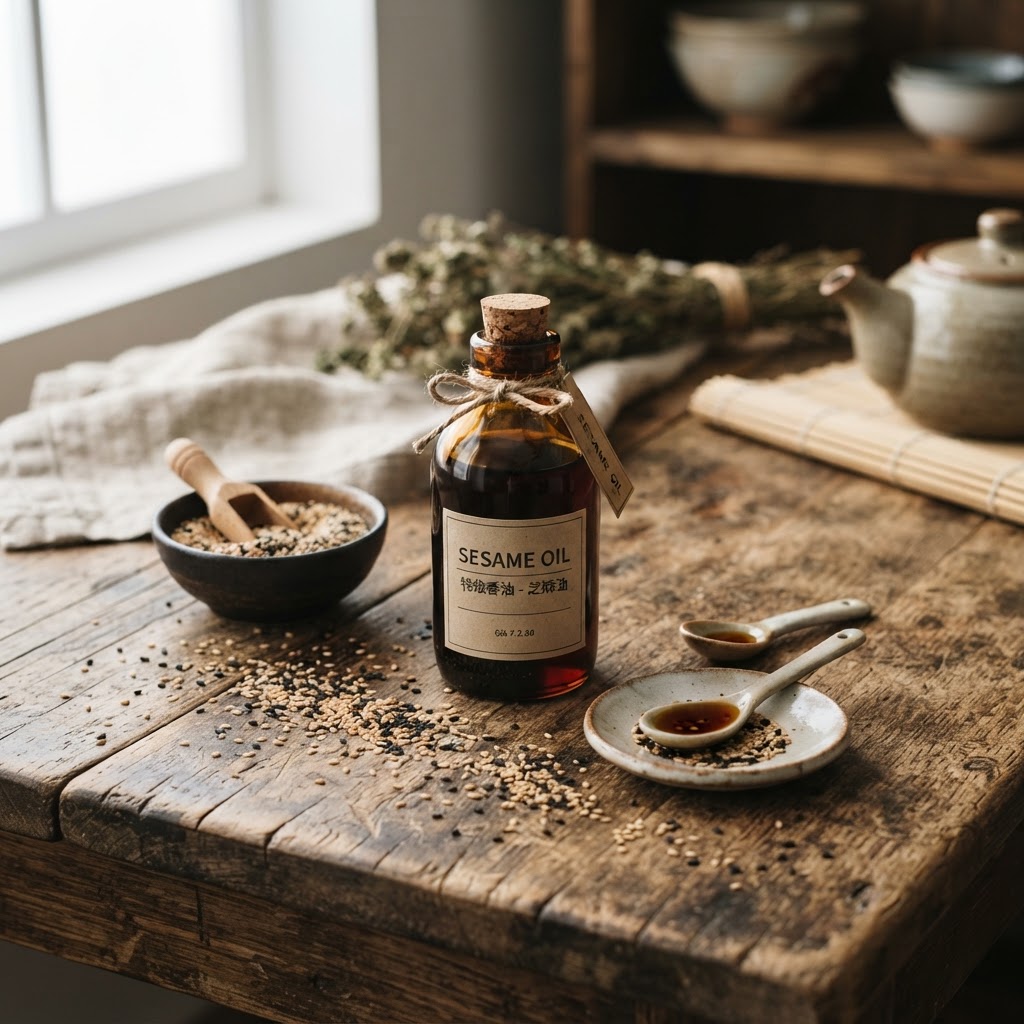
Sesame Oil
Sesame oil is pressed from sesame seeds and is a cornerstone of East Asian, South Asian, and Middle Eastern cooking. Toasted sesame oil has a deep, nutty aroma and is used as a finishing oil, while light (untoasted) sesame oil is neutral and used for frying. A little goes a long way — its flavor is intense and distinctive.
There are two main types: toasted (dark) sesame oil, made from roasted seeds, with a strong nutty aroma — used as a finishing oil, not for frying; and light (untoasted) sesame oil, pale and mild, used for sautéing and frying in Asian cooking.
For toasted sesame oil, look for a deep amber color and rich, roasted aroma. Buy in small bottles and use within a few months — the flavor fades. Cold-pressed oil is best.
Light sesame oil should be pale and neutral-smelling. Both are available at Asian markets and most supermarkets.
Sesame oil is relatively stable but should be kept in a cool, dark place and used within 6–12 months. Toasted sesame oil, with more volatile compounds, loses flavor faster — buy small bottles and use promptly.
Refrigeration extends the life of toasted sesame oil but may cloud it. Keep it sealed and away from heat and light. If it smells stale or flat, it has lost its aroma and should be replaced.
Sesame oil is a flavor powerhouse in Asian cooking.
Finishing: A few drops of toasted sesame oil over stir-fries, noodles, soups, and dumplings add a signature nutty aroma — add at the end, never heat it aggressively.
Stir-Frying: Light sesame oil is used for stir-frying in Chinese and Korean cooking; toasted oil is added at the finish for flavor.
Dressings & Sauces: The base of many Asian dressings, marinades, and dipping sauces — its flavor defines the profile.
Marinades: Sesame oil in marinades for meat and tofu adds flavor and helps carry other seasonings.
Baking: Used in some Asian sweets and breads for a nutty note.
Pickling: Sesame oil is used in Asian pickles and preserves, where its flavor and mild antimicrobial properties help preserve vegetables.
Its relative stability makes it a good medium for oil-stored condiments like chili crisp and garlic oil, traditional in Chinese cooking.
Sesame oil is rich in monounsaturated and polyunsaturated fats, including oleic and linoleic acids. It contains sesamol and sesamin — unique lignans with antioxidant and anti-inflammatory properties that help the oil resist oxidation.
A tablespoon provides about 120 calories and 14g of fat. The lignans in sesame oil are associated with heart health and may help lower blood pressure.
Toasted sesame oil is used in such small quantities that its nutritional contribution is mostly about flavor, while light sesame oil contributes meaningful fats to the diet.
Sesame is one of the oldest cultivated oilseed crops, grown for over 5,000 years. The phrase 'open sesame' from Arabian Nights refers to the way sesame pods burst open when ripe.
Sesame oil is remarkable for its stability — the sesamol and sesamin compounds make it naturally resistant to oxidation, which is why it was historically prized in warm climates before refrigeration.
In Korean cooking, sesame oil is so valued that it is often the last ingredient added to a dish, and a bottle of good sesame oil is a kitchen treasure. The oil is pressed from the seeds, and the leftover meal is used as a condiment and animal feed.
Toasted sesame oil is a key ingredient in chili crisp, the popular Chinese condiment — its nutty aroma is essential to the flavor.
Sesame is a drought-tolerant crop that grows in poor soils where other crops struggle, making it a valuable crop for arid regions. It is often grown by smallholders in Africa and Asia with minimal inputs.
The plant's deep roots help break up soil and it can be grown as a rotation crop. Choosing fair-trade and organic sesame oil supports small farmers and sustainable practices.
Because sesame oil is used in small quantities for flavor, a bottle lasts a long time, reducing waste — a little goes a long way.
Available Near You
Enter your ZIP code to find farms with sesame oil near you.
Recipes with Sesame Oil
3 recipes featuring Sesame Oil
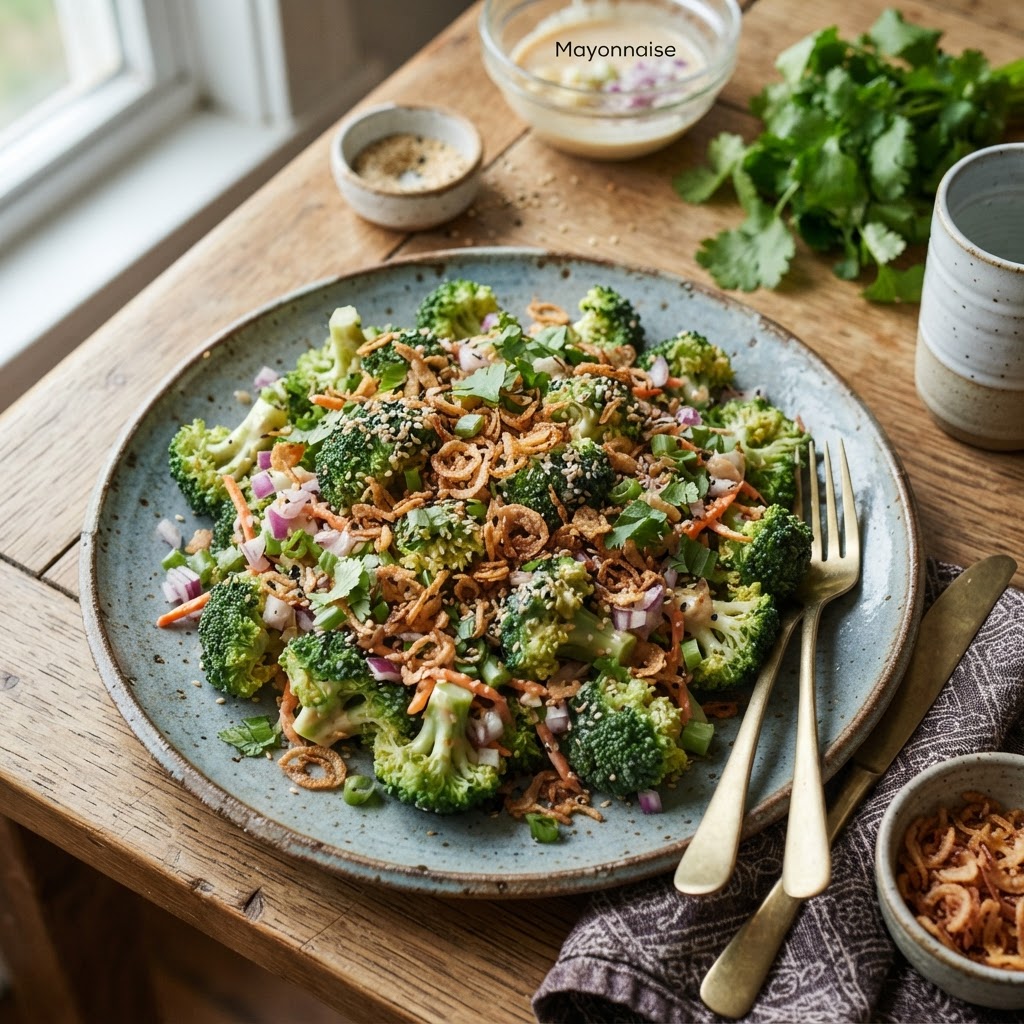
Asian Broccoli Salad with Crispy Shallots
Celebrate the crunch of the season with this vibrant broccoli salad, brought to life by a zesty ginger-sesame dressing. Topped with golden, crispy shallots, it is the perfect side for any festive gathering.
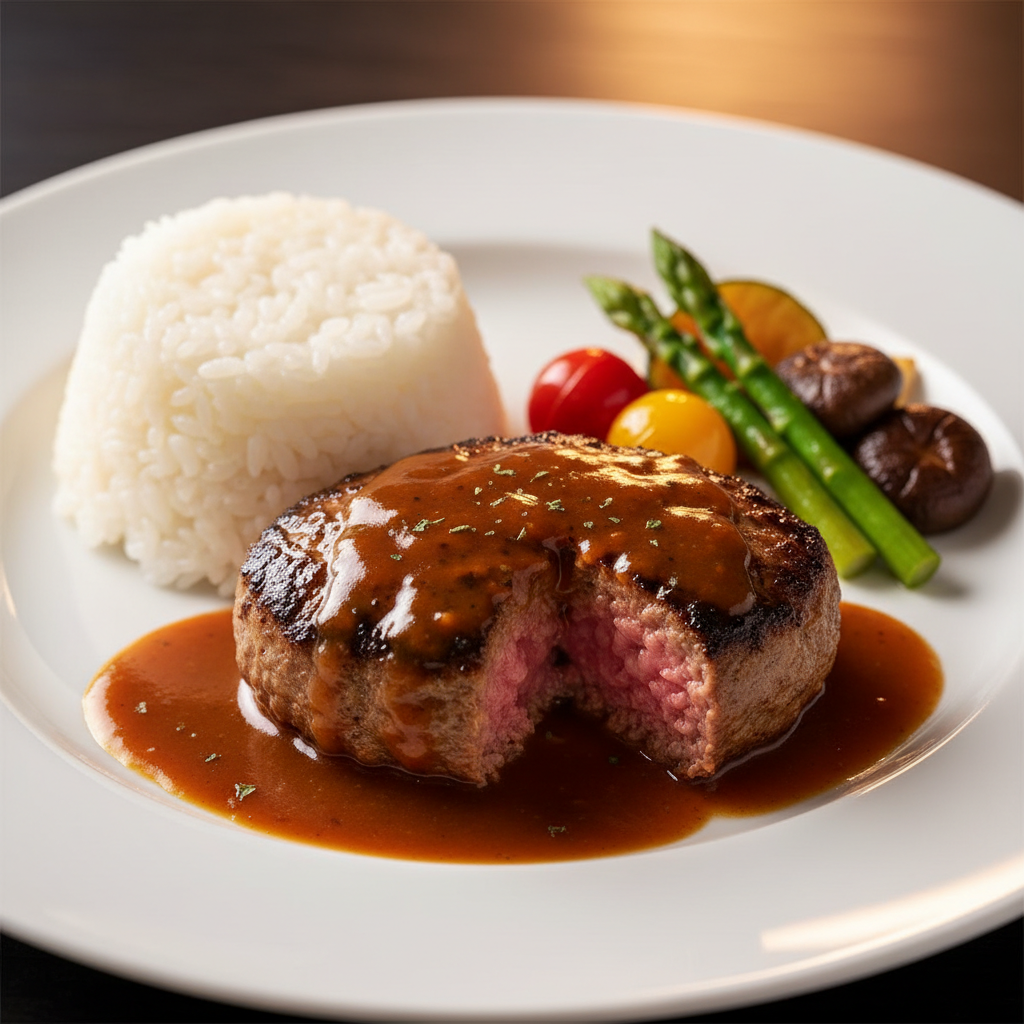
Japanese Burgers with Wasabi Ketchup
A 'burger steak' made with ground beef, pork, and panko breadcrumbs—incredibly juicy and moist. Served on a plate like a steak with rice, not in a bun.
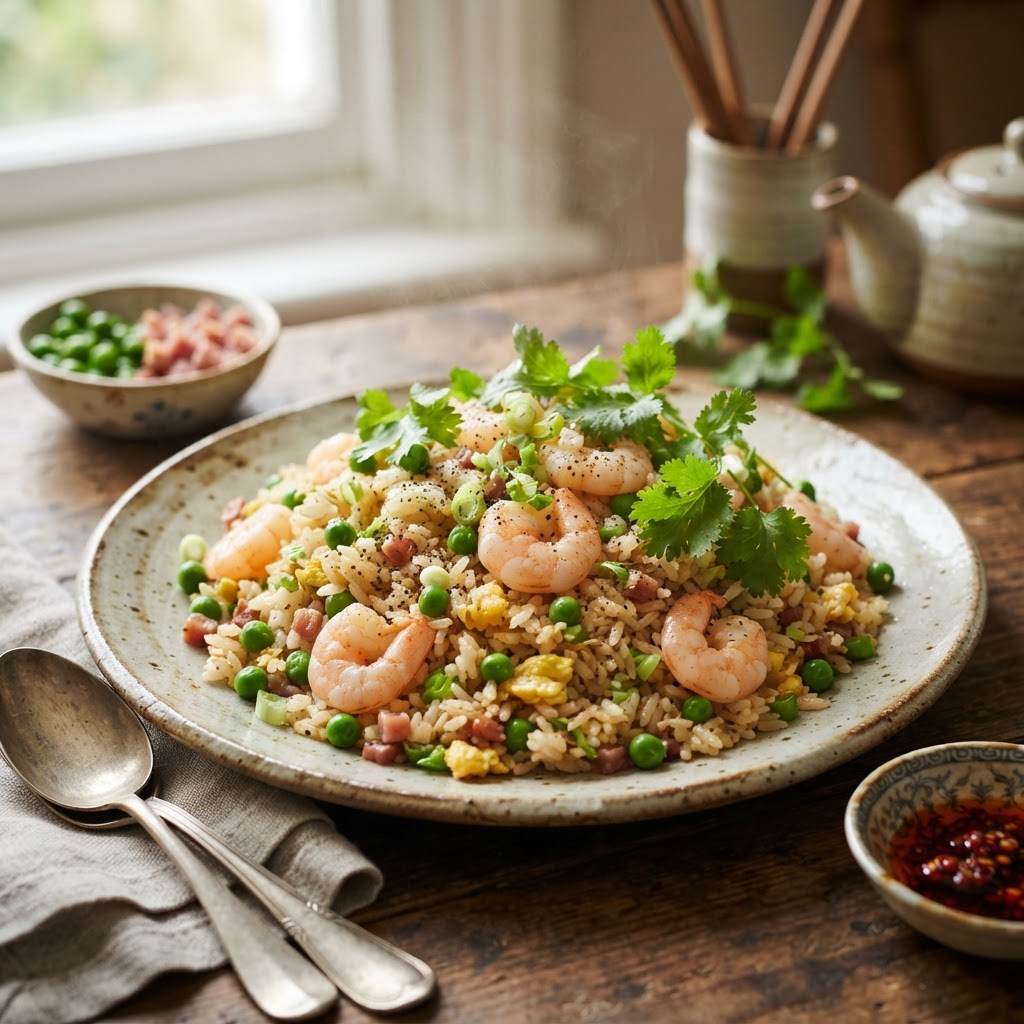
Yangzhou Fried Rice
Celebrate every season with this vibrant Yangzhou fried rice, where succulent shrimp and crisp peas dance in perfectly seasoned grains. It is a festive, savory bowl that brings pure kitchen joy to your table.