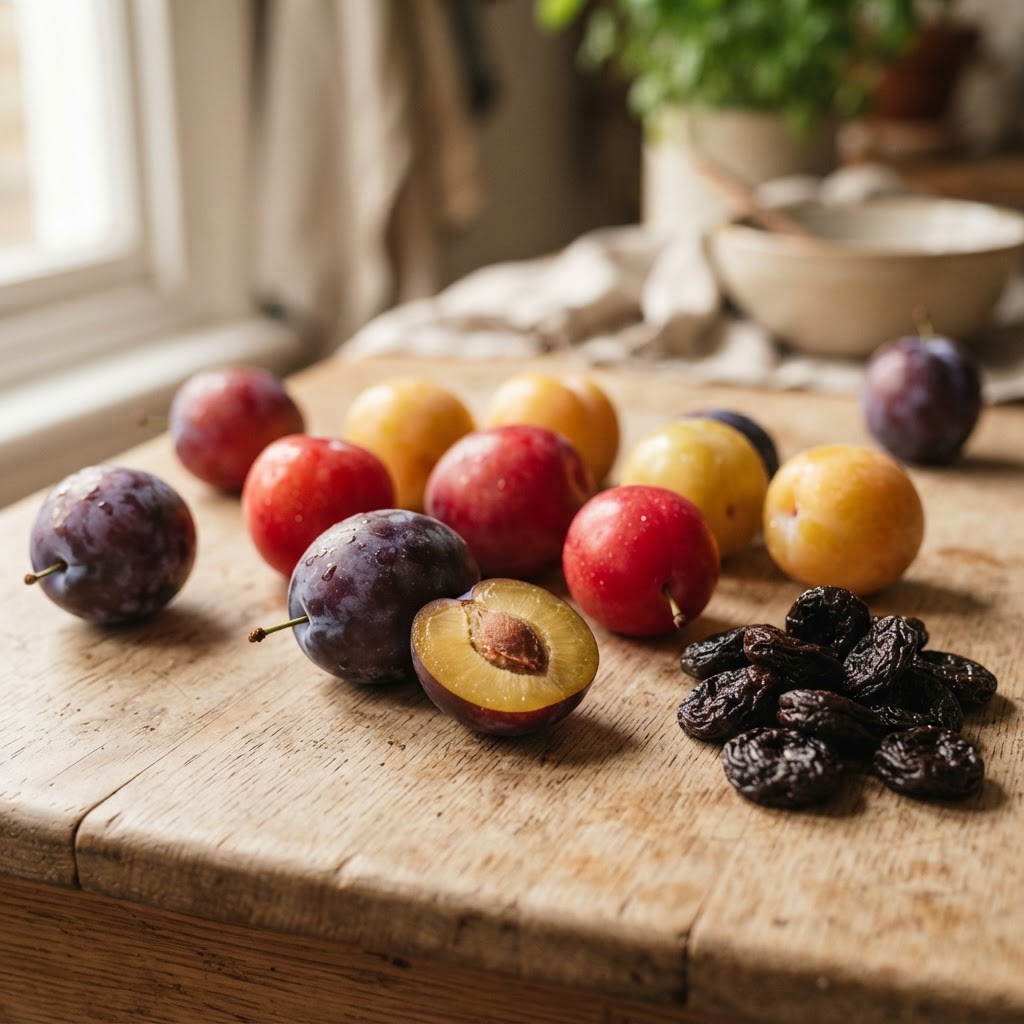
Fruit · Summer
Plums & Prunes
Prunus spp. · Family: Rosaceae
Plums are in the same genus as apricots, cherries, peaches, and almonds. They range from cherry-sized beach plums to tennis ball-sized Santa Rosas, from yellow mirabellas to deep red satsumas. Flavors span super tart to honeyed and floral. One of the oldest domesticated fruits in the world, plum stones have been found at Neolithic sites across Europe. In the 19th century, botanist Luther Burbank developed over 100 plum varieties in California — the foundation of the modern fresh plum industry. Dried plums, better known as prunes, trace their California roots to French brothers who grafted Agen prune plums with wild American plums in the mid-1800s.
Look for taut, firm skin without bruising, discoloration, or soft spots. A ripe plum yields to gentle thumb pressure. Unripe plums will ripen at home in a paper bag.
Most supermarket plums are hybrid cultivars — including Santa Rosa, Burbank, El Dorado, Redheart, and Friar — developed from crosses between European (P. domestica) and Chinese/Japanese plums (P. salicina). Most are freestone, meaning the pit separates easily from the flesh.
European plums (P. domestica) include greengage, egg plum, and prune plum — often smaller, oval, and intensely flavored. Damson and bullace are tart subspecies excellent for jams and preserves.
Store plums in the refrigerator and eat within a few days of purchase. If they still need to ripen, keep them in a paper bag at room temperature first, then move to the fridge once ripe.
Plum Torte: The classic — Marian Burros's plum torte, first published in the New York Times in 1983, is one of the most beloved American fruit desserts. A simple batter topped with halved Italian prune plums and cinnamon sugar. Make it every August.
Grilling: Halve and pit plums, brush with olive oil, and grill. Finish with honey, citrus zest, and chopped basil — or serve with Greek yogurt for a simple summer dessert.
Poaching: Poach plums in a vinegar brine with cinnamon, vanilla, and allspice for a spiced syrup that pairs beautifully with cheese, poultry, or pork.
Savory: Plum sauce is a classic pairing with duck and pork in Chinese cuisine. The tartness of plums also makes excellent chutneys for roasts and cheese boards.
Prunes: Don't overlook dried plums — they're exceptional in braised meat dishes (especially rabbit and pork), Moroccan tagines, and holiday baking.
Fresh plums have a short window — preserve them to enjoy through the cold months:
- Chutney — excellent with cheese plates or roast meats
- Plum jam — a classic holiday gift
- Plum catsup — for glazing grilled meats
- Plum sauce — keep in the fridge or process in jars
- Slivovitz (plum schnapps) — the classic Eastern European plum brandy, for when winter sets in
Fresh plums are a good source of Vitamin C. Dried plums (prunes) are a good source of fiber and have been studied for their potential to increase bone density. Both contain sorbitol, a natural sugar alcohol with a mild laxative effect.
Note: Prunes are high in oxalates, which may be a concern for those with kidney or gallbladder conditions.
Plums were among the first domesticated fruits in Central Asia and Europe — plum stones from wild species have been found at Neolithic sites in Ukraine, Germany, Switzerland, Austria, and Cyprus.
In the Middle Ages, the word "plum" could refer to various dried fruits — including raisins and currants.
In 2000, the FDA granted the California Prune Board permission to rebrand as the California Dried Plum Board — swapping "prune" for "dried plum" on all packaging.
By the end of the 19th century, there were 85 dried plum packing plants in California. By 1932, California commercially produced prune juice.
Seasonality: Plum season begins as early as May and runs well into fall, depending on variety and region. July and August are peak season in most of the US. Prune plums are typically harvested and dried in August.
Geography: California dominates US production, with Oregon, Washington, Idaho, and Michigan also significant producers. China is the world leader in plum production. During the off-season, the US imports plums almost exclusively from Chile.
Wild Plums: Several wild plum species are native to North America — including the beach plum (P. maritima) along the Atlantic coast, the Pacific plum (P. subcordata) in southern Oregon and Northern California, and the American plum (P. americana) across the central and eastern US.
Pesticides: Conventional plums ranked 23rd of 46 produce types in EWG's 2023 pesticide analysis. Choose organic if pesticide exposure is a concern.
In-Season Recipes with Plum
Seasonal recipes featuring Plum right now
Coming Soon
All Other Recipes with Plum
Coming Soon