Pineapple
Tropical, tangy, and sweet — the only source of bromelain, an enzyme that tenderizes meat and makes gelatin tricky.
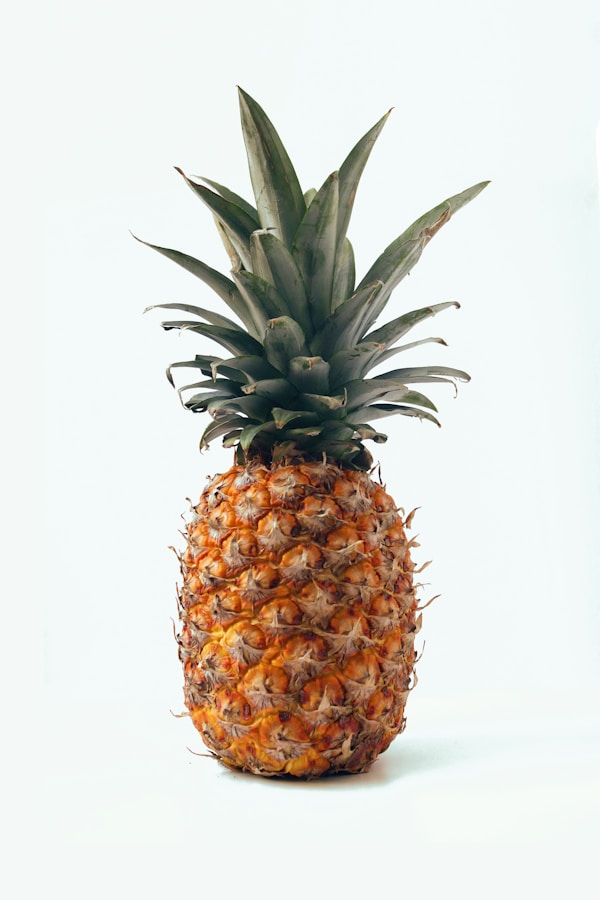
A ripe pineapple smells sweet and fragrant at the base — this is the most reliable indicator. The skin should be golden yellow (not entirely green), and the fruit should yield slightly when squeezed. Pull a center crown leaf — it should release with gentle resistance.
Important: pineapples do not ripen after harvest. They only soften and ferment. Buy pineapples that are already ripe. The myth that you can ripen a pineapple upside down only redistributes the juice — it does not increase sweetness.
Bromelain is a mixture of enzymes found only in pineapple that digest protein. This creates several practical implications: fresh pineapple cannot be used in gelatin-set desserts (Jell-O, panna cotta) because it prevents the gel from setting. Use canned pineapple instead — heat processing deactivates the enzyme.
The same enzyme makes pineapple an excellent meat tenderizer in marinades. However, limit marination to 30–60 minutes — longer breaks down protein to the point of mushiness.
Store whole ripe pineapple at room temperature for up to 2 days, or refrigerate whole for up to 5 days. Cut pineapple should be refrigerated in an airtight container and used within 5 days.
Freezing: Cut into chunks, freeze on a sheet pan, then bag. Excellent for smoothies and cooking. The freezing neutralizes bromelain, making frozen pineapple safe for use in gelatin desserts.
Grilling: Thick rings or spears brushed with oil on a hot grill until caramelized — the heat neutralizes bromelain and concentrates sugars dramatically. Extraordinary on its own, with pork, in tacos, or over ice cream.
Salsa & Relish: Fresh diced pineapple with lime, jalapeño, red onion, and cilantro — a classic pairing with fish tacos, shrimp, and grilled chicken. The bromelain tenderizes anything it touches.
Al Pastor: The iconic Mexican taco — pork marinated in chiles and spices, cooked on a vertical spit with fresh pineapple slices. The bromelain tenderizes the pork; the dripping juice caramelizes the exterior.
Juice & Cocktails: Fresh-pressed pineapple juice is incomparably better than canned. Essential in piña coladas, tiki cocktails, and tropical drinks.
Canning: Pineapple in juice or syrup — the heat processing deactivates bromelain, making canned pineapple safe for gelatin desserts. Commercial canned pineapple is very good quality.
Freezing: Cube and freeze — excellent for smoothies. The freezing also neutralizes bromelain.
Dehydrating: Thin rings or chunks dehydrated until chewy — intensely sweet and concentrated. Excellent in trail mix.
Fermentation: Tepache is a traditional Mexican fermented drink made from pineapple rinds and brown sugar — mildly alcoholic, tangy, and refreshing.
Pineapple is exceptionally rich in vitamin C — one cup provides 131% of the daily recommended intake. It is also a good source of manganese (76% DV), which is important for bone health and metabolism.
Bromelain — the unique enzyme complex in pineapple — has demonstrated anti-inflammatory properties in multiple studies. It is used medicinally as a digestive enzyme supplement and has shown promise in reducing post-surgical inflammation.
Pineapple also provides thiamine (B1), B6, and folate. The combination of high vitamin C and bromelain makes pineapple particularly effective at supporting immune function and reducing inflammatory markers.
Pineapples are bromeliads — the only commercially important fruit in the entire bromeliad family. The plants are native to South America and were spread throughout the tropics by indigenous peoples long before European contact.
When Christopher Columbus encountered pineapples in Guadeloupe in 1493, he called them 'piña de Indes' (pine of the Indies) for their resemblance to a pine cone. Pineapples became a symbol of wealth and hospitality in colonial Europe — they were so rare and expensive that they were rented by the day for display at banquets before actually eating them.
A pineapple plant produces only one fruit per growing cycle, which takes 18–24 months. Each 'eye' on the pineapple surface is an individual flower — a pineapple is actually a coalesced cluster of 100–200 individual fruitlets fused together.
Hawaii was the world's largest pineapple producer through the mid-20th century but the industry has largely moved to lower-cost tropical countries: Costa Rica, Philippines, Brazil, Thailand, and Indonesia now dominate production.
Dole and Del Monte operate large-scale industrial pineapple operations in these regions. Labor conditions and environmental practices vary significantly — fair trade certification helps ensure better outcomes for workers and farmers.
Pineapple production generates enormous amounts of waste — leaves, crowns, stems, and cores constitute 50–75% of the plant. Innovative uses include pineapple leather (Piñatex), bioethanol production, and animal feed. Buying whole pineapples and using the core reduces food waste.
Available Near You
Enter your ZIP code to find farms with pineapple near you.