Legumes, Beans & Nuts · All Seasons
Pine Nuts
Pinus species · Also: Pignoli, Piñón, Cedar Nuts, Chilgoza
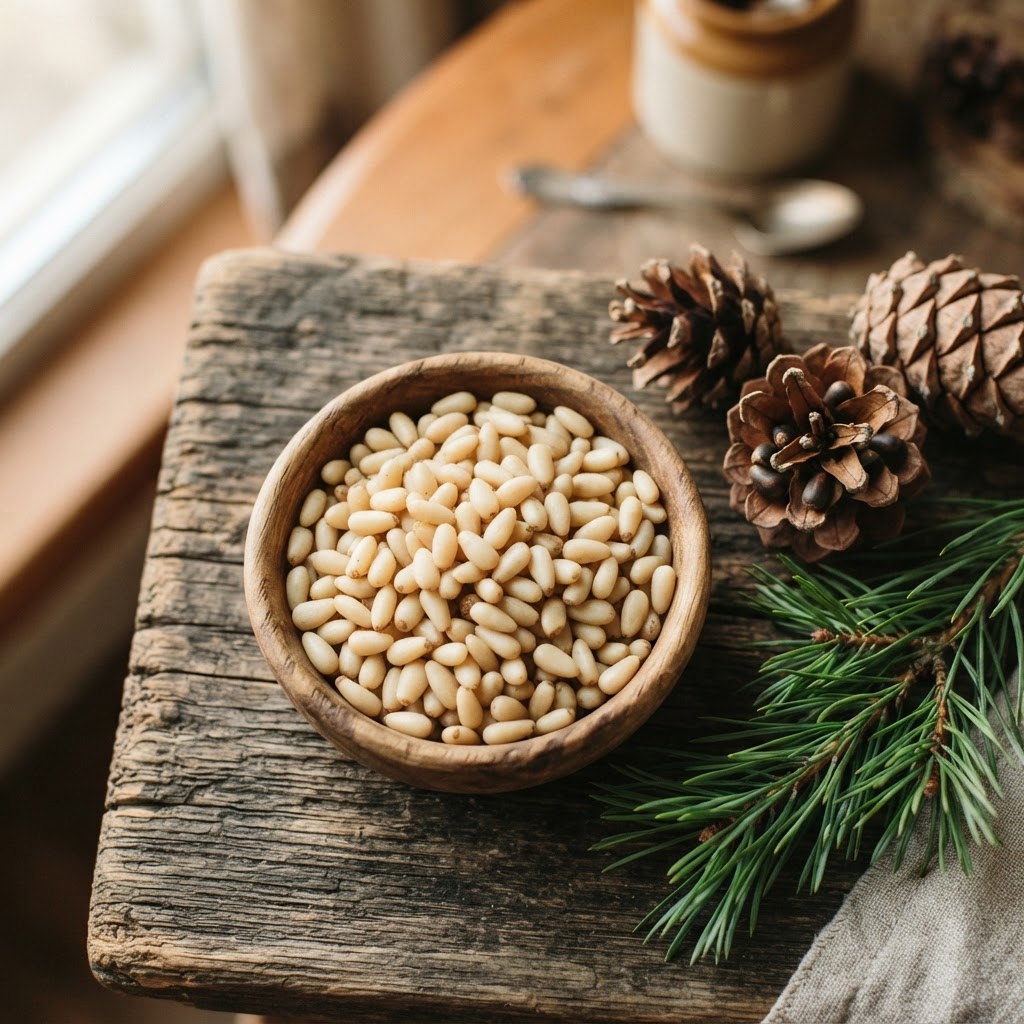
Pine nuts are the edible seeds of pine trees, tucked inside the tough scales of pine cones — small, ivory teardrops with a soft, buttery texture and a delicate resinous sweetness prized by cooks since antiquity. Slow to form and laborious to harvest, they are among the most expensive nuts in the world.
Europe's Mediterranean stone pine yields the classic "pignoli" of Italian pesto, the crunchy topping for pine-nut cookies and cakes, and the filling for Italian and Middle-Eastern sweets. The Korean pine supplies the large, soft pine nuts of East Asian cooking and the Chilgoza pine of the Himalayas is a treasured crop of northern India. In the American Southwest, the wild piñon pine nut is an Indigenous staple gathered for millennia. Toasted, ground, or eaten raw, pine nuts bring a creamy, resinous richness that makes them one of cooking's great luxuries.
Mediterranean Stone Pine (P. pinea)
The classic European pine nut — the pignoli of Italian pesto, cookies, and tarts; long, cream-colored, and buttery with a faint resinous sweetness. Grown mainly in Italy, Spain, and Portugal.
Korean Pine (P. koraiensis)
The large, soft pine nut of East Asian cooking — used in Korean, Chinese, and Japanese dishes, garnishing rice cakes and porridge; the most-traded pine nut worldwide.
Chilgoza Pine (P. gerardiana)
The prized pine nut of the Himalayas — long, slim, and richly flavored, harvested wild in northern India, Pakistan, and Afghanistan as a traditional winter cash crop.
Piñon / Pinyon (P. edulis, P. monophylla)
The wild pine nut of the American Southwest, gathered by Indigenous peoples for millennia — small, rich, and intensely flavored, a sacred autumn harvest of New Mexico, Nevada, and Arizona.
Siberian Pine (P. sibirica)
A cold-climate pine nut from Russia and Siberia — small and delicate, eaten roasted and pressed for pine-nut oil, a staple of Siberian foraging.
Mexican Stone Pine (P. cembroides)
A smaller piñon of Mexico and the U.S. Southwest — harvested wild and sold in local markets, one of several American pinyon pines that feed the Southwest.
Pine nuts ripen inside cones over 18–36 months, and most species drop the cones or release their seeds in late summer through autumn. Wild piñon harvesters gather unopened cones and dry them in the sun or kiln until the scales open to reveal the hard-shelled seeds inside, which must then be cracked by hand or machine.
Buy pine nuts that look plump, pale ivory, and clean, with a fresh, faintly sweet smell; avoid any with a dusty surface, dark spots, or a painty, rancid aroma — pine nuts spoil fast because of their high oil content.
For the highest quality, buy Italian or Spanish pine nuts (pignoli/piñón) for Mediterranean dishes, Korean or Chinese pine nuts for East Asian cooking, and wild American piñon in the Southwest when in season — each has its own size and flavour.
Pine nuts turn rancid faster than almost any other nut — their high oil content spoils in weeks at room temperature. Keep shelled pine nuts in an airtight container in the fridge for up to 3 months, or in the freezer for up to 9 months. Unshelled pine nuts keep for several months in a cool, dry place, and toasted pine nuts should be used within a few days or frozen immediately.
Harvesting: Collect unopened pine cones in late summer or fall, wearing gloves to avoid sticky sap; dry the cones in the sun or a warm oven until the scales open, then shake out the hard-shelled seeds.
Cracking: Pine-nut shells are thin but tough — crack them gently with a nutcracker or between two boards, or roll with a rolling pin for small piñon; commercial pine nuts are pre-shelled for convenience.
Toasting: Toast shelled pine nuts in a dry pan over medium heat for 3–5 minutes, stirring constantly, until golden and fragrant — toasting deepens their buttery sweetness and is worth doing for almost any recipe.
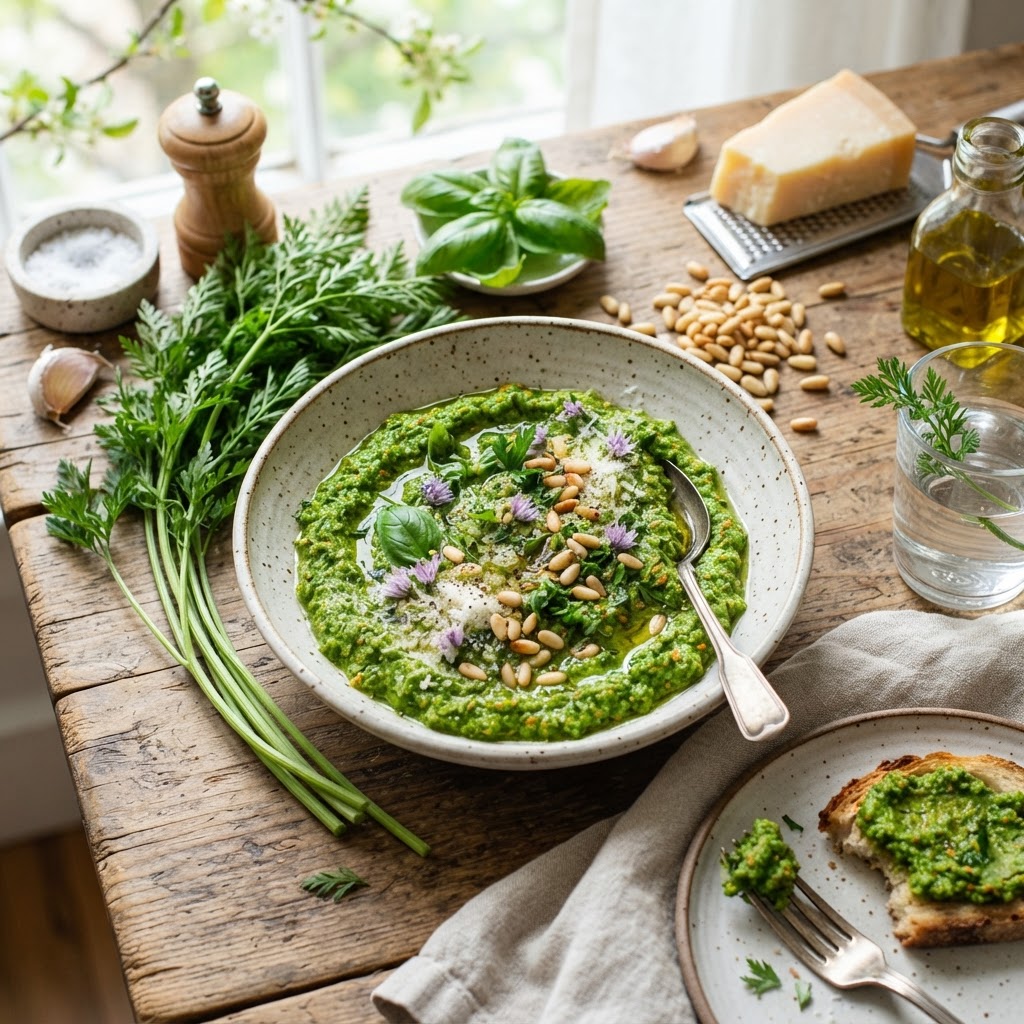
Pesto Genovese
The soul of Italian pesto — basil, garlic, olive oil, parmesan, and toasted pignoli pounded in a mortar; pine nuts are inseparable from the dish that made them famous.
Pignoli Cookies
A classic Italian-American cookie — a soft almond-paste dough rolled in pine nuts and baked golden; a staple of Italian bakeries, especially at Christmas.
Pine-Nut Tart / Torta della Nonna
An Italian custard tart topped with toasted pine nuts — 'grandmother's cake,' a beloved dessert of Tuscany and a showcase for the buttery nut.
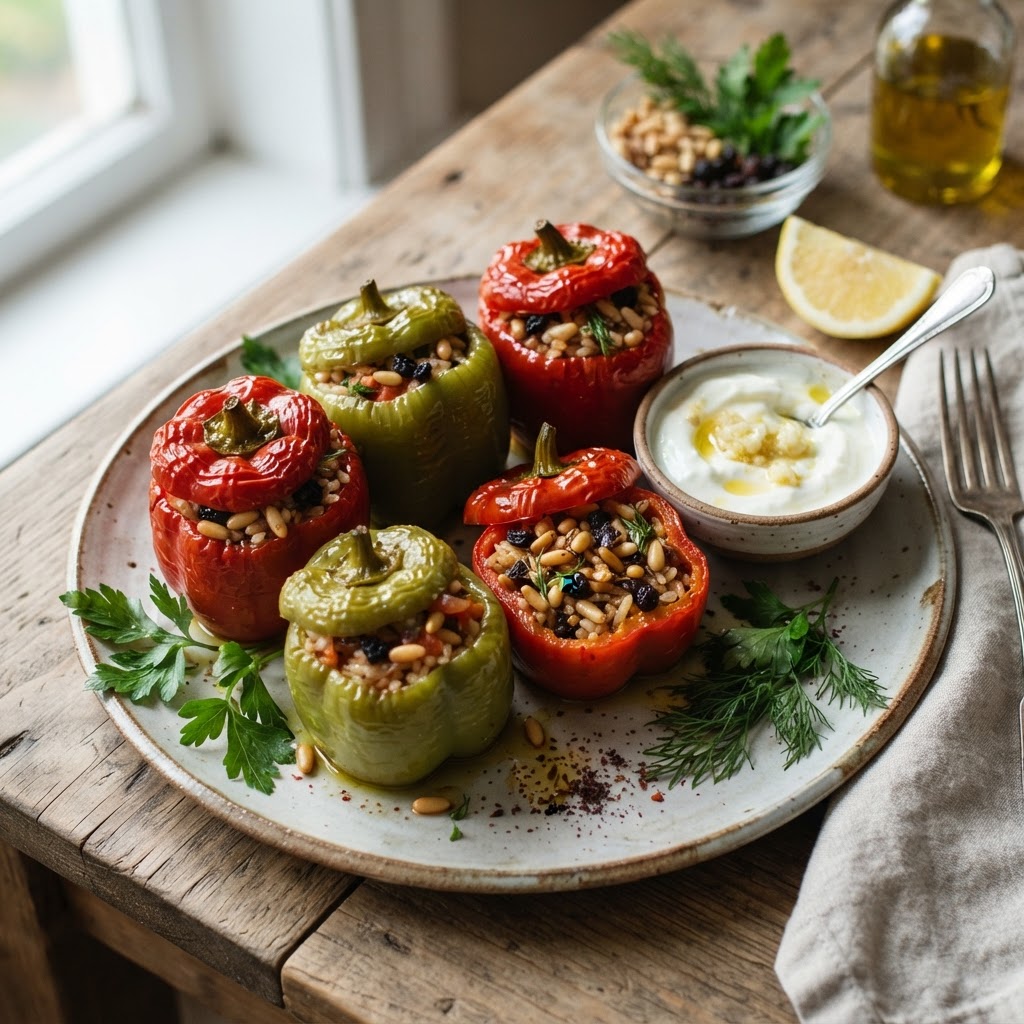
Middle-Eastern Rice & Stuffing
Toasted pine nuts scattered over rice pilafs, couscous, and stuffings throughout the Levant and Turkey — a signature garnish of the Eastern Mediterranean.
Korean Pine-Nut Porridge (Jatjuk)
A creamy Korean porridge of ground pine nuts and rice — a delicate, restorative comfort food served to the ill and the esteemed, a Korean court cuisine classic.
Toasted & Salted
Roast pine nuts in butter and salt for the simplest luxury snack — eaten by the handful or scattered over salads, roasted vegetables, and pasta.
Drying: Pine nuts must be fully dried (cured) before storage to prevent mould — spread shelled nuts in a thin layer in a warm, dry spot for several days until no moisture remains.
Freezing: Fully dried pine nuts keep best frozen — up to 9 months with little loss of flavour, the safest way to store their high-oil kernels.
In-shell storage: If kept in the shell, pine nuts store far longer than shelled — a cool, dry cupboard will keep them for months until you are ready to crack and use them.
Pine nuts are high in fat — about 68 g per 100 g, mostly heart-healthy unsaturated oils — and provide around 14 g of protein and a good amount of fiber, making them a nutrient-dense, energy-rich food.
They are an excellent source of vitamin E, vitamin K, magnesium, and iron, and one of the richest nut sources of pinolenic acid, a fatty acid studied for appetite-suppressing effects.
Pine nuts are rich in antioxidants and plant sterols, and their oil is pressed as a gourmet cooking oil in Russia and Siberia, prized for its delicate flavour and heart-health benefits.
Pine nuts take 18–36 months to mature inside their cones — one of the longest ripening periods of any nut, which is part of why they are so expensive and so deeply woven into autumn harvest traditions.
A phenomenon called "pine mouth" affects some people: 1–3 days after eating certain species (mostly Chinese P. armandii), a bitter, metallic taste lingers for up to two weeks; it is harmless but striking, and the reason many cooks buy only European or American pine nuts.
The piñon pine is the state nut of Nevada and a sacred tree of the Indigenous Southwest — piñon harvests of autumn are still communal events, and wild pine nuts from the pinyon are among the most deeply traditional foods of North America.
Pine nuts were eaten in Roman times, and Apicius includes them in recipes — they have been a luxury of Mediterranean cooking for over two thousand years, scattered over honeyed desserts and ground into sauces.
Pine nuts are celebrated at autumn harvests across three continents:
Festa del Pignolo
Northern Italy (Alps & Dolomites)
🗓 September–October 2026 (annual harvest)
In the Alpine forests of Italy, autumn is pine-nut harvest season — families gather the cones of the stone pine, and local festivals celebrate with pesto, pine-nut cakes, and the precious harvest of pignoli.
Piñon Harvest Season
Southwestern United States (New Mexico, Nevada, Arizona)
🗓 September–November 2026
The piñon pine nut is a sacred autumn harvest of Indigenous peoples of the Southwest — gathered from wild pinyon pines for thousands of years, roasted and eaten at community gatherings and tribal celebrations.
Castelluccio Pine Nut Fairs
Soria & Castilla y León, Spain
🗓 October–November 2026
Spain's stone-pine forests produce the prized piñón, celebrated at autumn village fairs with pine-nut turrones, pestiños, and the traditional harvest of the large, sweet Spanish pine nut.
Wild & slow-growing: Most pine nuts are still gathered from wild or semi-wild forests — the trees take decades to bear and the cones ripen over years, making pine nuts one of the least "industrial" and most forest-dependent of all nuts.
Forest conservation: Sustainable pine-nut harvesting supports the protection of pine forests from logging — the living trees yield for centuries, so communities that harvest nuts have a strong incentive to keep forests standing, making pine nuts a forest-conservation crop.
Global range: Italy, Spain, and Portugal produce the Mediterranean pignoli; China and Korea supply most of the world's pine nuts from Korean pine; the U.S. Southwest and Mexico produce wild piñon; Russia and the Himalayas supply Siberian and Chilgoza pine nuts — a truly global forest crop.
In-Season Recipes with Pine Nuts
Seasonal recipes featuring Pine Nuts right now
All Other Recipes with Pine Nuts
1 recipe featuring Pine Nuts