
Grains & Seeds · Summer & Fall
Pine Nuts
Pinus pinea, Pinus edulis, Pinus koraiensis · Also: Pignoli, Piñón, Pinhão, Indian Nuts, Cedar Nuts
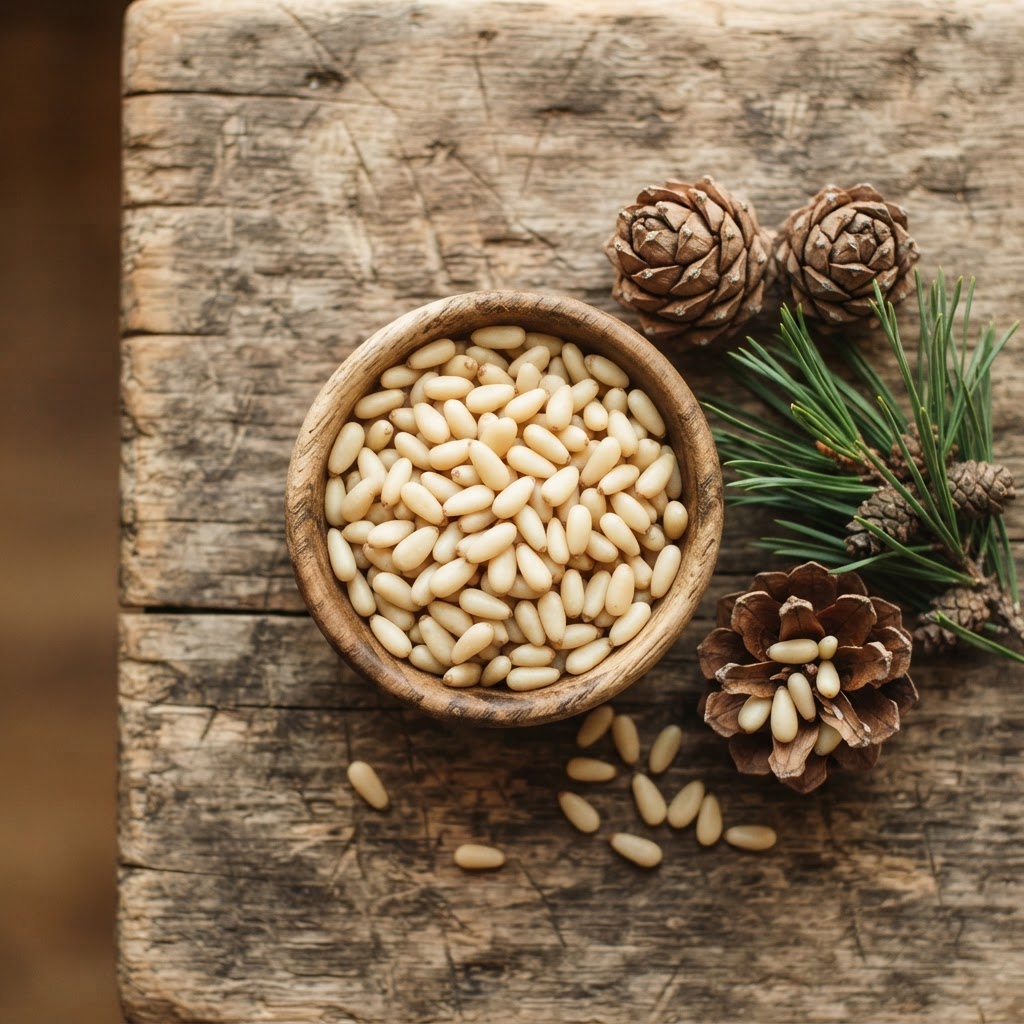
Pine nuts are the edible seeds of certain pine trees — one of the oldest human foods, gathered wild since Paleolithic times and still harvested by hand from pine cones in forests across the Mediterranean, the American Southwest, Korea, and the Himalayas. Each pine nut is a tiny ivory teardrop, the heart of the cone, freed by heat and patience and worth far more than its weight in most grains — among the most laborious and expensive of all foods to bring to table.
The flavor is unique: buttery, resinous, and delicately sweet, with a faint piney perfume that no other nut has; toasted, pine nuts deepen to a golden, aromatic richness that lifts everything it touches. They are the soul of Italian pesto, the crunch of Middle Eastern pilafs and kibbeh, the soft heart of pignoli cookies and Catalan panellets, and the creamy base of Korean pine nut porridge. The piñon harvest of the American Southwest is one of the oldest continuous food traditions in North America, and the Mediterranean stone pine has fed the people of its coast since Rome and before. A small handful of pine nuts can transform a dish — an ancient, wild, luxury food now grown and gathered worldwide.
Mediterranean Stone Pine (Pinoli)
Pinus pinea — the classic Italian pignoli, a long, ivory, teardrop-shaped nut cultivated in Italy, Spain, and Portugal since Roman times; the nut of pesto alla genovese, pignoli cookies, and Mediterranean pilafs; the most prized and expensive of the pine nuts.
Piñon (Colorado Pine Nut)
Pinus edulis — the small, round, rich pine nut of the American Southwest, gathered wild by Native peoples for thousands of years; the 'Indian nut' of the Great Basin, with a deeper, more resinous flavor than Mediterranean pine nuts; harvested from wild piñon-juniper forests.
Korean Pine Nut
Pinus koraiensis — the large, plump, sweet pine nut of Korea, northeastern China, and Russia; the nut of Korean juk (pine nut porridge), traditional sweets, and medicinal dishes; the largest of the commonly traded pine nuts.
Chilgoza Pine Nut
Pinus gerardiana — the long, slender pine nut of the Himalayas (Pakistan, India, Afghanistan), gathered from wild high-altitude forests; a prized ingredient in North Indian and Pakistani sweets, pilafs, and curries, and an important cash crop for mountain communities.
Siberian Pine Nut (Cedar Nut)
Pinus sibirica — the small pine nut of Siberian Russia, harvested from the vast Siberian 'cedar' (stone pine) forests; sold as 'cedar nuts' in Russian markets and used in Russian sweets, baking, and traditional foods; similar in size and flavor to the Korean pine nut.
Other Regional Pines
Many other pines produce edible nuts — the Mexican piñon, the singleleaf piñon of the Great Basin, the Coulter pine of California, the Mexican stone pine — each gathered locally by Indigenous and rural communities, though only a few species reach international markets.
Pine nuts are sold shelled and raw, toasted, or in their cones; the most common commercial types are the Mediterranean stone pine (Italy, Spain, Portugal), the Korean pine (China, Korea), and the piñon (American Southwest). For pesto and Italian dishes, buy Mediterranean pignoli — long, ivory, and creamy; for Southwest recipes, look for piñon, smaller and rounder with a deeper resinous flavor.
Look for plump, pale ivory nuts with no dark spots or rancid smell — pine nuts go rancid quickly because of their high oil content; buy from shops with good turnover and keep them cold. Buy in small quantities and use within a few months; the high price reflects the laborious hand harvest, not overpricing.
Season: pine nuts ripen in late summer to fall, but most pine species only produce a heavy crop every 3–7 years (masting), so the harvest is irregular and precious; the dried, shelled nuts are available year-round.
Pine nuts are high in oil and go rancid quickly — store shelled nuts in an airtight container in the refrigerator for up to 3 months, or in the freezer for up to 6–9 months; at room temperature they will spoil in a few weeks. Toasted pine nuts should be used within a few days or frozen. Pine nuts in the shell keep longer — up to a year in a cool, dry place — but must be cracked by hand, which is part of the pleasure and the price.
Harvesting: Pine nuts are gathered by hand from green pine cones in late summer to autumn; the cones are picked or knocked from the tree with long sticks, then heated to open their scales and release the seeds, which are still enclosed in a hard shell — a laborious process that has not been mechanized for most pine species.
Shelling: Each pine nut is enclosed in a hard, dark shell that must be cracked off by hand or machine; the soft ivory nut inside is what we eat. The small size and hard shell make pine nuts one of the most labor-intensive foods to process, which is the main reason for their high price.
Toasting: Raw pine nuts are lightly toasted in a dry pan to deepen their flavor and bring out their buttery, resinous sweetness — a step that transforms them from soft and bland to golden and aromatic; watch carefully, as they burn in seconds.
Pesto alla Genovese
The classic Italian use — raw pine nuts pounded in a mortar with basil, garlic, Parmigiano, pecorino, and olive oil into the green sauce of Genoa; the buttery pine nuts give pesto its creamy body, and only Mediterranean pine nuts are traditional.
Pilafs, Couscous & Middle Eastern Dishes
Toasted pine nuts sprinkled over rice pilafs, couscous, kibbeh, falafel, and stuffed vegetables (dolma); the soft crunch and buttery flavor are central to Lebanese, Syrian, Turkish, and Persian cooking — pine nuts in meat, in rice, in bulgur.
Pignoli Cookies & Panellets
Italian pignoli cookies — almond paste balls rolled in pine nuts and baked until golden; Catalan panellets for All Saints' Day; pine nuts in tarts, cakes, and marzipan across the Mediterranean; the soft, sweet use of the nut in traditional holiday baking.
Korean Pine Nut Porridge (Juk)
Korean pine nuts ground and simmered with rice into a creamy, nourishing juk (porridge); a medicinal and celebration food in Korea, given to the sick, the old, and at celebrations — the large, sweet Korean pine nut is the traditional choice.
Salads, Pasta & Roasted Vegetables
Toasted pine nuts scattered over salads (especially with goat cheese and beets), over roasted squash and Brussels sprouts, and over pasta; a small handful lifts a simple dish with their buttery crunch and piney aroma.
Sweets, Cakes & Marzipan
Pine nuts baked into French pignole cakes, Spanish turrón, Italian tortes, and Middle Eastern baklava; ground into marzipan and almond paste; the creamy, resinous sweetness pairs naturally with honey, sugar, and almond.
In the shell: Pine nuts in their shells keep for up to a year in a cool, dry, dark place — the hard shell protects the oily nut inside; the piñon harvest of the Southwest was historically stored in baskets and jars through the winter as a winter staple.
Shelled & frozen: Shelled pine nuts keep for months in the freezer — the cold prevents the high oil from going rancid; buy in small quantities, keep what you will use soon in the fridge, and freeze the rest.
Drying: Pine nuts are naturally dry when harvested from the cone, and need only to be fully dried before storage to prevent mold; in the shell they can be dried further in the sun or a low oven and kept through the year.
Pine nuts are rich in heart-healthy monounsaturated fats, protein, and minerals — especially magnesium, iron, zinc, and vitamin E; they are a calorie-dense, energy-rich food, which is why they sustained Indigenous peoples and mountain communities through the winter.
Pine nuts contain pinolenic acid, a fatty acid that has been studied for its appetite-suppressing effects and potential benefits for cholesterol; they also provide antioxidants and B vitamins.
A small handful of pine nuts gives a surprising amount of nutrition — protein, healthy fat, and minerals — which is why they were traditionally a winter survival food for the peoples of the Great Basin, the Apennines, and the Siberian taiga; the laborious harvest was worth it for the dense nutrition the nuts provided.
Pine nuts are one of the oldest human foods — evidence of pine nut gathering goes back tens of thousands of years; the shells are found at Paleolithic and Neolithic sites across Europe, the Mediterranean, and the American Southwest, a wild food gathered long before farming.
Pine nuts are so expensive because they are so laborious to harvest — each cone must be picked or knocked from the tree, heated to open, and the nuts individually shelled by hand or machine; many pine species produce a heavy crop only every 3–7 years, and it takes 15–25 years for a stone pine to begin producing cones.
The piñon pine is the state tree of New Mexico, and its pine nuts — 'Indian nuts' — are a sacred food of the Native peoples of the Southwest; the annual piñon harvest is a time of family gathering, ceremonies, and the roasting of the green cones over open fires.
Some people experience 'pine mouth' — a bitter, metallic taste in the mouth one to two days after eating certain pine nuts (especially some Chinese varieties), which can last for days; the cause is not fully understood, but it is temporary and harmless, and not all pine nuts cause it.
From the piñon harvest of the Southwest to Italian sagre and Korean celebrations, pine nuts are the wild, ancient seed of many cultures:
Pinyon Harvest & Great Basin Pine Nut Gatherings
Southwestern United States (Great Basin)
🗓 September–November 2026 (autumn harvest)
The piñon pine nut harvest is one of the oldest traditions of the Indigenous peoples of the Great Basin and Southwest — the Shoshone, Paiute, Hopi, and Navajo gather each autumn to harvest the green pine cones of the piñon pine, roasting them in fires and saving the tender 'Indian nuts' for winter; the harvest is a time of family gathering, song, and thanksgiving.
Sagra del Pinolo
Pienza & the Apennines, Italy
🗓 October 2026 (autumn harvest)
In the Apennine hills of Italy — where stone pines and their domesticated pine nuts (pinoli) have been cultivated since Roman times — village sagre celebrate the pine nut harvest with pesto, pignoli cookies, and castagnaccio; the pinolo is the heart of Italian pesto alla genovese and of countless traditional sweets.
Mediterranean Pine Nut Traditions
Across the Mediterranean (Spain, Portugal, Türkiye)
🗓 September–October 2026
From the stone pine forests of Spain (piñón) and Portugal (pinhão) to the çam fıstığı groves of Türkiye, the autumn pine nut harvest is marked by regional traditions — pine nuts in Catalan panellets for All Saints, in Middle Eastern pilafs and baklava, and in Spanish Christmas sweets; the Mediterranean pine nut has been a luxury ingredient for 2,000 years.
Korean & East Asian Pine Nut Traditions
Korea, China & the Himalayas
🗓 October–November 2026
In Korea, the Korean pine (Pinus koraiensis) produces the large, sweet pine nuts used in juk (porridge), cookies, and traditional sweets, and given as gifts at the autumn harvest festival Chuseok; across East Asia and the Himalayas, pine nuts are gathered from the Korean pine and the chilgoza pine, prized in traditional medicine and cuisine.
Wild harvest: Most pine nuts are still gathered from wild or semi-wild forests rather than plantations — the piñon of the American Southwest, the chilgoza of the Himalayas, the cedar nuts of Siberia; this makes them a low-input, low-impact food but also one of the most labor-intensive and uncertain harvests in agriculture.
Forest conservation: Protecting the pine forests that produce pine nuts protects entire ecosystems — the piñon-juniper forests of the Southwest, the stone pine forests of the Mediterranean, the Siberian taiga; sustainable pine nut harvesting gives economic value to standing forests, which protects them from logging.
Slow-growing & masting: Pine trees take decades to begin producing cones and produce heavy crops only every few years (masting), so pine nuts cannot be rapidly scaled like annual grains; this natural limit protects the forests from overexploitation but also makes pine nuts permanently expensive.
Global range: Pine nuts are gathered from pine forests across the Mediterranean (stone pine), the American Southwest (piñon), Korea and northeastern China (Korean pine), the Himalayas (chilgoza), and Siberia (cedar pine) — one of the most widely gathered wild foods on Earth, and a key seasonal food for many forest and mountain peoples.
Available Near You
Enter your ZIP code to find farms with pine nuts near you.
Recipes with Pine Nuts
2 recipes featuring Pine Nuts
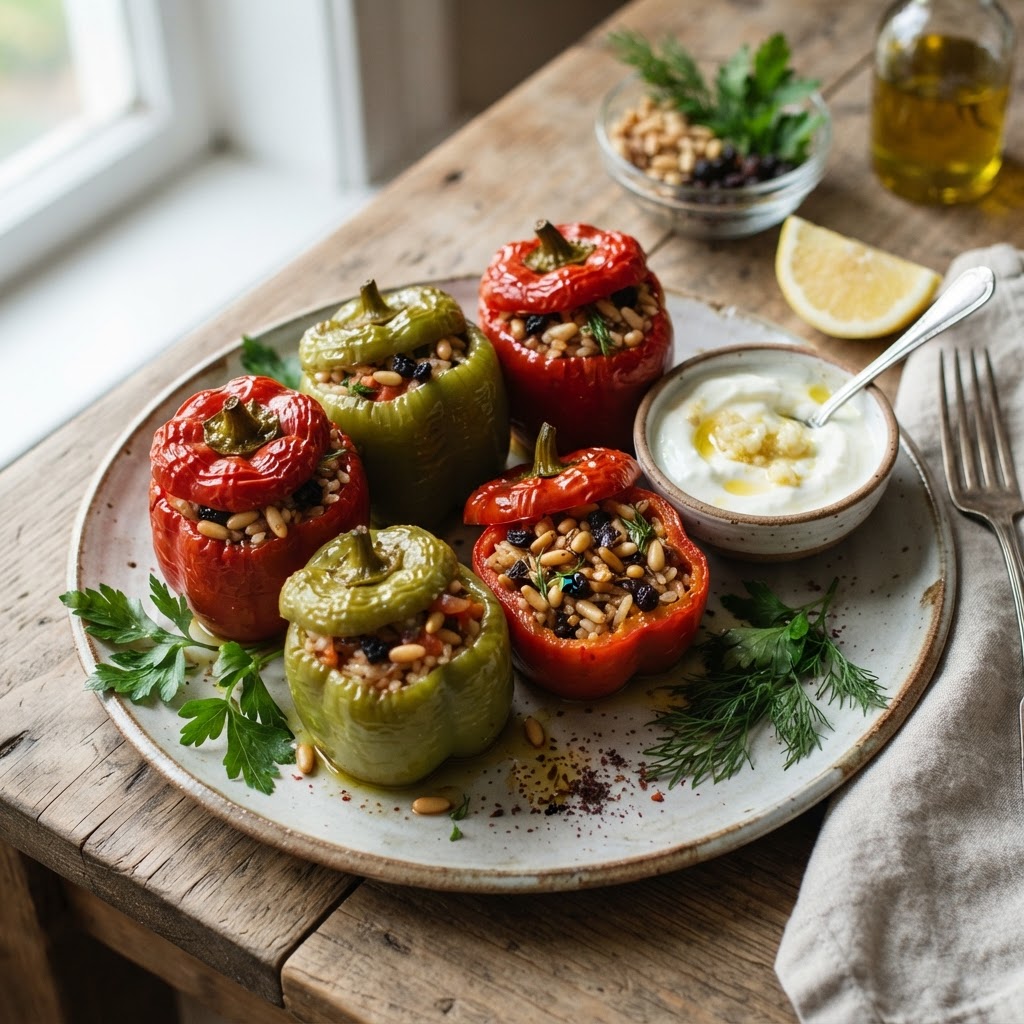
Bell Peppers Stuffed with Rice, Raisins, and Pine Nuts
Celebrate the vibrant Mediterranean harvest with these jewel-toned peppers. Each bite bursts with the perfect harmony of aromatic spices, sweet currants, and toasted pine nuts, all brightened by a creamy garlic yogurt dip.
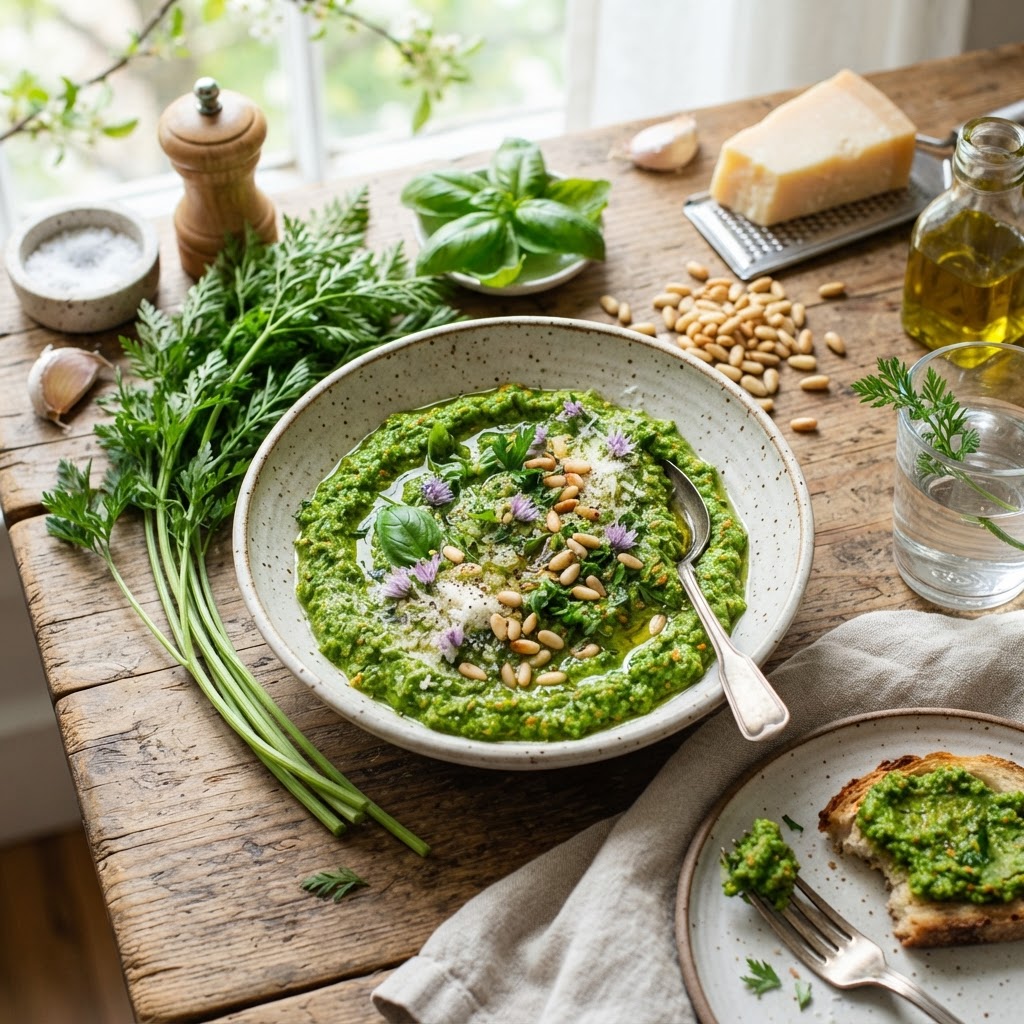
Carrot Top Pesto
Celebrate spring with this vibrant pesto, turning humble carrot tops into a fragrant, peppery masterpiece. Toss with pasta for a zesty, garden-fresh bowl that truly honors the season's bounty.