Fruit · Tropical
Papaya
Carica papaya · Also: Papaw (Australia)
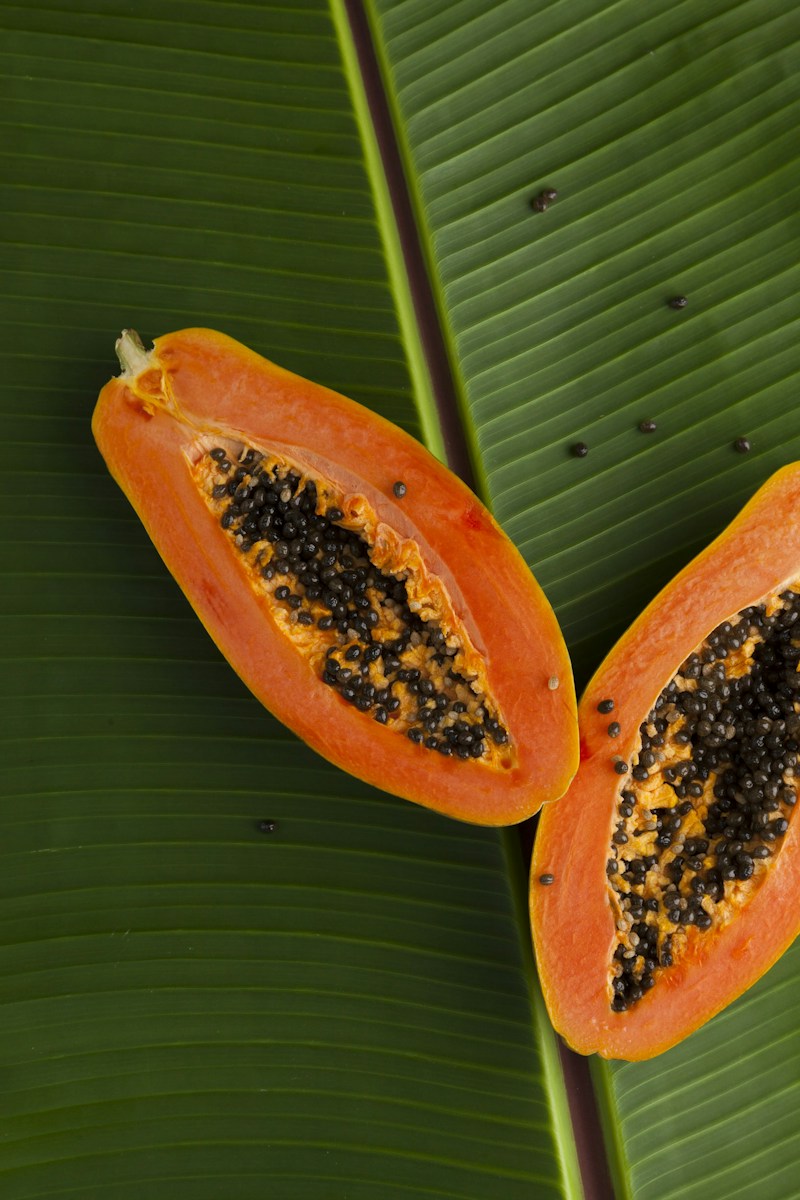
The papaya looks unassuming when whole, but cut into a ripe fruit and you'll find gorgeous peachy-orange flesh, a cavity full of dramatically contrasted black seeds, and an earthy, sweet flavor. Originally from southern Mexico, Central America, and northern South America, by the 17th century Dutch and Portuguese colonists had brought papaya to Africa and then to the Far East, where it became an integral part of Southeast Asian cuisines. Today it's a staple from Thailand to the Caribbean.
Choose a papaya whose skin is slightly soft when you press into it — like an avocado. Avoid fruit with dark spots, overly soft areas, or shriveled skin.
Papayas come in two main shapes: the smaller, pear-shaped Hawaiian variety and the larger, oblong variety grown in Mexico and Central America commonly found in supermarkets, typically weighing three to five pounds. Cut open the yellow-green skin to reveal peachy to deep orange flesh.
In Asian markets, you may also find green papaya — distinctive for its green skin, hard pale interior, and white seeds. This is the unripe fruit used in Southeast Asian cooking.
Papayas are highly perishable. Once they ripen, they won't last long unless refrigerated — and even then, no more than a week or two. Use ripe papaya promptly for best flavor and texture.
Most people eat papaya raw. Simply slice into cubes, discarding the skin and seeds. Classic preparations include:
Fresh with Lime & Cayenne: A squeeze of lime juice and a pinch of cayenne transforms a simple papaya slice into a vibrant snack — a street food staple across Latin America.
Som Tam (Thai Green Papaya Salad): Shred unripe green papaya raw and serve with fish sauce, lime, sprouts, vegetables, and fresh herbs. One of the most popular dishes in all of Thailand.
Natural Meat Tenderizer: Papaya contains papain, an enzyme that breaks down tough meat fibers. Unripe papaya or papaya juice can be used as a marinade for tougher cuts of meat.
Papaya Seeds: Don't throw them away — dry and grind papaya seeds and use as a black pepper substitute with a slightly peppery, mustardy bite.
The easiest way to save papaya for later is to freeze it in cubes, which can then be added to smoothies straight from frozen. There is also a long tradition in warmer climates of making papaya into jam and pickles. In the Philippines, green papaya pickle relish (achara) is a beloved condiment. Papaya also dries very well.
Papayas are an excellent source of Vitamin C, containing over half the recommended daily value per 100 grams. They are also a good source of folate. The enzyme papain, present throughout the fruit, has been studied for its digestive benefits.
Papaya is called "papaw" or "pawpaw" in Australia — a completely different fruit from the pawpaw of the Northeastern United States (Asimina triloba), despite sharing the name.
Papaya was one of the first fruits at the center of the GMO debate. In 1998, it became the first transgenic fruit sold in the US — the Rainbow papaya — created after scientists inserted genes from the ringspot virus into the papaya genome to give it a built-in vaccine against the disease that had nearly destroyed Hawai'i's papaya industry.
Papaya contains latex and may cause a reaction in those with latex allergies.
Pesticides: According to the Environmental Working Group, papayas are part of the "Clean Fifteen" — one of the fifteen fruits and vegetables with the lowest pesticide residue load. Their thick skin offers additional protection.
Water Use: Papaya needs moist soil to thrive, with a water footprint of about 55 gallons per pound. However, compared to other thirsty crops like coffee, chocolate, or mango, its water footprint is relatively modest.
Seasonality: Peak US papaya season is May through September in Hawai'i, Florida, and Puerto Rico.
Geography: India is the world's top producer, but Mexico, Brazil, and Belize lead in exports. In the US, Hawai'i is the main commercial growing region. Papaya grows quickly and begins fruiting within just 10 months of planting.
In-Season Recipes with Papaya
Seasonal recipes featuring Papaya right now
Coming Soon
All Other Recipes with Papaya
Coming Soon