
Vegetable · Spring–Summer
Nopales
Genus Opuntia · Also: Nopal, Cactus Paddles, Prickly Pear Paddles
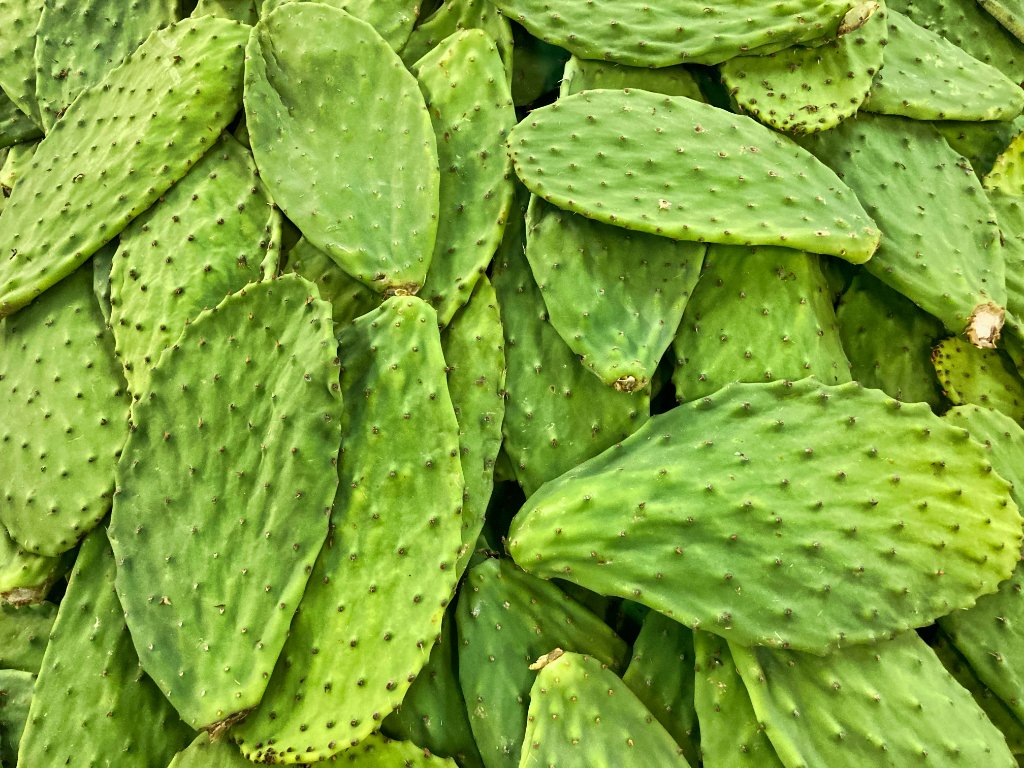
Nopales are the edible pads (paddles) of the prickly pear cactus (Opuntia), native to the Americas and central to Mexican cuisine for thousands of years. The plant was of deep importance to the Aztecs — the name of their great city Tenochtitlán, now Mexico City, literally means "place where cactus pear grows on stone." Today nopales are enjoyed across Mexico, the Southwestern U.S., and increasingly around the world as a nutritious, drought-resilient vegetable.
Both the paddles and fruit of the prickly pear are covered in tiny spines. Some vendors strip them before selling; if you wild-harvest or buy untreated paddles, you'll need to remove them yourself.
Paddles are best harvested young — older ones are tougher with harder spines. Look for bright green paddles that are firm but not floppy, and avoid any with soft spots or discoloration. They should feel slightly tender when gently squeezed, not mushy.
Nopales can be stored covered in the refrigerator for up to three weeks — they keep exceptionally well compared to most fresh produce.
Preparing Nopales: Before cooking, always de-spine and clean the paddles thoroughly. Use tongs or thick gloves to handle them. Scrape or cut off the eyes (bumps where spines emerge) and any remaining spines with a sharp knife or vegetable peeler.
Mucilage: The paddles release a mucilaginous sap similar to okra when cooked. If that texture is off-putting, sautéing or boiling reduces the sliminess significantly.
Everyday Uses: Nopales are used throughout Mexico and the Southwestern U.S. — sautéed as a side dish, tossed into salads (nopalitos), made into salsas, tucked into tacos, or added to egg dishes. One classic preparation is nopal cactus with caramelized onion, guajillo chile, and fresh cheese.
Freezing nopales works well — the texture changes somewhat, but since they are predominantly used in cooked or processed dishes, the change is barely noticeable. They can also be pickled in brine with garlic and chiles for long-term storage.
Nopales are notably high in dietary fiber, and contain small amounts of calcium and Vitamin C. They are low in calories and have a low glycemic index, making them a nutritious and filling vegetable choice.
Nopales and prickly pears are so important in Mexico that the cactus appears on the Mexican flag — an eagle perching on a nopal cactus on a rock rising from a lake.
Cochineals, insects that live and feed on prickly pear paddles, produce bright-red carminic acid and are the source of the valuable natural colorant carmine — widely used in cosmetics, food coloring, and beverages.
Traditionally, heated paddles were used as poultices to treat arthritis and other aches and pains in indigenous communities across the Americas.
Prickly pear proved a disastrous invasive species in Australia: introduced in the late 18th century, the plant had overtaken millions of acres by the 1920s.
Drought Resilience: Prickly pear cacti are champions at growing in marginal, arid environments with very little water — making nopales one of the more sustainable agricultural choices, especially in drought-prone areas like California and the Southwest.
Wild Harvesting: Nopales can be wild-harvested across much of North America — from the Southwest to the Great Lakes. Wild-harvested paddles require zero irrigation, fertilizer, or pesticides.
Seasonality: Young cactus paddles typically appear in markets in spring and early summer. They may be found year-round in Mexican grocery stores and specialty markets.
Global Cultivation: Opuntia ficus-indica is grown in arid areas worldwide including central Mexico, the Mediterranean, South Africa, the Middle East, and parts of East Africa.
Available Near You
Enter your ZIP code to find farms with nopales near you.
Recipes with Nopales
Coming Soon