
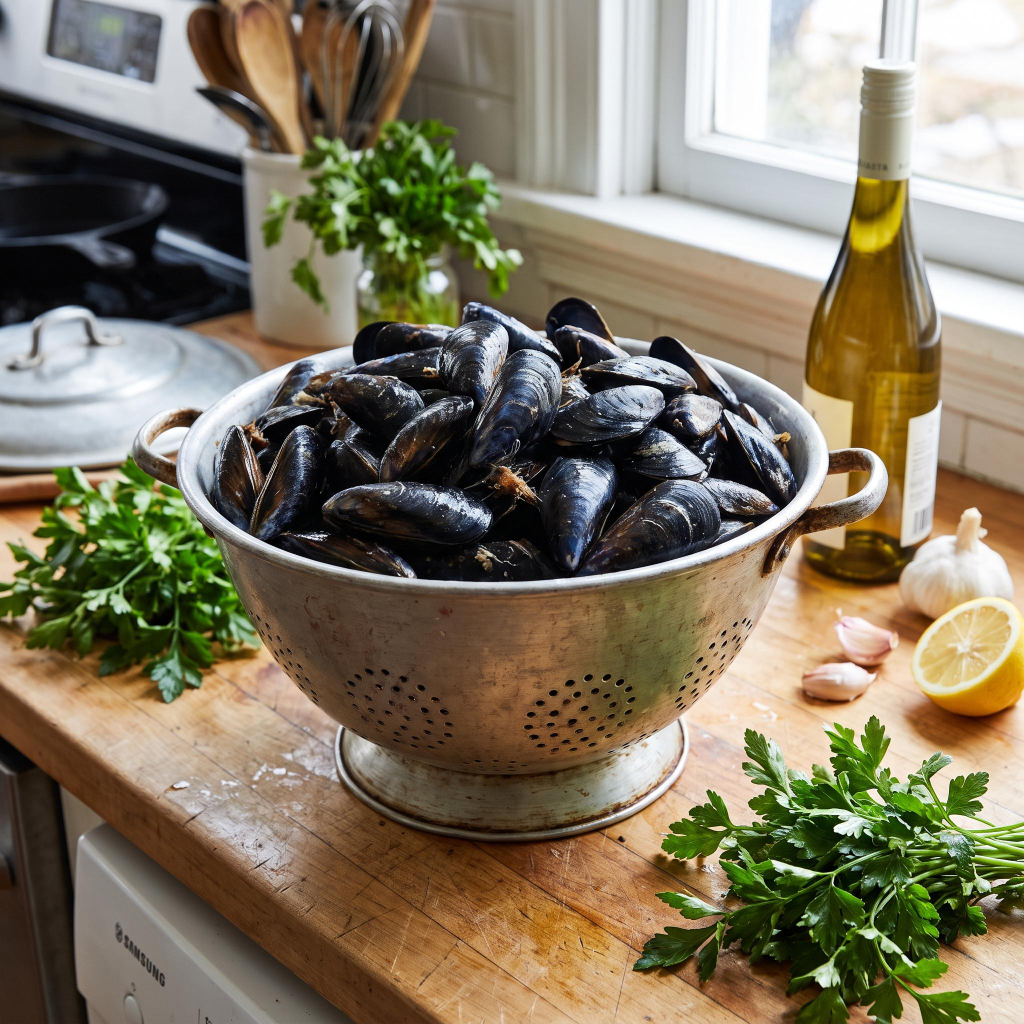
Mussels
Affordable, flavorful shellfish perfect for soups and pastas
Buy mussels live — they should be tightly closed or close when tapped. Discard any with cracked shells or that stay open when tapped; they are dead and unsafe.
Farmed mussels (rope-grown) are the best choice — they are clean, grit-free, sustainable, and consistently high quality. They are often sold debearded.
Mussels are one of the most affordable shellfish, making them a great value for impressive meals. Plan on about 1 pound per person for a main course.
From common blue mussels to striking green-lipped, each variety brings its own size and flavor:
Blue Mussels
The most common cultivated mussel — small, sweet, and dark-shelled; widely available and consistently good.
Green-lipped
Large, meaty mussels from New Zealand with a distinctive green-edged shell — mild, sweet, and visually striking.
Mediterranean
Smaller and more delicate than blue mussels — prized in southern European cooking for their tender, sweet meat.
Penn Cove / Cultivated
Premium rope-grown mussels from the U.S. Pacific Northwest — clean, plump, and free of grit.
Wild Horse
Larger, heavier-shelled wild mussels — stronger flavor and more texture; require thorough scrubbing and debearding.
Galician
Small, intensely flavored mussels from the Atlantic coast of Spain — often steamed in white wine or preserved in brine.
Keep live mussels in the refrigerator in a breathable container — a bowl covered with a damp cloth, never sealed in plastic or submerged in water. They need to breathe.
Store at 35–40°F and use within 1–2 days. Smell them before cooking — they should smell clean and briny, not fishy.
Before cooking, scrub the shells and pull off the 'beard' (the fibrous threads they use to anchor to ropes). Discard any that remain open after a tap or that have broken shells.
Mussels cook in minutes — their shells pop open when done.
Steaming: The classic preparation — steam with white wine, shallots, garlic, butter, and herbs (moules marinière) for 4–6 minutes until shells open. Discard any that do not open.
Pasta: Toss steamed mussels with linguine or spaghetti and their cooking broth for a quick, elegant meal.
Curries & Stews: Mussels add briny sweetness to Thai curries, French bouillabaisse, and Italian cioppino.
Grilling: Toss mussels directly on a hot grill until they pop open, then top with garlic butter — a smoky, simple treat.
Smoking: Smoke opened mussels briefly for a rich, savory appetizer.
Smoking: Smoked mussels, packed in oil, are a gourmet pantry item for antipasti and salads.
Pickling: Pickled mussels in escabeche (vinegar and spices) are a Spanish tapas classic.
Canning: Canned mussels keep for months and are a convenient addition to pasta and salads.
Freezing Cooked: Shucked, blanched mussels freeze for up to 3 months for use in cooked dishes; raw mussel texture suffers when frozen.
Drying: Dried mussels add umami to Asian soups and stocks.
Mussels are a nutritional bargain — high in protein, low in calories, and exceptionally rich in vitamin B12, iron, and manganese. A 3-ounce serving provides about 20 grams of protein and only about 150 calories.
They are an excellent source of omega-3 fatty acids, selenium, and zinc, supporting heart and immune health. Mussels are among the best dietary sources of iron, making them valuable for preventing anemia.
Mussels are low in mercury and a lean, sustainable protein — a healthy regular choice.
Mussels attach themselves to rocks and ropes with strong, stretchy threads called byssal threads — the 'beard' you remove before cooking. Scientists study these threads for inspiration in waterproof adhesives.
Mussels are filter feeders — they pump seawater through their gills, straining plankton and cleaning the water. A single mussel can filter a liter of water in an hour.
Moules frites — mussels with fries — is the national dish of Belgium, where they are consumed by the ton, traditionally served in the pot they were cooked in.
Mussels have been farmed for centuries; rope-grown mussels, suspended in clean coastal water, are one of the most efficient and sustainable forms of aquaculture.
Mussels are among the most sustainable seafood you can eat. Farmed mussels require no feed, no freshwater, and no chemicals — they filter their food from the seawater and actually improve water quality.
They are consistently rated a 'best choice' by seafood watchdogs. Mussel farming has minimal environmental impact and can even benefit coastal ecosystems.
Because mussels are filter feeders, always buy from trusted sources and check for biotoxin advisories in your region — mussels can accumulate toxins from algal blooms, which is why harvest areas are closely monitored and regulated.
Available Near You
Enter your ZIP code to find farms with mussels near you.
Recipes with Mussels
Coming Soon