Maple Syrup
Golden amber syrup made from the sap of sugar maple trees. A beloved natural sweetener with a distinctive caramel-woody flavor, used in baking, glazes, dressings, and drizzled over pancakes and waffles.
Look for 100% pure maple syrup — not 'pancake syrup' or 'table syrup,' which are corn syrup with artificial maple flavor. The label should list only one ingredient: maple syrup.
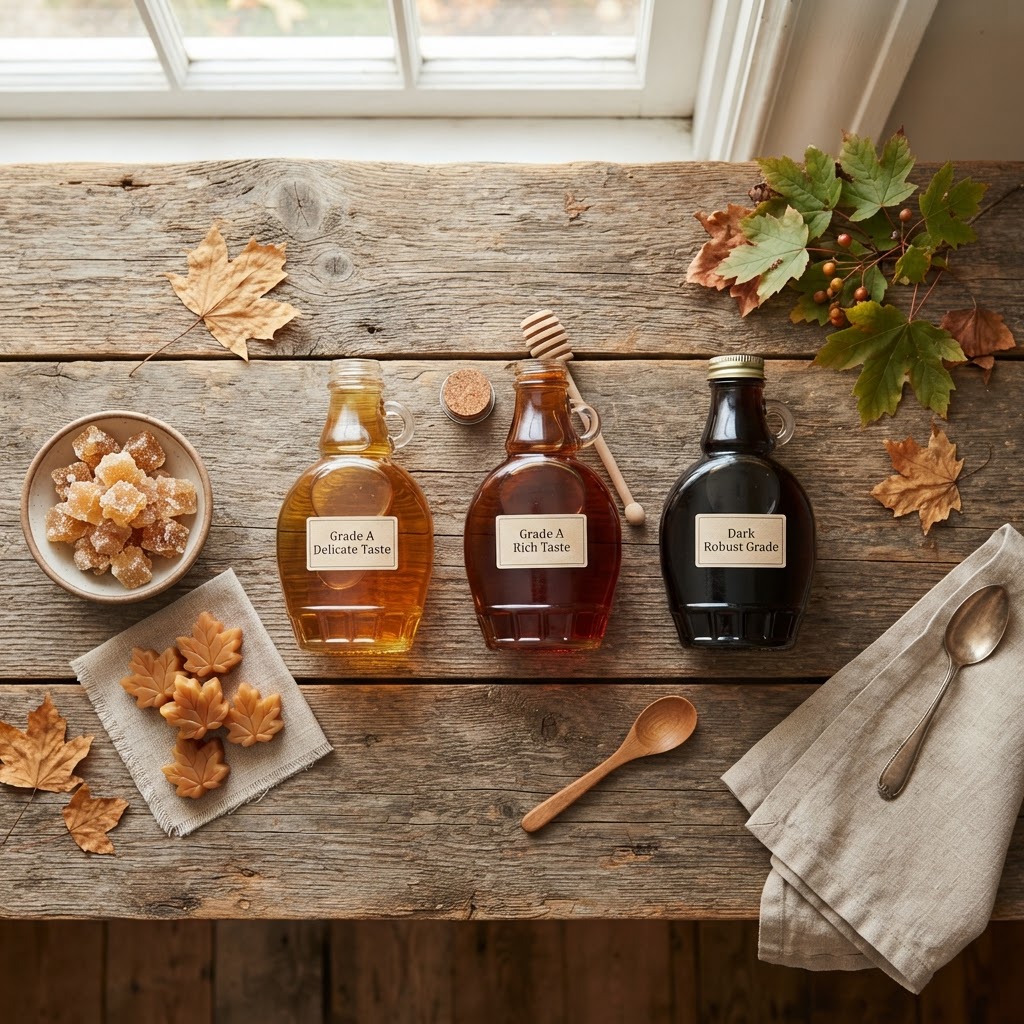
Grade indicates color and flavor intensity, not quality. Golden/Delicate is lightest and mildest; Very Dark/Strong is deepest and most robust. Choose by use: delicate for drizzling and light baking, dark for cooking and bold flavor.
Buy local whenever possible. Vermont, New York, Quebec, and the upper Midwest produce exceptional syrup, and buying directly from sugar makers at farmers' markets guarantees freshness and supports small operations.
Maple syrup is graded by color and flavor intensity, which deepen as the season progresses:
Golden / Delicate
The lightest grade with a delicate, pure maple flavor — harvested earliest in the season; ideal for drizzling and vanilla-forward recipes.
Amber / Rich
The classic pancake syrup — a rich, balanced maple flavor and amber color; the most versatile grade for everyday use.
Dark / Robust
Strong, hearty maple flavor with a deeper color — harvested later in the season; excellent for baking, glazes, and bold flavor.
Very Dark / Strong
The most intense, caramelized maple flavor — a late-season grade prized for cooking, marinades, and recipes where maple leads.
Maple Sugar
Dehydrated, crystallized maple syrup — a shelf-stable sweetener with concentrated maple flavor for baking and coffee.
Maple Butter / Cream
Whipped, crystallized maple syrup with a spreadable, fudge-like texture — a decadent topping for toast and pastries.
Unopened, pure maple syrup keeps indefinitely in a cool, dark place. Once opened, refrigerate it — it will keep for a year or more.
Unlike honey, maple syrup can grow mold on the surface if left at room temperature after opening. If mold appears, skim it off, bring the syrup to a brief boil, let it cool, and store in a clean jar in the refrigerator.
For long-term storage, maple syrup freezes beautifully — it stays pourable and keeps its flavor for years. Maple sugar and maple butter keep at cool room temperature in sealed containers.
Maple syrup is a natural sweetener with a distinctive flavor that shines far beyond pancakes.
Baking: Substitute maple syrup for sugar (use 3/4 cup per cup of sugar and reduce other liquids slightly). It adds moisture, browning, and a warm, complex sweetness to cakes, cookies, and quick breads.
Glazing & Marinades: Maple's sugars caramelize into a beautiful glaze for roasted vegetables, salmon, chicken, and pork. Pair with mustard, soy, or bourbon for depth.
Dressings & Sauces: Whisked into vinaigrettes, maple balances sharp acids with its round sweetness. It enriches barbecue sauce, teriyaki, and glazes.
Desserts: Maple custard, panna cotta, ice cream, and fudge showcase the syrup's own flavor. Maple sugar adds concentrated flavor to shortbread and frostings.
Beverages: Stir into coffee, oatmeal, or warm milk; a splash sweetens lemonade and cocktails with aromatic depth.
Maple syrup's high sugar content makes it a natural preservative.
Maple Sugar: Boil syrup past the soft-ball stage and stir until it crystallizes into granulated maple sugar — shelf-stable for years and a concentrated sweetener.
Maple Butter (Cream): Heat syrup to about 232°F, cool to room temperature, then whip until it turns into a spreadable, crystallized paste — a traditional New England treat.
Maple Candy: Heat syrup to the soft-ball stage, cool slightly, and stir before molding into sugar-shape candies — a classic spring treat at sugar shacks.
Infused Maple: Steep syrup with herbs, chiles, or citrus zest for flavored syrups that keep refrigerated for months.
Pure maple syrup contains more than just sugar — it delivers meaningful amounts of manganese and riboflavin, plus smaller amounts of calcium, potassium, zinc, and magnesium. It also contains unique polyphenols and antioxidants not found in other sweeteners.
A tablespoon of maple syrup has about 52 calories and a glycemic index around 54 — lower than table sugar's 65, meaning a gentler effect on blood sugar.
While maple syrup is more nutrient-dense than refined sugar, it is still a concentrated sweetener and should be enjoyed in moderation. Its advantage is flavor: a little delivers a lot of character, so you often need less.
It takes about 40 gallons of maple sap to make one gallon of maple syrup — the sap runs thin and clear, only 2% sugar, before it is boiled down.
Maple sugaring is one of the oldest food traditions in North America. Indigenous peoples of the Northeast were making maple sugar long before European contact, collecting sap in wooden troughs and concentrating it by dropping hot stones into the liquid.
The sugar season is short — just 4–6 weeks in late winter and early spring, when warm days and freezing nights make the sap flow. A single tap yields about 10 gallons of sap in a season.
Quebec produces over 70% of the world's maple syrup — more than the rest of the world combined. The Federation of Quebec Maple Syrup Producers maintains a strategic syrup reserve, the 'global maple syrup reserve,' to stabilize prices.
Maple syrup is one of the most sustainable sweeteners on earth — sugar maples are tapped, not cut, and a well-managed sugarbush can produce syrup for generations. A single tree may be tapped for 100+ years.
Maple sugaring supports forest conservation: keeping northern hardwood forests intact for syrup production preserves habitat, carbon storage, and watershed health. The trees themselves sequester carbon, making maple syrup a low-carbon sweetener.
Climate change threatens the industry, however — warming winters shorten and shift the sugaring season northward. Supporting maple producers helps keep these forests and traditions alive as the climate changes.
Available Near You
Enter your ZIP code to find farms with maple syrup near you.