
Fruit · October – May (California)
Kiwi
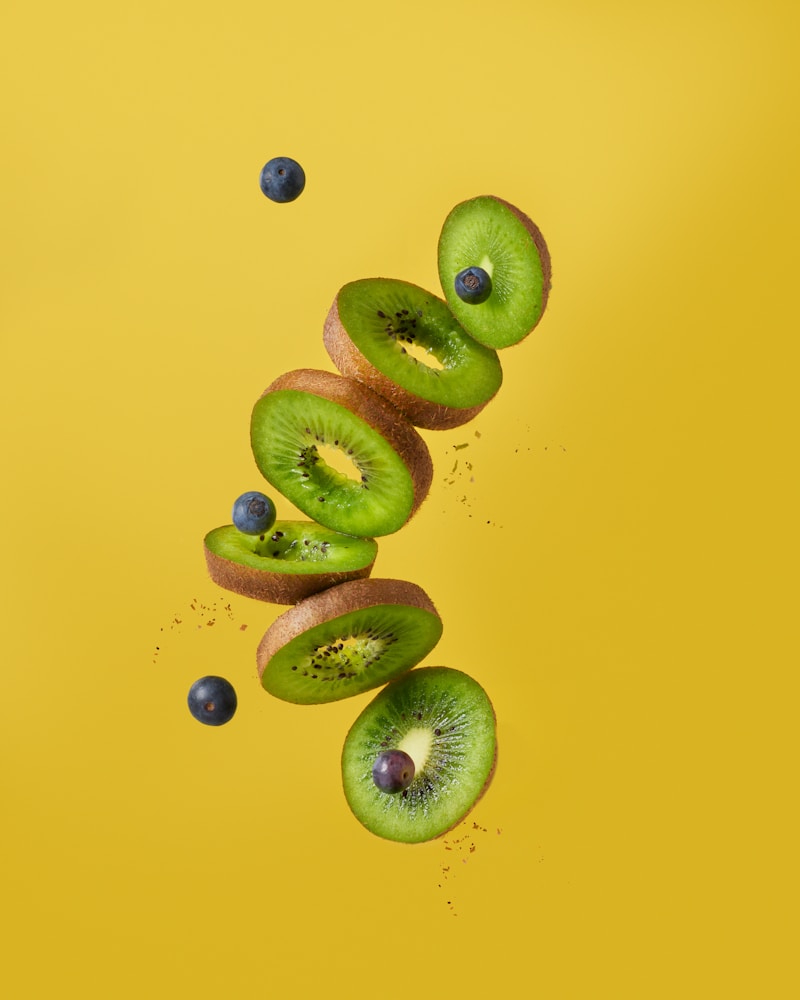
Don't let the rather drab exterior of a kiwifruit (Actinidia deliciosa) fool you: the beauty of a cut kiwi can't be beat, with its emerald green interior and ring of jet-black seeds. Its flavor is unlike any other fruit — an intriguing cross between grapes and strawberries with a tropical flair.
Surprisingly, kiwi is not actually a tropical fruit — it grows best in temperate climates. And it only arrived commercially in the United States in the 1960s, making it one of the newest fruits on the American market.
In 1904, a New Zealand school principal named Mary Isabel Fraser brought kiwi seeds home from the Yangtze Valley in China. New Zealanders initially called them "Chinese gooseberries," but when entering the American market, growers renamed them "kiwifruit" after the similarly fuzzy and brown native New Zealand kiwi bird.
Kiwi's emerald interior is green from chlorophyll, and each fruit can contain as many as 1,500 seeds.
Kiwis contain calcium oxalate, which can be irritating to the throat and stomach if ingested in large quantities.
Hayward (Green Kiwi): The most common variety in U.S. markets. About the size of a large chicken egg, with brown fuzzy skin, bright green flesh, and tiny black seeds. Tangy and sweet.
Golden Kiwi: Slightly less acidic than Hayward with smoother, less fuzzy skin and golden-yellow flesh. Often found as organic at specialty markets.
Kiwi Berries (A. arguta): A different species native to Japan, Northern China, and Siberia. About the size of a large grape, smooth-skinned, and can be eaten whole — no peeling needed.
Look for kiwis that feel heavy for their size, with no mushy or discolored spots.
Choose firm kiwis if you'd like to hold off on eating them; a ripe kiwi will yield to gentle pressure when squeezed.
While most people peel kiwi, the skin is actually edible — just texturally a bit fuzzy.
Ripe kiwi will keep for up to four weeks in the refrigerator, and even up to 10 months in proper cold storage.
To ripen unripe kiwi, place in a paper bag with a ripe banana or apple — the kiwi should ripen in one to two days.
Raw / Slooping: The classic method — slice the unpeeled fruit in half through its equator and scoop out the pulp with a spoon. Simple, delicious, zero waste.
Salads & Garnishes: Peeled and sliced kiwi makes a beautiful garnish and adds tropical brightness to fruit salads.
Pavlova: Kiwi is a classic topping for this iconic Aussie and New Zealand dessert — baked meringue topped with whipped cream and fresh fruit.
Meat Tenderizer: Kiwi puree can tenderize tough cuts of meat — enzymes in the fruit break down muscle fibers effectively.
Fruit Pie Filling: Kiwis are high in pectin, so a bit of pureed kiwi added to fruit pie fillings helps firm them up naturally.
Fruit Tarts: Sliced kiwi is a classic topping for pastry cream fruit tarts — visually stunning and delicious.
Jam: Kiwi jam is simple to make — try a straightforward kiwi jam or a delightful strawberry-kiwi combination.
Pickles: Kiwi red pepper pickle with juniper and allspice is an adventurous and memorable preserve.
Freezing: Peel and slice kiwi, freeze on a cookie sheet until solid, then transfer to zip-top freezer bags. Excellent for smoothies and garnishes.
Vitamin C: An excellent source — just one kiwi provides over half the recommended daily value of Vitamin C.
Vitamin K: Also an excellent source of Vitamin K, which supports bone health and blood clotting.
Top Producers: China, Italy, New Zealand, and Chile. California produces 98% of U.S. kiwifruit.
U.S. Season: California kiwifruit is in season October through May. Imports from Italy and Chile make kiwis available year-round.
How They Grow: Kiwifruit grows on flowering vines. Both male and female vines are required (roughly one male per 8–9 females), pollinated by bees. Despite tropical flavor, kiwi thrives in temperate climates with cool winters, rainfall, and some elevation.
Water Use: Kiwi vines require significant irrigation. California kiwi — grown in a drought-prone state — may not always be the most sustainable option.
Food Miles: Much U.S. kiwi is imported from New Zealand and Chile, adding transportation environmental costs if eating locally is a priority.
Pesticides: Kiwi does not appear on the Environmental Working Group's Dirty Dozen list. New Zealand growers have increasingly adopted integrated pest management to reduce chemical use. Organic kiwis are readily available — a good choice if pesticide avoidance is a priority.
Available Near You
Enter your ZIP code to find farms with kiwi near you.