
Nasturtium
Also known as: Indian Cress, Garden Nasturtium, Capucine, Mastuerzo, Capuchina, Chaguir
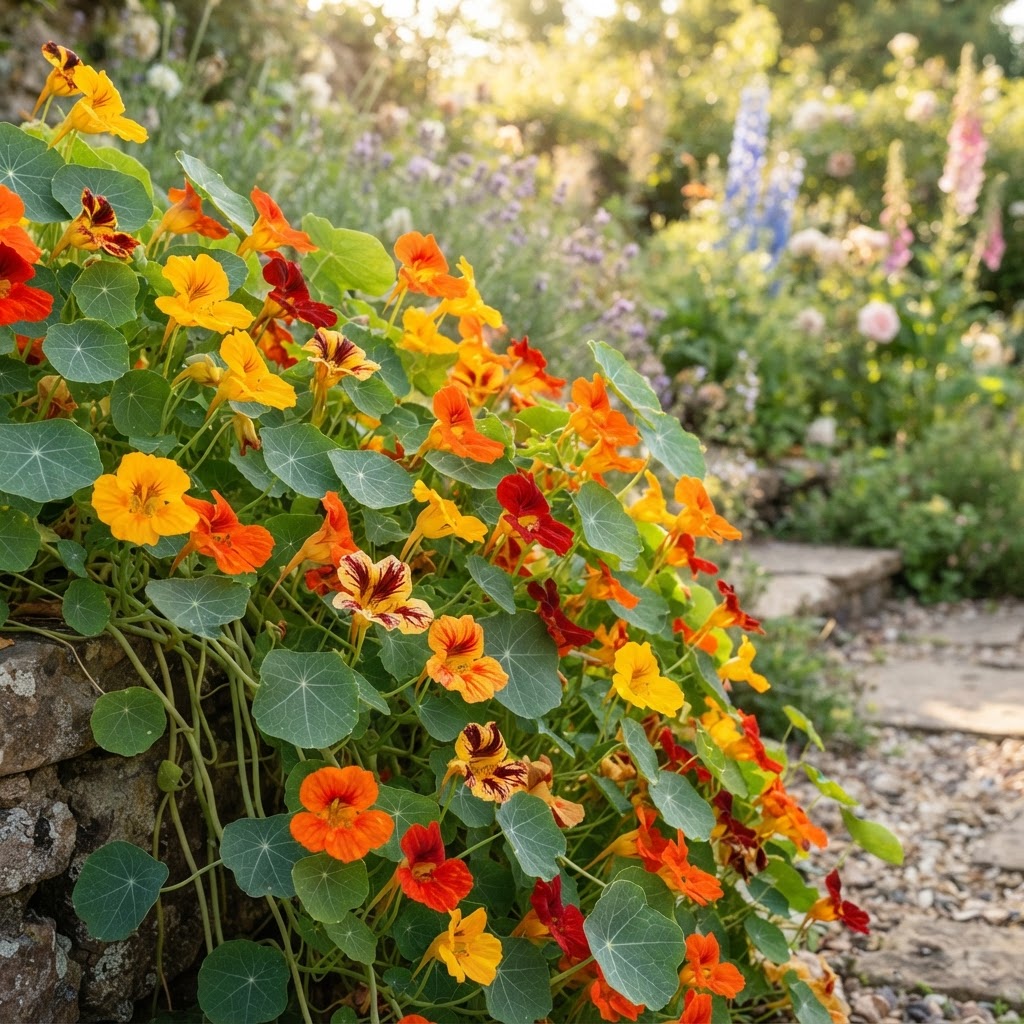
Nasturtium (Tropaeolum majus) is a trailing, semi-succulent annual of the Tropaeolaceae (nasturtium) family, long familiar in the gardens, borders, and old kitchen plots of South and Central America and, since the 16th century, of Europe and the wider world. It forms rounded mounds or trailing vines of soft, shield-shaped, blue-green leaves on long, slender stems, and bears a profusion of bright, open, trumpet-shaped flowers in shades of yellow, orange, and red through summer, followed by round, ridged green seed pods. Native to the Andes and widely cultivated, nasturtium has been gathered for centuries as a tender, peppery green and gentle herb, prized for its bright, pungent flavor and cheerful, edible flowers, and woven into the culinary and folk traditions of Europe, the Americas, and the old kitchen gardens, where it is at once a beloved salad plant, a garden herb, and a cheerful ornamental.
spring, summer
Fresh, peppery, and green with a sharp, bright, and distinctly watercress-like c...
Tropaeolum majus
herb
Pairs Well With
Nasturtium is gathered young and tender, and used as a fresh, peppery green or gentle herb rather than as a bold seasoning.
The young leaves and tender stems are eaten raw in salads, where their crisp, peppery, and watercress-like flavor blends well with milder greens and a light vinaigrette, and used as a delicate garnish for cold soups and summer plates.
The bright flowers are scattered over salads, soups, and tarts, where they add a peppery bite and a splash of color, and used to garnish plates and platters.
The young seed pods are gathered green and pickled in vinegar and salt, where they make a fine caper substitute, a use rooted in centuries of old kitchen practice, and folded into sauces and dressings.
The leaves and flowers are folded into herbal butters, vinegars, and oils, and used to enliven sandwiches, savory tarts, and rice dishes.
Always gather the youngest leaves and stems, as older leaves become tough and overly peppery, and use in moderation, as the peppery flavor is bright and builds quickly.
Nasturtium has been treasured for centuries in European and American herbal and folk tradition as a gentle, pungent, and nutritive herb of the gardens and old kitchen plots.
The leaves and flowers were traditionally infused as a gentle herbal tea to soothe the digestion, support the system against colds, and ease minor fevers, and valued as a gentle, nutritive and antimicrobial tonic supportive of the whole system.
A warm poultice of the leaves was used in folk practice to soothe minor wounds, skin irritations, and blemishes, and as a gentle, antiseptic wash for the skin, a use reflected in the old name of 'Indian cress.'
Nasturtium was a beloved household remedy, gathered from the garden and kept as a peppery and nutritive herb for the digestion, the skin, and the ills of the cold months, and its gentle virtues are reflected in the old saying that it 'warms the body and clears the chest.'
In tradition it was a plant of the garden and the kitchen, gathered as the leaves and flowers unfurled and kept as a household herb for the digestion, the skin, and the ills of the cold and warm months alike.
Gather the young, tender leaves, flowers, and seed pods in spring and summer, before and as the plant flowers, when the flavor is most peppery and the texture most delicate, and use fresh or pickled; for pickling, pack the young seed pods in vinegar and salt and store sealed in a cool place.
Rinse the leaves and flowers well, then use raw in salads, as a garnish, or folded into herbal butters, vinegars, and oils.
Scatter the bright flowers over salads, soups, and tarts, and use to garnish plates and platters, and pickle the young seed pods in vinegar and salt to make a fine caper substitute.
Infuse the leaves and flowers into herbal teas and vinegars, blended with mint or lemon, or use as a gentle, antiseptic wash for the skin.
Always gather the youngest leaves, as older leaves become tough and overly peppery, and harvest only from clean, unpolluted ground away from roads and sprays.
Nasturtium is generally considered safe for most adults when consumed in moderate, culinary amounts as a fresh green or peppery herb.
The herb is peppery and the young leaves and flowers are prized for their fresh, pungent, and slightly sweet flavor, and should be gathered young and tender to avoid toughness and excessive pepperiness.
Nasturtium is nutritious and rich in gentle vitamins and minerals, and is best eaten in moderation, as large amounts may not suit every digestion, and the herb should not be taken in medicinal amounts by those with known sensitivities, except with professional guidance.
Nasturtium has been used in folk medicine to soothe the digestion and support the system against colds; pregnant and breastfeeding women should use nasturtium only in small, culinary amounts, and medicinal or prolonged use should be undertaken only with professional guidance.
Always use only culinary-grade nasturtium from a reliable source and correctly identify any plants, and harvest only from clean, unpolluted ground away from roads and sprays.
Nasturtium has a long tradition in natural beauty and herbal skincare, treasured for its gentle, pungent, and nutritive properties rather than for delicate fragrance.
An infusion of the leaves and flowers is a traditional herbal skin wash and gentle astringent rinse, used to refresh and tone the skin and to soothe minor skin irritations, blemishes, and a tired complexion.
Nasturtium is infused into gentle facial toners, skin rinses, and herbal baths to refresh and renew the skin, and into soothing creams to ease minor skin irritations and bring a soft, rested glow.
The leaves and flowers are used in herbal compresses for tired and inflamed skin, in cooling bath herbs and foot soaks, and in folk practice to soothe minor wounds and blemishes.
With its gentle, pungent virtue and bright, cheerful flowers, nasturtium remains a beloved herb of natural beauty rituals and herbal skincare across the warm regions of the world.
Nasturtium thrives in the warm, sunny, well-drained soils of gardens, borders, and old kitchen plots across the world, forming rounded mounds or trailing vines that flower through summer and set their ridged seed pods as the season turns.
The plant is hardy and adaptable, spreading by seed, and its bright, open flowers support bees and other pollinators, while its trailing habit shades the soil and its soft, shield-shaped leaves hold water through the heat.
In tradition, nasturtium was a plant of the garden and the kitchen, gathered as the leaves and flowers unfurled and woven deep into the cooking and folk medicine of Europe and the Americas, where it is at once a beloved salad plant, a garden herb, and a cheerful ornamental.
It was sown in old gardens to warm the body and clear the chest, gathered in the heat to refresh the skin, and remains a living thread of folk medicine, household remedy, and the cheerful, peppery ecology of the old garden.
Available Near You
Enter your ZIP code to find farms with nasturtium near you.
Recipes with Nasturtium
Coming Soon