
Rue
Also known as: Herb of Grace, Common Rue, Garden Rue, Herba Rutae, Ruda, Rutagrano
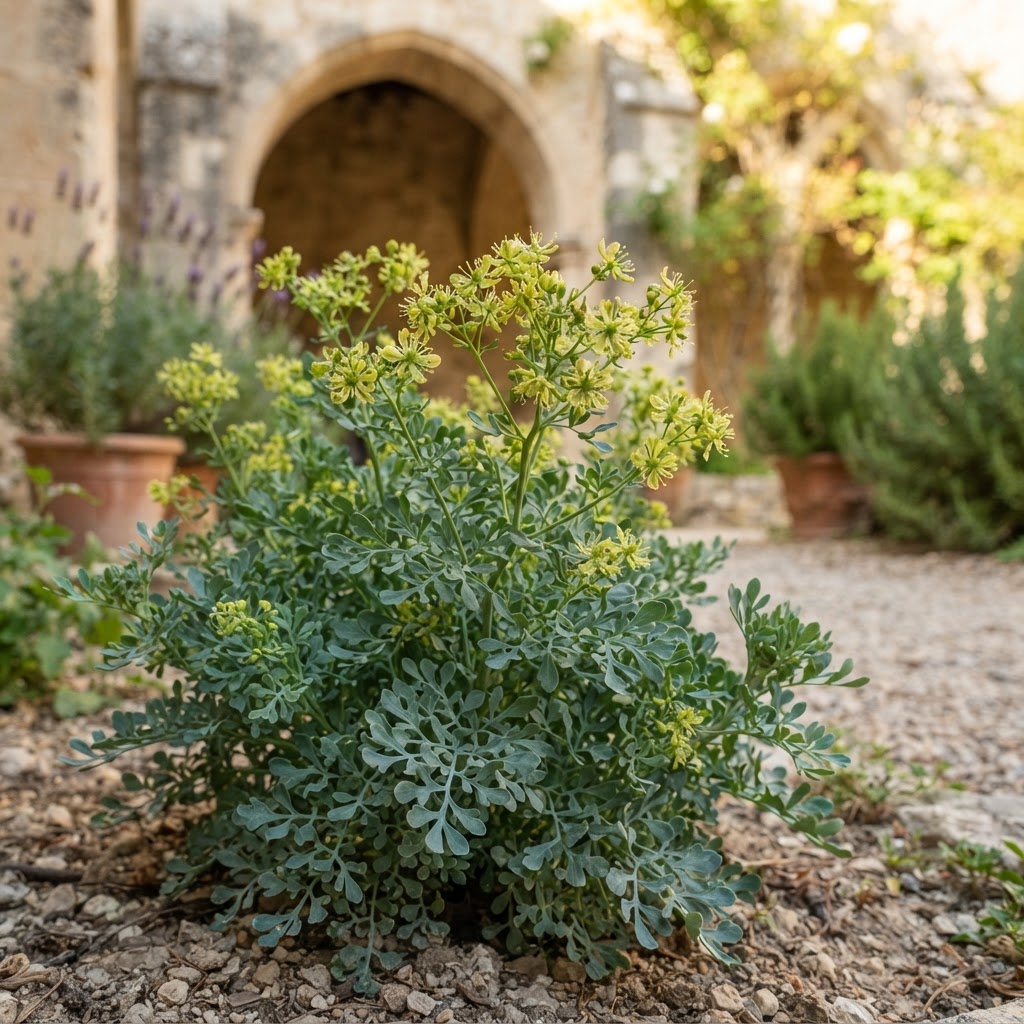
Rue (Ruta graveolens) is a hardy, evergreen, perennial shrub of the Rutaceae (citrus) family, long familiar in the gardens, cloister beds, and old herb plots of the Mediterranean and southern Europe. It forms compact mounds of bluish-green, deeply lobed leaves and bears clusters of small, fringed, yellow-green flowers through summer, followed by papery seed capsules. Native to the Mediterranean and widely cultivated, rue has been gathered for centuries as a pungent, bitter herb and protective plant, prized for its sharp, aromatic flavor and long, tangled history in medicine, ritual, and folklore, and woven deep into the culinary, herbal, and folk traditions of Italy, the Balkans, the Middle East, and Latin America, where it is at once a garden seasoning, a trusted remedy, and a plant of strong symbolic meaning.
spring, summer
Pungent, earthy, and bitter with a strong, sharp, and aromatic, camphor-like cha...
Ruta graveolens
herb
Pairs Well With
Rue is gathered sparingly and used as a bold, aromatic seasoning or bitter herb rather than as a tender green, for its flavor is potent and unmistakable.
The young leaves are used in very small amounts to season old-country dishes, where their sharp, bitter, and aromatic character adds depth and complexity, a use rooted in the cooking of Italy, the Balkans, the Middle East, and Latin America.
A few bruised leaves may be steeped in olive oil or vinegar to make a flavored condiment, and a sprig is sometimes added to stock pots, stews, or pickling brines, then removed before serving, to lend a bitter, aromatic note.
In traditional Italian and Balkan cooking, rue is used to flavor grappa and herbal liqueurs, and a leaf or two may be folded into rustic egg or cheese dishes, where its bitter, musky character balances rich flavors.
The fresh leaves are occasionally used, in tiny quantities, as a pungent garnish, and the dried leaves are kept as a household herb for occasional seasoning.
Always use rue very sparingly, as the flavor is strong and bitter and builds quickly, and gather only the youngest leaves, as older leaves are sharper and more acrid.
Rue has been treasured for centuries in Mediterranean, European, and Latin American herbal and folk tradition as a powerful, protective, and gently medicinal herb of the gardens and old cloister beds.
The leaves were traditionally infused as a strong herbal tea to ease the digestion, warm the system, and soothe minor cramps and colic, and valued as a gentle, nutritive and emmenagogue tonic supportive of the whole system.
A warm poultice of the leaves was used in folk practice to soothe minor wounds, sprains, and aching joints, and as a gentle, warming wash for the skin, a use reflected in the old Latin name of 'herba rutae.'
Rue was a beloved household remedy and a plant of strong symbolic meaning, gathered from the garden and worn or hung to ward off evil, the evil eye, and plague, and its virtues are reflected in the old saying that it 'chases away harm and clears the air.'
In tradition it was a plant of the garden, the doorway, and the apothecary, gathered as the leaves unfurled and kept as a household herb for the digestion, the skin, and the ills of the cold and warm months alike.
Gather the young, tender leaves in spring and early summer, before and as the plant flowers, when the flavor is most aromatic and the texture most tender, and use fresh or dried; for drying, spread the leaves on a screen in a warm, airy, shaded place and store sealed away from light and heat.
Rinse the leaves well and use only in very small amounts, bruising a leaf or two to release the aromatic oils, then adding to oil, vinegar, stock, or stew and removing before serving.
Steep a sprig in grappa or herbal liqueur, or fold a single leaf into rustic egg or cheese dishes, where its bitter, musky character balances rich flavors.
Infuse the leaves into herbal vinegars and oils, blended with other garden herbs, or keep the dried leaves as a household herb for occasional seasoning.
Always gather the youngest leaves, as older leaves are sharper and more acrid, and harvest only from clean, unpolluted ground away from roads and sprays.
Rue is a potent herb and should be used only in very small, culinary amounts, and with care, for its flavor is strong and its virtues are powerful.
The fresh leaves can cause contact dermatitis in sensitive individuals, especially in sunlight, and the leaves should be handled with care, with gloves if sensitivity is known, and the skin washed after handling.
Rue has been used in folk medicine to ease the digestion and warm the system; pregnant and breastfeeding women should avoid rue, as it has been traditionally used as an emmenagogue and may stimulate the uterus, and medicinal or prolonged use should be undertaken only with professional guidance.
The herb is aromatic and bitter and best reserved for sparing, occasional use, and those with known sensitivities or on certain medications should consult a professional before use.
Always use only culinary-grade rue from a reliable source, handle with care, and harvest only from clean, unpolluted ground away from roads and sprays.
Rue has a long tradition in natural beauty and herbal skincare, treasured for its powerful, aromatic, and protective properties rather than for delicate fragrance.
An infusion of the leaves is a traditional herbal skin wash and gentle astringent rinse, used to refresh and tone the skin and to soothe minor skin irritations and blemishes, though it should be used with care and kept away from sunlight on the skin.
Rue was infused into herbal vinegars, skin toners, and aromatic washes to renew the skin, and into herbal sachets and pillows, where its strong, sharp scent was believed to refresh the senses and clear the air.
The leaves were used in folk practice to ease minor aches and skin troubles, in protective herbal baths, and as a gentle, warming wash for tired and aching limbs, a use rooted in centuries of Mediterranean tradition.
With its potent, aromatic quality and strong symbolic meaning, rue remains a herb of traditional household remedies and occasional skincare, best used sparingly and with respect.
Rue thrives in the warm, sunny, well-drained soils of gardens, rocky slopes, and old cloister beds across the Mediterranean and southern Europe, forming compact evergreen mounds that flower through summer and hold their bluish leaves through drought.
The plant is hardy and adaptable, spreading by seed and by root, and its small flowers support bees and other pollinators, while its strong, aromatic leaves have long seasoned the kitchen, the apothecary, and the doorway alike.
In tradition, rue was a plant of the garden, the threshold, and the apothecary, gathered as the leaves unfurled and woven deep into the cooking, medicine, and ritual of Italy, the Balkans, the Middle East, and Latin America, where it is at once a garden seasoning, a trusted remedy, and a plant of strong protective meaning.
It was sown in old gardens to ward off evil, hung at the doorway to chase away harm, and carried as a charm against the evil eye, and it remains a living thread of folk medicine, household remedy, and the potent, aromatic ecology of the old garden.
Available Near You
Enter your ZIP code to find farms with rue near you.
Recipes with Rue
Coming Soon