
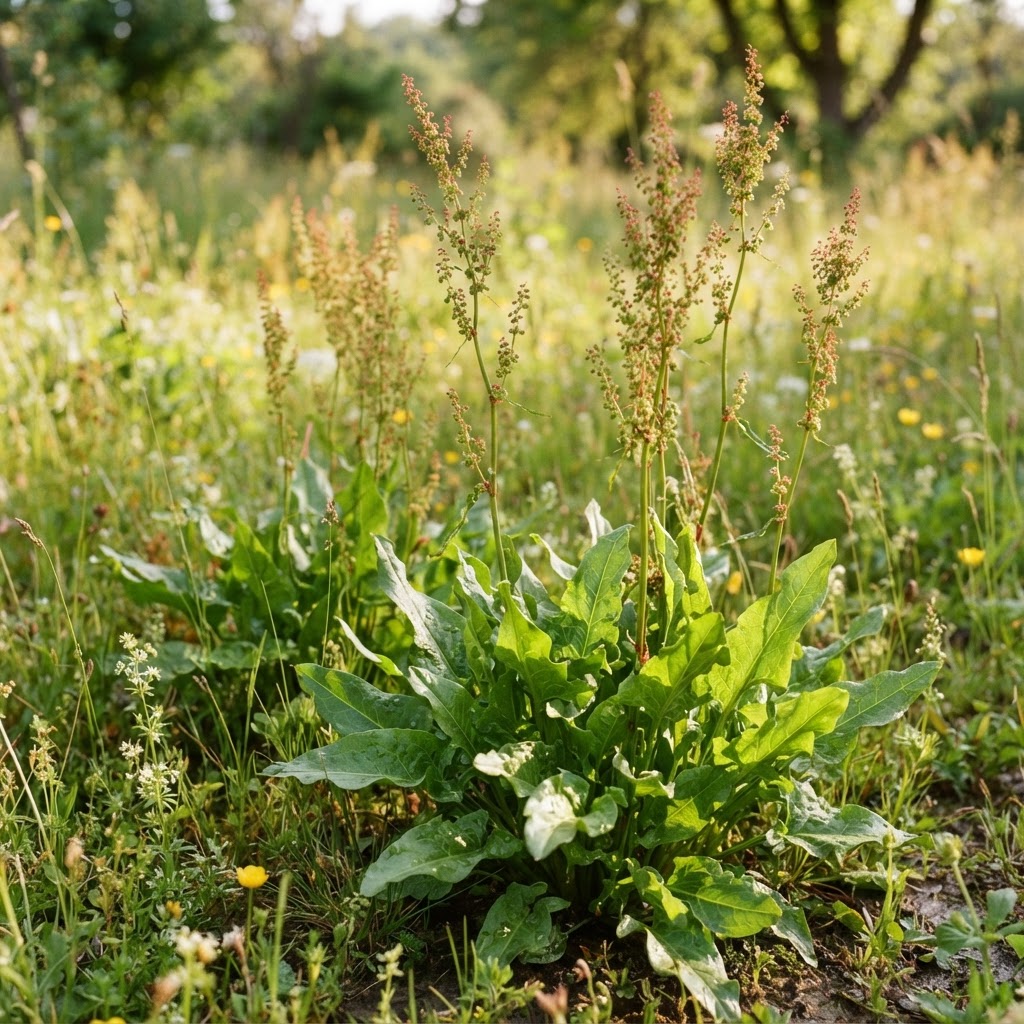
Sorrel
Also known as: Garden Sorrel, Common Sorrel, Spinach Dock, Narrow-Leaved Dock, Sour Grass, Oseille, Acedera, Sauerampfer
Sorrel (Rumex acetosa) is a hardy, clump-forming perennial of the Polygonaceae (buckwheat) family, long familiar in the gardens, fields, and old herb beds of Europe and western Asia. It forms low clumps of long, arrow-shaped, glossy green leaves, and sends up tall, slender stems bearing loose, reddish-green flower spikes in summer. Native to the meadows and pastures of Europe and widely cultivated, sorrel has been gathered for centuries as a tender, sour green and gentle herb, prized for its bright, lemony acidity and cooling, herbaceous flavor, and woven deep into the culinary and folk traditions of France, Eastern Europe, and the old kitchen gardens, where it is at once a beloved spring green, a garden herb, and a trusted household remedy.
spring, summer
Fresh, green, and tart with a clean, bright, and distinctly lemony character and...
Rumex acetosa
herb
Pairs Well With
Sorrel is gathered young and tender, and used as a fresh, sour green or gentle herb rather than as a bold seasoning.
The young leaves are eaten raw in salads, where their crisp, tart, and lemony flavor blends well with milder greens, and used as a delicate garnish for cold soups and summer plates.
They are lightly cooked in soups, stews, and sauces, where their natural acidity brightens the dish, a use central to French and Eastern European cooking, and folded into omelets, savory tarts, and rice dishes.
Sorrel is the classic base of soupe à l'oseille and schav, a traditional Eastern European sorrel soup, and is folded into creamy sauces for fish and eggs, where its bright acidity cuts the richness.
The leaves are used to enliven potato salads, to season young cheeses, and to add a clean, lemony bite to herbal butters and vinegars.
Always gather the youngest leaves, as older leaves become tough and overly acidic, and use in moderation, as the tart, lemony flavor is bright and builds quickly.
Sorrel has been treasured for centuries in European and Asian herbal and folk tradition as a gentle, cooling, and nutritive herb of the gardens, meadows, and wild places.
The leaves were traditionally infused as a gentle herbal tea to cool the system, soothe the digestion, and ease minor fevers and heat, and valued as a gentle, nutritive and diuretic tonic supportive of the whole system.
A warm poultice of the leaves was used in folk practice to soothe minor wounds, skin irritations, and aching joints, and as a gentle, cooling wash for inflamed and tired eyes.
Sorrel was a beloved household remedy, gathered from the garden and the wild and kept as a cooling and nutritive herb for the heat, the digestion, and the skin, and its gentle virtues are reflected in the old saying that it 'cools the blood and cleanses the body.'
In tradition it was a plant of the garden and the meadow, gathered as the tender leaves unfurled and kept as a household herb for the heat, the skin, and the ills of the warm months.
Gather the young, tender leaves in spring and early summer, before and as the plant flowers, when the flavor is most bright and the texture most tender, and use fresh or lightly cooked; for short storage, wrap the leaves in a damp cloth and keep cool.
Rinse the leaves well, then use raw in salads, as a garnish, or lightly cooked in soups, stews, and sauces, where the natural acidity brightens the dish and the leaves wilt quickly.
Fold the leaves into creamy sauces for fish and eggs, omelets, and savory tarts, and use to season young cheeses and herbal butters.
Infuse the leaves into herbal teas and vinegars, blended with mint or lemon, or use as a gentle, cooling wash for the skin.
Always gather the youngest leaves, as older leaves become tough and overly acidic, and harvest only from clean, unpolluted ground away from roads and sprays.
Sorrel is generally considered safe for most adults when consumed in moderate, culinary amounts as a wild green or sour herb.
The herb is bright and the young leaves are prized for their fresh, lemony, and tart flavor, and should be gathered young and tender to avoid toughness and excessive acidity.
Sorrel contains oxalic acid, which gives its tart flavor and can, in large amounts, interfere with mineral absorption and may not suit those prone to kidney stones; it is best eaten in moderation and avoided in medicinal amounts by those with known sensitivities.
Sorrel has been used in folk medicine to cool the system and soothe the digestion; pregnant and breastfeeding women should use sorrel only in small, culinary amounts, and medicinal or prolonged use should be undertaken only with professional guidance.
Always use only culinary-grade sorrel from a reliable source and correctly identify any wild plants, and harvest only from clean, unpolluted ground away from roads and sprays.
Sorrel has a long tradition in natural beauty and herbal skincare, treasured for its gentle, cooling, and nutritive properties rather than for delicate fragrance.
An infusion of the leaves is a traditional herbal skin wash and gentle astringent rinse, used to refresh and tone the skin and to ease minor skin irritations and blemishes.
Sorrel is infused into gentle facial toners, skin rinses, and herbal baths to cool and renew the skin, and into soothing creams to ease minor skin irritations and bring a soft, rested glow.
The leaves are used in herbal compresses for tired and inflamed eyes, in cooling bath herbs and foot soaks, and in folk practice to soothe minor wounds and aching joints.
With its gentle, cooling virtue and bright, herbaceous acidity, sorrel remains a beloved herb of natural beauty rituals and herbal skincare across the warm regions of Europe.
Sorrel thrives in the cool, moist, well-drained soils of meadows, pastures, and old gardens across Europe and western Asia, forming low clumps of arrow-shaped leaves that send up slender flower stems in summer.
The plant is hardy and adaptable, spreading by seed and by root, and its small flowers support bees and other pollinators, while its early leaves provide one of the first fresh greens of spring.
In tradition, sorrel was a plant of the meadow and the garden, gathered as the tender leaves unfurled and woven deep into the cooking and folk medicine of France, Eastern Europe, and the old kitchen gardens, where it is at once a beloved spring green, a garden herb, and a trusted household remedy.
It was sown in old gardens to cool the blood, gathered in the heat to cleanse the body, and remains a living thread of folk medicine, household remedy, and the gentle, herbaceous ecology of the old meadow.
Available Near You
Enter your ZIP code to find farms with sorrel near you.
Recipes with Sorrel
Coming Soon