
Sweet Bay
Also known as: Bay Laurel, Bay Leaf, True Laurel, Laurel, Daphne, Laurier Noble, Alloro, Lorbeer, Hoja de Laurel, Defne
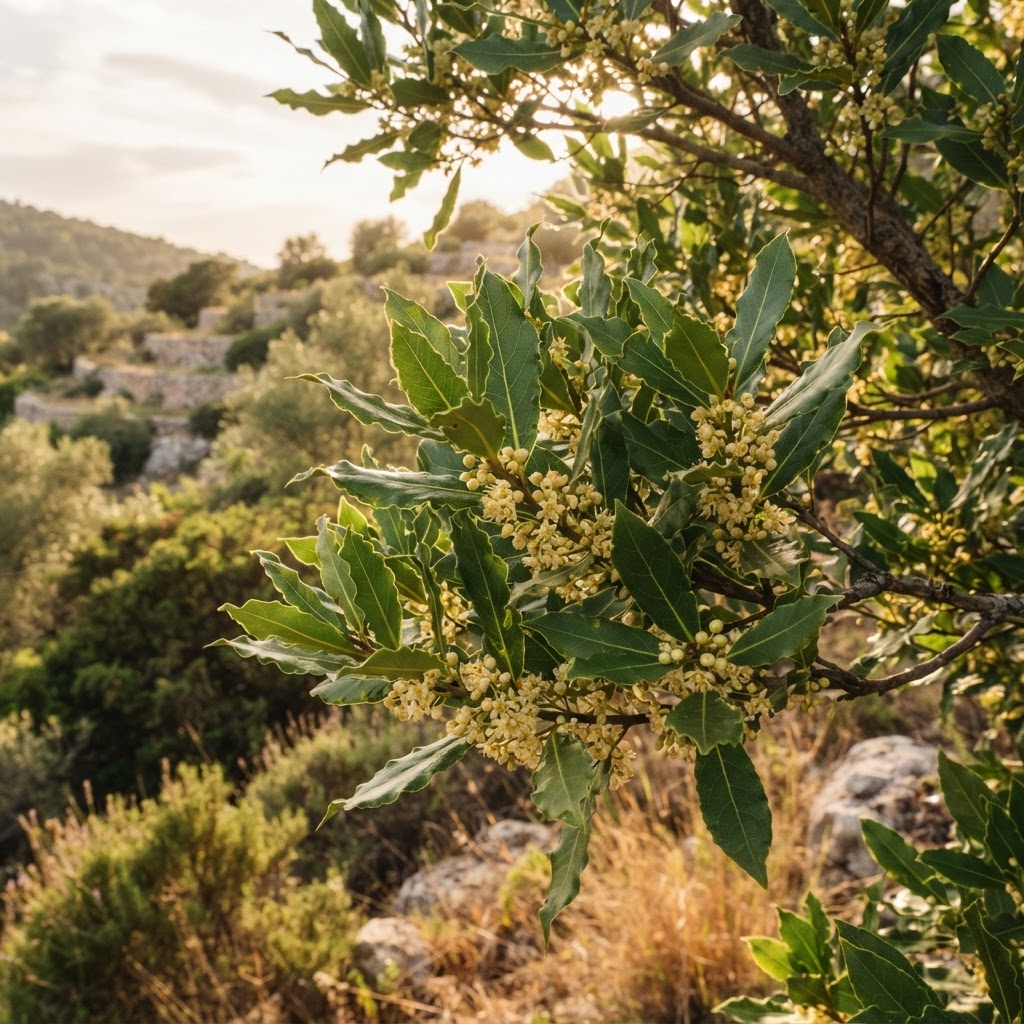
Sweet Bay (Laurus nobilis) is an evergreen tree or large shrub of the Lauraceae (laurel) family, long familiar in the gardens, hillsides, and sacred groves of the Mediterranean. It forms a dense canopy of glossy, leathery, dark green leaves with wavy margins, and in spring bears small, pale yellow flowers followed by dark, olive-like berries. Native to the Mediterranean and widely cultivated, sweet bay has been gathered for millennia for its aromatic leaves, prized as a gentle, resinous herb, a symbol of victory and honor, and a beloved household remedy, woven deep into the cooking, mythology, and gardens of the ancient and modern world.
spring, summer, fall, winter
Fresh, green, and gently floral with a warm, resinous, and faintly eucalyptus ch...
Laurus nobilis
herb
Pairs Well With
Sweet Bay is gathered year-round, and used as a gentle, aromatic flavoring rather than as a bold seasoning.
The leaves are added whole to soups, stews, broths, and stocks, where their warm, resinous, and gently floral flavor infuses the liquid and is removed before serving, a use central to Mediterranean, French, and Indian cooking.
They are folded into rice dishes, grain pilafs, and braises, used to scent marinades, poaching liquids, and pickling brines, and added to slow-cooked sauces, ragouts, and bean dishes to lend depth and a clean, woody warmth.
Fresh leaves are milder and greener than dried, and may be finely chopped and folded into stuffings, sauces, and herb butters, while dried leaves are stronger and most often used whole.
Sweet Bay is infused into herbal teas and tisanes, often blended with honey or lemon, and used to scent custards, creams, and milk puddings.
Always use whole leaves and remove before serving, and use in moderation, as the resinous flavor is aromatic and builds slowly.
Sweet Bay has been treasured for millennia in Mediterranean and Asian herbal and folk tradition as a gentle, warming, and aromatic herb of the garden and the sacred grove.
The leaves were traditionally infused as a gentle herbal tea to soothe the digestion, warm the system, and ease minor fevers, and valued as a gentle, nutritive and aromatic tonic supportive of the appetite and the whole system.
A warm infusion or poultice of the leaves was used in folk practice to soothe minor wounds, aches, and skin irritations, and as a gentle, warming wash for tired and aching limbs, and the leaf oil was a classic household remedy for chest complaints and stiffness.
Sweet Bay was a beloved household remedy, gathered from the garden and kept as an aromatic and warming herb for the digestion and the cold months, and woven deep into the mythology of ancient Greece and Rome, where crowns of bay laurel honored victors, poets, and heroes.
In tradition it was a plant of the garden and the sacred grove, gathered as the leaves unfurled and kept as a household herb for the digestion, the skin, and the ills of the cold months.
Gather the leaves year-round, plucking the youngest, most tender leaves for the freshest flavor, and use fresh or dried; for drying, spread the leaves on a screen in a warm, airy, shaded place and store sealed away from light and heat.
Rinse the leaves well, then add whole to soups, stews, broths, and stocks, removing before serving, or fold into rice dishes, braises, and marinades to infuse their warm, resinous flavor.
Fresh leaves may be finely chopped and folded into stuffings, sauces, and herb butters, while dried leaves are stronger and most often used whole, crumbled lightly to release the aroma.
Infuse the leaves into herbal teas and tisanes, blended with honey or lemon, or use as a gentle, warming wash for the skin.
Always use whole leaves and remove before serving, and harvest only from clean, unpolluted ground away from roads and sprays, gathering only true bay laurel and not ornamental look-alikes.
Sweet Bay is generally considered safe for most adults when consumed in moderate, culinary amounts as a flavoring or gentle herb.
The herb is aromatic and the leaves are prized for their warm, resinous flavor, and should be used whole and removed before serving, as the leathery leaves can be sharp and indigestible if swallowed.
True bay laurel (Laurus nobilis) is culinary and safe, but ornamental look-alikes such as cherry laurel (Prunus laurocerasus) are poisonous and must never be used; always gather only from a reliable source and with certain identification.
Sweet Bay has been used in folk medicine to soothe the digestion and warm the system; pregnant and breastfeeding women should use sweet bay only in small, culinary amounts, and the essential oil should not be taken internally except with professional guidance.
Always use only culinary-grade true bay laurel from a reliable source and correctly identify any plants, and harvest only from clean, unpolluted ground away from roads and sprays.
Sweet Bay has a long tradition in natural beauty and herbal skincare, treasured for its gentle, warming, aromatic, and resinous properties.
An infusion of the leaves is a traditional herbal skin wash and gentle astringent rinse, used to refresh and tone the skin and to soothe minor skin irritations and blemishes.
Sweet Bay is infused into gentle facial toners, skin rinses, and herbal baths to soothe and renew the skin, and into soothing creams and oils to ease minor skin irritations and bring a soft, rested glow.
The leaves are used in herbal compresses for tired and inflamed eyes, in relaxing bath herbs and foot soaks, and the leaf oil in traditional hair tonics to stimulate the scalp and add shine.
With its gentle, warming virtue and resinous fragrance, sweet bay remains a beloved herb of natural beauty rituals and herbal skincare across the Mediterranean and beyond.
Sweet Bay thrives in the sunny, well-drained soils of Mediterranean hillsides, gardens, and sacred groves, forming dense, evergreen canopies that flower in spring and hold their glossy leaves year-round.
The tree is hardy and adaptable, long-lived and drought-tolerant, and its small pale flowers support bees and other pollinators, while its strong scent deters browsing.
In tradition, sweet bay was a plant of the garden and the sacred grove, gathered as the leaves unfurled and woven deep into the mythology of ancient Greece and Rome, where crowns of bay laurel honored victors, poets, and heroes, and the tree was sacred to Apollo.
It was planted at the doorway to guard against lightning and evil, carried as a charm against misfortune, and remains a living thread of folk medicine, household remedy, and the gentle, aromatic ecology of the old garden.
Available Near You
Enter your ZIP code to find farms with sweet bay near you.
Recipes with Sweet Bay
Coming Soon