
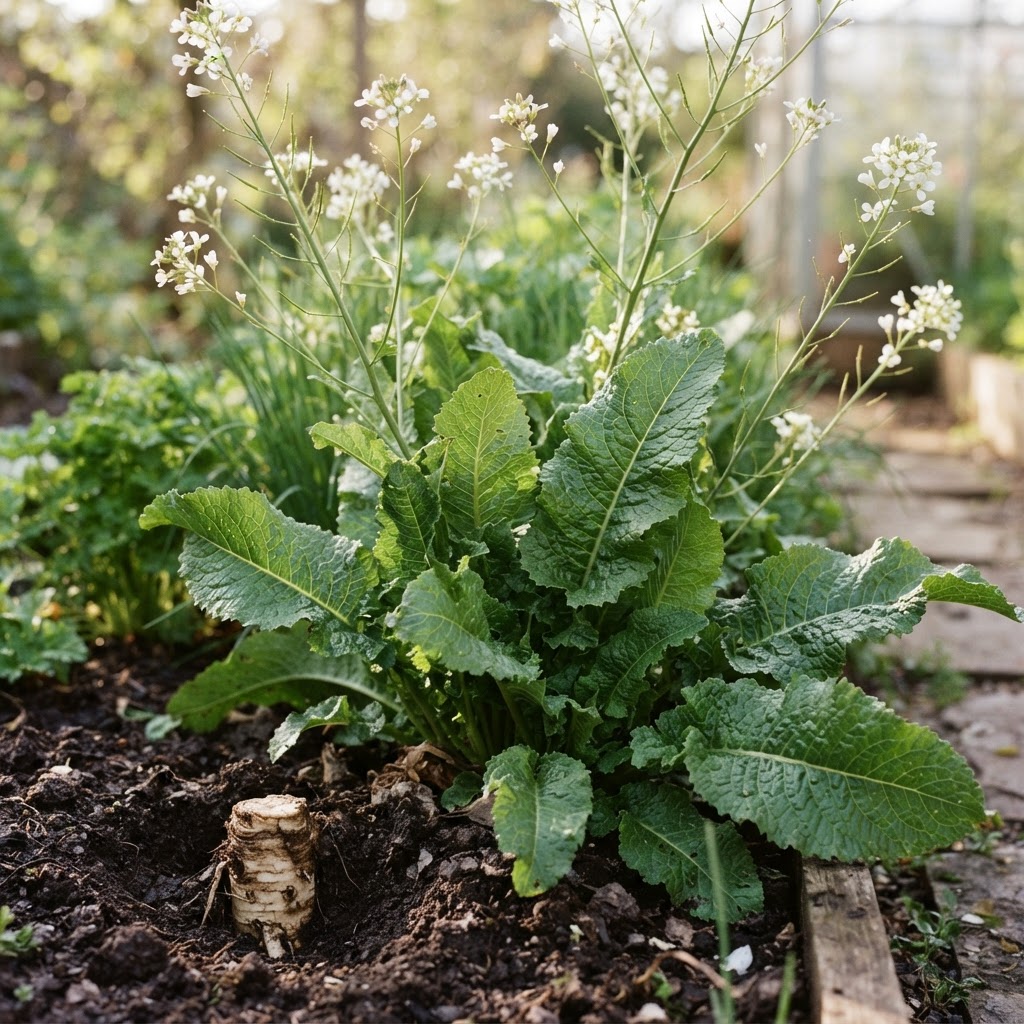
Horseradish
Also known as: Cochlearia armoracia, Red Cole, Mountain Radish, Great Raifort, Pferderettich, Kren, Merretich, Rábano Picante, Cren, Peberrod
Horseradish (Armoracia rusticana) is a hardy, clump-forming perennial of the Brassicaceae (cabbage) family, long familiar in the gardens, fields, and old kitchen plots of temperate Europe and Asia. It forms large, long, fleshy white roots and big, coarse, deep green leaves with crinkled margins and toothed edges, sending up tall stems bearing loose clusters of small white flowers in late spring and early summer. Native to southeastern Europe and western Asia and widely naturalized and cultivated, horseradish has been gathered for centuries for its fiery, aromatic root and peppery young leaves, prized as a pungent condiment, a gentle spring herb, and a beloved household remedy, and woven deep into the culinary traditions of Eastern Europe, the British Isles, and the Jewish Passover table.
spring, fall
Pungent, sharp, and fiery with a clean, hot, mustard-like heat and a faint, eart...
Armoracia rusticana
herb
Pairs Well With
Horseradish is gathered as both a fiery root and a tender spring herb, used as a pungent condiment and gentle green rather than as a bold seasoning.
The young spring leaves are chopped sparingly into salads, where their mild, peppery, mustard-like flavor blends well with milder greens, and used as a delicate garnish for cold soups and spring plates, and lightly cooked in soups and stews, added toward the end to preserve their delicate texture.
The fleshy white root is peeled, grated, and used fresh as a pungent condiment, traditionally mixed with vinegar to tame and preserve its fiery heat, and served with roasted and boiled meats, fish, and eggs.
It is folded into sauces, mustards, and creamy dressings, and used to enliven beet relishes, potato dishes, and deviled eggs, a use central to Eastern European and Ashkenazi Jewish cooking.
Horseradish is infused into cordials and herbal tisanes, and used sparingly to add a clean, hot, aromatic kick to a great many dishes.
Always gather the youngest leaves and freshest roots, as the heat fades quickly once grated, and use in moderation, as the pungency is strong and builds quickly.
Horseradish has been treasured for centuries in European and Asian herbal and folk tradition as a fiery, warming, and aromatic herb of the kitchen and the medicine chest.
The root and leaves were traditionally infused as a warming herbal tea to soothe the digestion, warm the system, and ease minor fevers, and valued as a gentle, nutritive and pungent tonic supportive of the appetite and the whole system.
A warm poultice of the grated root was used in folk practice to warm and stimulate the skin, ease aches and stiffness, and draw out minor wounds, and as a classic household remedy for colds and chest complaints.
Horseradish was a beloved household remedy, gathered from the garden and kept as a pungent and warming herb for the digestion and the cold months, and its fiery virtues are reflected in the old custom of eating grated root with rich meats to 'warm the stomach and cut the fat.'
In tradition it was a plant of the garden and the kitchen, gathered in spring for its tender leaves and dug in autumn for its fiery root, and kept as a household herb for the digestion, the skin, and the ills of the cold months.
Gather the young, tender leaves in spring, before and as the plant flowers, when the flavor is most peppery and the texture most delicate, and use fresh or dried; for drying, spread the leaves on a screen in a warm, airy, shaded place and store sealed away from light and heat.
Dig the fleshy white roots in autumn, after the plant has stored its reserves, scrub and peel, then grate fresh as needed; the fiery heat and aroma fade quickly once exposed to air, so grate just before serving and preserve with vinegar to capture the peak pungency.
Rinse the leaves well, then use sparingly raw in salads, as a garnish, or lightly cooked in soups and stews, added toward the end of cooking to preserve their delicate texture and flavor.
The grated root is mixed with vinegar, cream, or mustard to make sauces and condiments, and used to enliven beet relishes, potato dishes, and roasted meats.
Always gather the youngest leaves and freshest roots, as older leaves become tough and bitter, and harvest only from clean, unpolluted ground away from roads and sprays.
Horseradish is generally considered safe for most adults when consumed in moderate, culinary amounts as a condiment or gentle herb.
The herb is pungent and the grated root is prized for its fiery, sinus-clearing heat, and should be used sparingly, as large amounts may irritate the mouth, throat, and stomach, and contact with the eyes should be avoided.
Horseradish has been used in folk medicine to warm the system and soothe the digestion; pregnant and breastfeeding women should use horseradish only in small, culinary amounts, and medicinal or prolonged use should be undertaken only with professional guidance.
Those with stomach ulcers, kidney disease, or known sensitivities should use horseradish cautiously and sparingly, and avoid medicinal amounts.
Always use only culinary-grade horseradish from a reliable source and correctly identify any wild plants, and harvest only from clean, unpolluted ground away from roads and sprays.
Horseradish has a long tradition in natural beauty and herbal skincare, treasured for its fiery, warming, and stimulating properties rather than for delicate fragrance.
An infusion of the leaves and grated root is a traditional herbal skin wash and stimulating rinse, used to refresh and tone the skin and to bring a warm, rosy glow to pale or tired complexions.
Horseradish is infused into stimulating facial toners, skin rinses, and herbal baths to warm and renew the skin, and into warming creams and oils to ease minor aches and bring a soft, rested glow.
The grated root is used in traditional herbal hair rinses to stimulate the scalp and in folk practice to fade minor skin spots and blemishes, and the leaves in herbal compresses for tired and inflamed eyes.
With its fiery, warming virtue, horseradish remains a beloved, if sparingly used, herb of natural beauty rituals and herbal skincare across the temperate world.
Horseradish thrives in the deep, moist, well-drained soils of gardens, fields, and old kitchen plots across temperate Europe and Asia, forming leafy clumps that flower in late spring and send down long, fleshy white roots.
The plant is hardy and adaptable, spreading vigorously by root, and its small white flower clusters support bees and other pollinators, while its strong scent deters browsing and its deep roots bind the soil.
In tradition, horseradish was a plant of the garden and the kitchen, gathered in spring for its tender leaves and dug in autumn for its fiery root, and woven deep into the Passover Seder plate, the Eastern European Easter table, and the Sunday roast of the British Isles.
It was carried as a charm against evil, eaten to warm the body and cut the fat, and remains a living thread of folk medicine, household remedy, and the fiery, aromatic ecology of the old garden.
Available Near You
Enter your ZIP code to find farms with horseradish near you.
Recipes with Horseradish
Coming Soon