
Alexander
Also known as: Alisander, Alexander's Sage, Horse Parsley, Black Lovage, Maceron, Smyrnium, Persil de Macédoine, Schwarzer Liebstöckel, Alessandrina
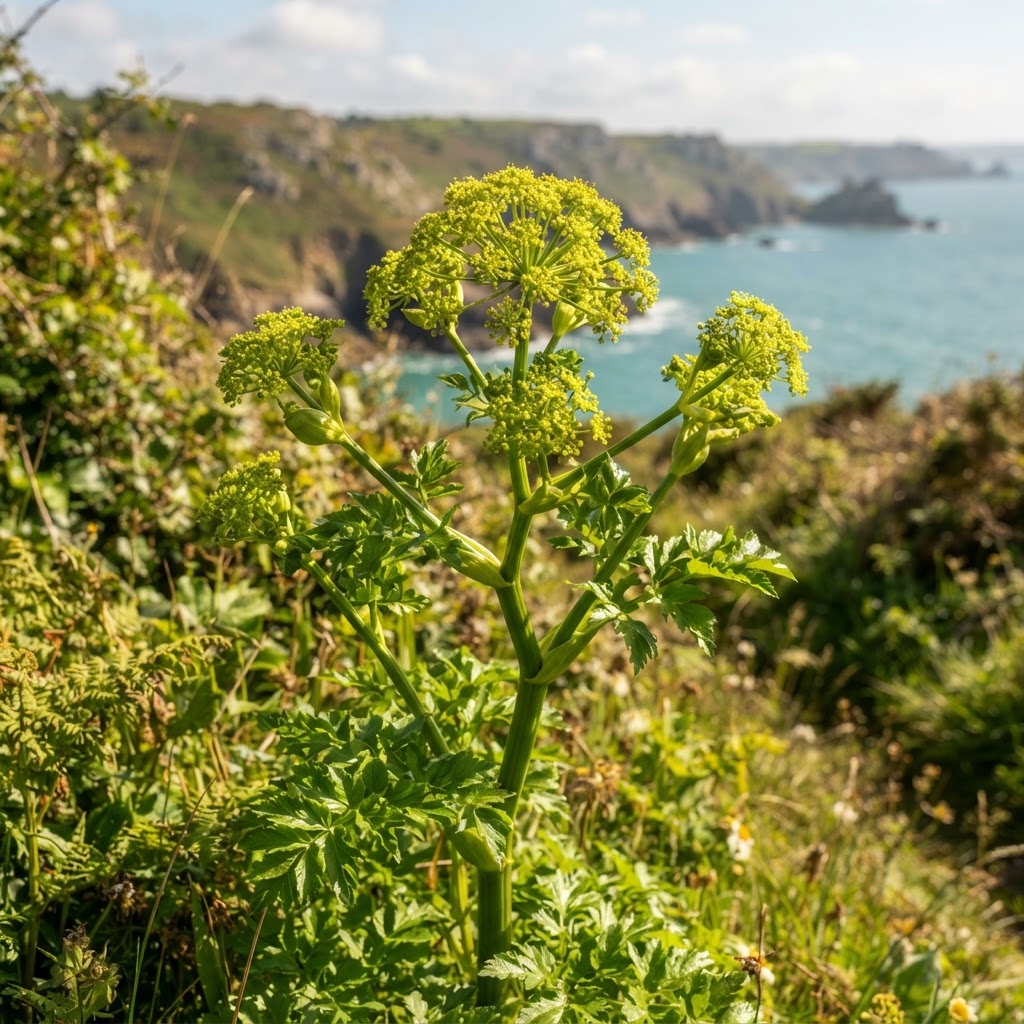
Alexander (Smyrnium olusatrum) is a tall, hardy biennial of the Apiaceae (carrot) family, long naturalized across the hedgerows, cliffs, and old gardens of southern and western Europe and the Atlantic seaboard. It sends up stout, glossy, branched stems clothed in bright green, celery-like leaves divided into broad, toothed leaflets, and bears dense, rounded umbels of small, bright yellow-green flowers in spring, followed by aromatic black seeds. Native to the Mediterranean and widely naturalized in Britain and beyond, Alexander was once cultivated as a winter and spring vegetable, prized for its celery-like flavor, and has been gathered for centuries as a wild edible, a gentle aromatic herb, and a beloved sign of the returning spring.
spring
Savory, aromatic, and distinctly celery-parsley with a warm, earthy, and faintly...
Smyrnium olusatrum
herb
Pairs Well With
Alexander is gathered young and tender, and used as a pot herb, vegetable, and aromatic seasoning rather than as a bold spice.
The young stems are peeled and cooked like celery or asparagus, gently boiled, steamed, or braised, and served warm with butter or a light sauce, a traditional spring vegetable in coastal Britain and the Atlantic seaboard.
The young leaves are chopped raw into spring salads, where their savory, celery-parsley flavor blends well with milder greens and a tangy vinaigrette, or added to soups, stews, and broths as a pot herb.
The flower buds are gathered and pickled in vinegar or used as a caper substitute, and the unripe seed pods may be pickled in a similar way for a sharp, aromatic accent.
Alexander stems and leaves are folded into omelets, savory tarts, and rice dishes, and the seeds are used sparingly as a celery-like seasoning in country cooking.
Always gather the youngest growth, as the plant quickly becomes tough, fibrous, and bitter after flowering, and use in moderation, as the savory flavor is strong.
Alexander has been treasured for centuries in European herbal and folk tradition as a gentle, warming, and nutritive herb of the early spring.
The leaves and stems were traditionally infused as a gentle herbal tea to soothe the digestion, warm the system, and ease minor fevers, and valued as a gentle, nutritive tonic supportive of the appetite and the whole system.
A warm infusion or poultice of the leaves was used in folk practice to soothe minor wounds, aches, and skin irritations, and as a gentle, warming wash for tired and aching limbs.
Alexander was a classic spring vegetable, gathered from hedgerows and cliffs and cultivated in old gardens as a winter and spring green, prized for its celery-like flavor and gentle, nutritive virtue.
In tradition it was a plant of the returning spring, gathered as the first fresh growth of the year and kept as a household herb for the digestion, the skin, and the ills of the cold months.
Gather the young stems, leaves, and flower buds in spring, before and as the plant begins to flower, when the flavor is most aromatic and the texture most tender, and use fresh or dried; for drying, spread the leaves on a screen in a warm, airy, shaded place and store sealed away from light and heat.
Peel the young stems, then cook like celery or asparagus, gently boiled, steamed, or braised, and serve warm with butter or a light sauce.
Chop the young leaves raw into spring salads, or add to soups, stews, and broths as a pot herb toward the end of cooking to preserve their delicate flavor.
Gather the flower buds and unripe seed pods and pickle them in vinegar as a caper substitute, or use the seeds sparingly as a celery-like seasoning.
Always gather the youngest growth, as the plant quickly becomes tough, fibrous, and bitter after flowering, and harvest only from clean, unpolluted ground away from roads and sprays.
Alexander is generally considered safe for most adults when consumed in moderate, culinary amounts as a wild green or aromatic herb.
The herb is savory and the young stems and leaves are prized for their celery-parsley flavor, and should be gathered young and tender to avoid toughness and bitterness.
As a member of the carrot family, Alexander can be confused with less benign look-alikes, some of which are dangerously poisonous; always gather only with certain identification and from a reliable source.
Alexander has been used in folk medicine to soothe the digestion and warm the system; pregnant and breastfeeding women should use Alexander only in small, culinary amounts, and medicinal or prolonged use should be undertaken only with professional guidance.
Always use only culinary-grade Alexander from a reliable source and correctly identify any wild plants, as the leaves and stems can be confused with less benign look-alikes, and harvest only from clean, unpolluted ground away from roads and sprays.
Alexander has a modest tradition in natural beauty and herbal skincare, treasured chiefly for its gentle, warming, and nutritive properties rather than for delicate fragrance.
An infusion of the leaves is a traditional herbal skin wash and astringent rinse, used to refresh and tone the skin and to soothe minor skin irritations and blemishes.
Alexander is infused into relaxing and warming bath herbs, foot soaks, and herbal washes to warm and renew the skin, a use rooted in centuries of European folk tradition.
It was used in old herbal practice to support the skin, ease minor aches and irritations, and as a gentle, nutritive herb for tired and aching limbs.
The warming, savory quality of Alexander makes it a useful, if sparing, ingredient in herbal skincare blends, and the dried leaves are kept as a household herb for occasional skin and tonic use.
Alexander thrives in the disturbed, well-drained soils of hedgerows, cliffs, old gardens, and coastal ground across southern and western Europe and the Atlantic seaboard, forming tall, leafy stands that flower in spring and set aromatic black seeds by early summer.
The plant is vigorous and hardy, spreading by seed, and its bright flower umbels support bees and other early pollinators, while its strong scent deters browsing.
In tradition, Alexander was a plant of the returning spring, gathered as the first fresh growth of the year and cultivated in old gardens as a winter and spring vegetable, prized for its celery-like flavor and gentle, nutritive virtue.
It remains a beloved sign of spring along the hedgerows and cliffs of Britain and the Atlantic coast, a living thread of kitchen, medicine, and folk tradition.
Available Near You
Enter your ZIP code to find farms with alexander near you.
Recipes with Alexander
Coming Soon