
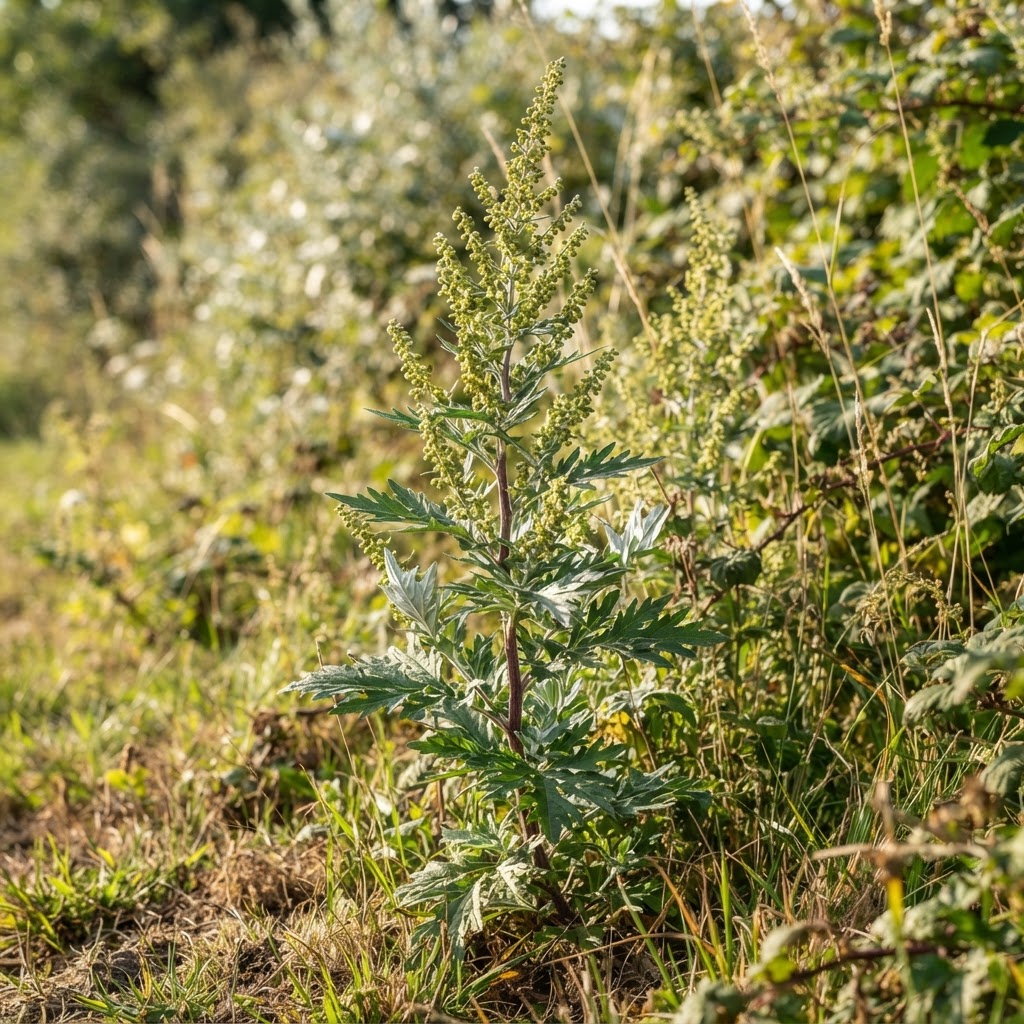
Mugwort
Also known as: Common Mugwort, Common Wormwood, Felon Herb, St. John's Plant, Moxa, Armoise, Beifuß, Artemisia
Mugwort (Artemisia vulgaris) is a tall, hardy, aromatic perennial of the Asteraceae (daisy) family, long naturalized across the temperate regions of Europe, Asia, and North America. It sends up stout, reddish stems clothed in deeply divided, dark green leaves—white and woolly beneath—and bears small, inconspicuous yellow-green to reddish flower heads in late summer, releasing a pungent, camphoraceous scent when brushed. Native to Eurasia and widely naturalized, mugwort has been cultivated and gathered for millennia as a culinary, medicinal, and protective herb, valued for its bitter flavor, digestive virtues, and rich folkloric association with dreams, protection, and midsummer rituals.
spring, summer
Bitter, aromatic, and herbal with a distinctly earthy, resinous, and camphoraceo...
Artemisia vulgaris
herb
Pairs Well With
Mugwort is used sparingly as a bitter aromatic, prized for its deep, savory character rather than eaten in quantity.
A small amount may be used to flavor rich, fatty meats such as goose, duck, pork, and game, where its bitterness cuts the fat and aids digestion, a traditional pairing in northern European and Asian country cooking.
It is a classic seasoning for the Christmas goose and for hearty stuffings, sausages, and pâtés in parts of Germany and central Europe, often combined with thyme, sage, or marjoram.
Mugwort is sometimes infused into herbal teas, bitters, liqueurs, and vermouths to add a bitter, aromatic depth, and used in tiny amounts in marinades and herbal salt blends.
In East Asian tradition, young mugwort leaves are blanched or pulped and used sparingly in rice cakes, soups, and savory pancakes, and the dried herb is rolled into moxa sticks for warming therapy.
Always use small quantities and taste as you go, as the bitterness is strong and builds quickly.
Mugwort has been treasured for millennia in European and Asian herbal and folk tradition as a bitter digestive, a protective plant, and an herb of dreams.
The leaves were traditionally infused as a bitter tonic to stimulate the appetite, ease indigestion, and support the liver and stomach, particularly after rich, heavy meals.
It was valued in old herbal practice for easing menstrual complaints, expelling worms, and soothing fevers, and as a warming, relaxing nervine to calm the nerves and support rest.
Mugwort was a classic protective and strewing herb, hung over doors and tucked into bedding to ward off evil, illness, and insects, and carried or burned as a smudge in midsummer rituals of cleansing and protection.
In folk tradition it was an herb of dreams and travel—placed under the pillow to inspire vivid dreams, and associated in old Europe with St. John and the magic of midsummer.
Gather the young leaves and tender tips in spring and early summer, before flowering, when the flavor is most aromatic and least bitter; later leaves become tougher and more astringent.
Use mugwort fresh or dried; for drying, hang small bundles in a warm, airy, shaded place and store sealed away from light and heat.
Rinse and chop a small amount finely before use, and taste the dish as you go, as the bitterness is strong and builds quickly.
Use in tiny quantities with rich meats, in stuffings, sausages, and marinades, or infused into teas, bitters, and liqueurs, and always pair with milder herbs such as thyme, sage, or marjoram to balance its intensity.
For East Asian use, blanch young leaves briefly to soften and mellow their bitterness before cooking.
Always use only culinary-grade mugwort from a reliable source; wild plants must be correctly identified, as mugwort can be confused with less benign look-alikes.
Mugwort is generally considered safe in small, culinary amounts for most adults when used occasionally as a flavoring.
The herb is potent and bitter and should be used sparingly; large or frequent amounts may cause digestive upset, nausea, or nervous effects in sensitive individuals.
Mugwort has been used in folk medicine to stimulate menstruation and ease menstrual complaints; pregnant women should avoid mugwort, especially in medicinal amounts, due to potential effects on the uterus and pregnancy.
Mugwort pollen is a common cause of seasonal allergic reactions, particularly in those sensitive to ragweed and other members of the daisy family, and contact with the fresh plant may cause skin reactions in some.
Always use only culinary-grade mugwort from a reliable source and correctly identify any wild plants; medicinal or prolonged use should be undertaken only with professional guidance.
Mugwort has a long history in natural beauty and herbal care, treasured for its cleansing, aromatic, and warming properties.
An infusion of the leaves is a traditional rinse for the hair and scalp, said to soothe irritation, add shine, and help control dandruff, and is used in herbal hair tonics in parts of Asia.
Mugwort is infused into relaxing bath herbs, foot soaks, and massage oils to warm the body, soothe tired muscles, and calm the nerves, a use rooted in centuries of European and Asian folk tradition.
It was used in old herbal washes and astringent skin rinses to soothe and refresh the skin, and infused into oils to ease minor skin irritations.
The warming, aromatic quality of mugwort makes it a beloved ingredient in herbal pillows, sleep sachets, and soothing skincare blends, and the dried herb is rolled into moxa sticks for traditional warming therapy.
Mugwort thrives in the disturbed, well-drained soils of roadsides, hedgerows, riverbanks, and rough ground across temperate Europe, Asia, and North America, forming tall, leafy stands that flower in late summer.
The plant is vigorous and hardy, spreading by seed and rhizome, and its small flowers support bees and beneficial insects, while its strong scent deters browsing animals.
In tradition, mugwort was a plant of protection, dreams, and midsummer magic—hung over doors to ward off evil, worn as a charm against illness and misfortune, and placed under pillows to inspire vivid dreams and aid travel.
Named for its old use in flavoring beer before hops, and associated across Europe with St. John and the magic of midsummer, it remains a living thread of kitchen, medicine, and folk tradition across the temperate world.
Available Near You
Enter your ZIP code to find farms with mugwort near you.
Recipes with Mugwort
Coming Soon