
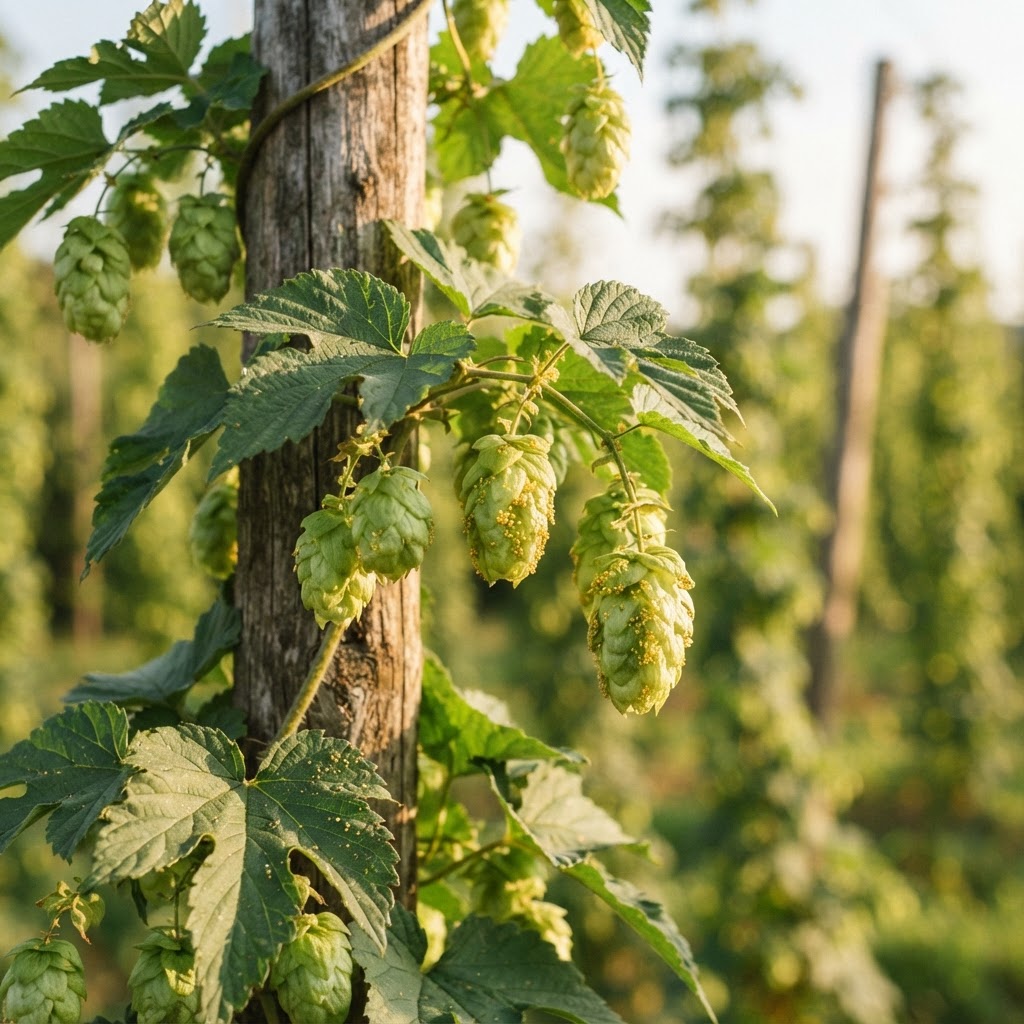
Hops
Also known as: Common Hops, European Hops, Hop Vine, Houblon, Luppolo, Hopfen
Hops are the flowers (seed cones) of Humulus lupulus, a vigorous, climbing perennial bine of the Cannabaceae family, long grown across the temperate regions of Europe, Asia, and North America. The plant sends up long, twining stems each spring, clothed in deeply lobed, rough green leaves, and bears pendulous, pale green cone-like flowers studded with golden, powdery lupulin glands that hold the bitter, aromatic resins and essential oils. Native to temperate Eurasia and naturalized widely, hops have been cultivated for at least a thousand years as the defining bittering and preserving agent of beer, and as a traditional medicinal and culinary herb valued for their calming, digestive, and aromatic qualities.
spring, summer, fall
Bitter, aromatic, and herbal with a distinct resiny, earthy, and floral characte...
Humulus lupulus
herb
Pairs Well With
Hops are most famous as the bittering and aromatic heart of beer, where their resins and oils balance the sweetness of malt and lend the characteristic floral, citrus, pine, and herbal aromas of every style from delicate pilsner to bold IPA.
Young hop shoots and tendrils, known as "hop tops" or "hop asparagus," are a prized spring delicacy in parts of Europe, gathered when just a few inches tall and gently sautéed, steamed, or folded into risotto, frittata, soups, and pasta, with a flavor reminiscent of asparagus and sorrel.
Hop leaves and young cones may be used sparingly to flavor broths, infusions, and herbal liqueurs, or to add a bitter aromatic note to savoury dishes and herbal salts.
Dried hop cones can be steeped into teas, tinctures, and bitters, and infused into syrups, vinegars, and cordials for their aromatic, relaxing quality.
Hops are potent and bitter; use them sparingly in the kitchen and always pair with rich or sweet elements to balance their intensity.
Hops have been used for over a millennium as a beer bittering and preserving agent, valued for their antimicrobial resins that help clarify and stabilize ale.
In European herbal tradition, hops were treasured as a calmative, sedative, and bitter digestive, infused as a relaxing tea to ease anxiety, restlessness, and insomnia, and taken after meals to stimulate digestion and appetite.
Hop pillows and sachets—stuffed with the dried, fragrant cones—were a folk favorite for promoting sleep and soothing the nerves, a use still cherished today.
Hops were used in old herbal practice as a gentle diuretic, a bitter tonic for the stomach and liver, and a poultice or wash for the skin, and the young shoots were eaten each spring as a cleansing, tonic vegetable.
They remain a symbol of brewing, harvest, and conviviality across the temperate world.
For the spring "hop asparagus," gather the young shoots and tender tips when just 2–6 inches tall, snapping off the woody bases and gently peeling if needed; blanch or sauté briefly to preserve their delicate, asparagus-like flavor.
For hop cones, harvest in late summer when the papery cones feel dry, springy, and richly scented, and the lupulin dust is golden and fragrant; dry them gently in a warm, airy, shaded place and store sealed away from light and heat.
Use dried cones sparingly in teas, infusions, bitters, and herbal liqueurs, or infuse into syrups and vinegars for a bitter aromatic edge.
For cooking, use only culinary-grade, pesticide-free hops from a reliable source; commercially grown hops for brewing are not always intended for culinary use.
Always use hops in small amounts and taste as you go, as the bitterness is intense and builds quickly.
Hops are generally considered safe for most adults in culinary and moderate tea amounts, and have a long history of safe use in brewing and herbal practice.
Due to their mild sedative and hormonal effects, hops may cause drowsiness and should be used with caution when driving or operating machinery, and in combination with sedative medications.
Hops contain mild phytoestrogens and have been used in folk practice to support menstruation and menopause; pregnant and breastfeeding women should consult a professional before medicinal use.
Some individuals may experience allergic reactions, particularly those sensitive to pollen or to plants in the Cannabaceae family, and fresh hop cones can cause contact dermatitis in sensitive individuals during harvest.
Use only culinary- or brewing-grade, pesticide-free hops from a reliable source; ornamental and nursery plants may be treated and are not intended for consumption.
Hops have a long-standing place in natural beauty and herbal care, treasured for their calming, soothing, and toning properties.
An infusion of hop cones is a traditional hair rinse, said to add shine, condition the scalp, and help soothe irritation and dandruff, and is an old folk treatment for thinning hair.
Hops are infused into relaxing bath herbs, sleep pillows, and massage oils to calm the nerves, soothe tired muscles, and promote restful sleep, a use rooted in centuries of folk tradition.
They are used in old herbal washes and astringent skin tonics to soothe and refresh the skin, and infused into oils to ease minor skin irritations.
The gentle sedative and aromatic quality of hops makes them a beloved ingredient in sleep sachets, herbal pillows, and calming skincare blends.
Hops thrive in the cool, moist, temperate climates of Europe, Asia, and North America, climbing vigorously each summer up trellises, poles, and hedgerows in sun-rich, well-drained soil.
The bine is a perennial, dying back to a rhizome each winter and racing upward again in spring, its stems twining clockwise and its pale cones maturing by late summer; the cones are rich in nectar and pollen and support bees and beneficial insects, while the dense foliage offers shelter to small wildlife.
In tradition, hops were a plant of harvest, celebration, and communal festivity, the centerpiece of hop-picking festivals and rural gatherings across the brewing regions of Europe; their calming, aromatic cones were tucked into pillows for sleep and scattered as strewing herbs for their fragrance.
They remain a living thread of brewing, harvest, and herbal tradition across the temperate world.
Available Near You
Enter your ZIP code to find farms with hops near you.
Recipes with Hops
Coming Soon