
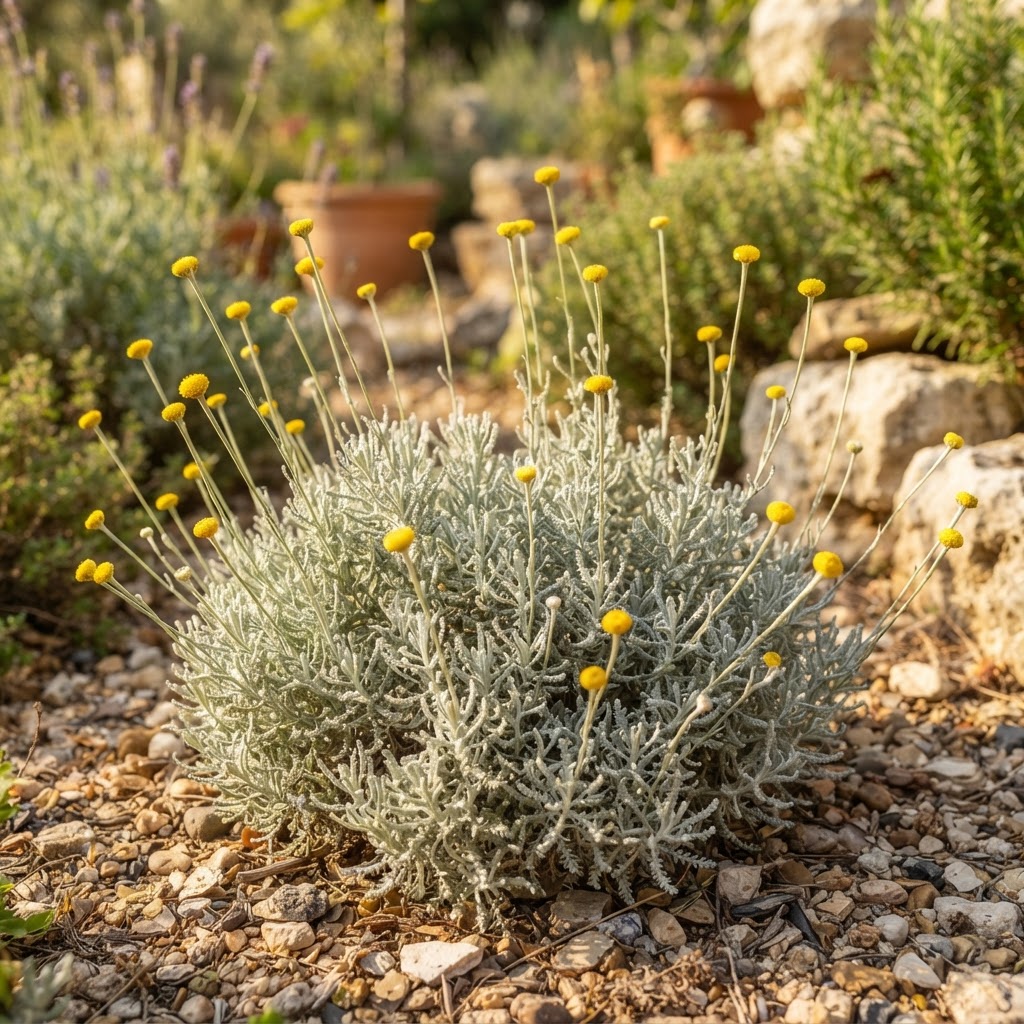
Santolina
Also known as: Lavender Cotton, Cotton Lavender, Grey Santolina, Santoline, Petite Cyprière
Santolina, commonly called lavender cotton or cotton lavender, is a small, evergreen, aromatic sub-shrub of the Asteraceae (daisy) family long grown in the herb gardens of the Mediterranean and across southern Europe. It bears dense, finely divided, silvery-grey foliage—soft and cottony to the touch—and small, rounded, bright yellow button flowers on upright stems, releasing a strong, camphoraceous scent when brushed. Native to the western and central Mediterranean, santolina has been cultivated for centuries as a culinary, medicinal, and protective herb, valued for its bitter flavor, insect-repelling fragrance, and ornamental silvery beauty in knot gardens and borders.
spring, summer
Bitter, pungently aromatic, and herbal with a camphoraceous, resinous, and sligh...
Santolina chamaecyparissus (also Santolina rosmarinifolia)
herb
Pairs Well With
Santolina is used sparingly as a bitter, aromatic herb, prized for its intense, savory character rather than eaten in quantity.
A small sprig may be used to flavor rich, fatty meats such as mutton, lamb, pork, and game, where its bitterness cuts the fat and aids digestion, a traditional pairing in old Mediterranean country cooking.
It is sometimes infused into vinegars, oils, and herbal liqueurs and bitters to add a bitter, aromatic depth.
Santolina can be used in tiny amounts in savory marinades, stuffings, and herbal salt blends, often combined with rosemary, thyme, or sage, and is best used in combination with other herbs to balance its strong, camphoraceous edge.
It is rarely used in modern kitchens; the flavor is potent and can turn soapy or medicinal if overused.
Always use fresh, young leaves in small quantities and taste as you go.
Santolina has been treasured for centuries in Mediterranean and European herbal and folk tradition as a bitter digestive, a protective plant, and an insect-repelling and strewing herb.
The leaves were traditionally infused as a bitter tonic to stimulate the appetite, aid digestion, and ease sluggish digestion after rich meals.
It was valued in old herbal practice for easing fevers, menstrual complaints, and worm infestations, and as a gentle antiseptic wash for the skin.
Santolina was a classic strewing herb, scattered on floors and tucked into linen to perfume the home and repel moths, fleas, and insects, and was grown near cottage doors for protection and fragrance.
In folk tradition it was a plant of protection and cleansing, valued for its silvery beauty and its strong, medicinal scent.
Gather the young, tender leaves and tips in spring and early summer, before the plant flowers, when the flavor is most aromatic and least bitter.
Use santolina fresh; the leaves lose much of their aroma when dried, so harvest as needed.
Rinse and chop a small amount finely before use, and taste the dish as you go, as the bitterness is strong and builds quickly.
Use in tiny quantities with rich meats, in stuffings and marinades, or infused into vinegars and herbal liqueurs, and always pair with milder herbs such as rosemary, thyme, or sage to balance its intensity.
For insect-repelling and household use, hang bundles of fresh or dried santolina in wardrobes, or scatter the leaves among linens.
Always use only culinary-grade santolina grown without pesticides; ornamental plants from nurseries may be treated and are not intended for consumption.
Santolina is generally considered safe in small, culinary amounts for most adults when used occasionally as a flavoring.
The herb is potent and bitter and should be used sparingly; large or frequent amounts may cause digestive upset, nausea, or skin irritation in sensitive individuals.
Santolina has been used in folk medicine to induce menstruation and expel worms; pregnant and breastfeeding women should avoid santolina, especially in medicinal amounts, due to potential effects on the uterus and pregnancy.
Some individuals may experience allergic reactions, particularly those sensitive to plants in the daisy family.
Always use only culinary-grade santolina from a reliable source; ornamental and nursery plants may be treated and are not intended for consumption.
Medicinal or prolonged use should be undertaken only with professional guidance.
Santolina has a long history in natural beauty and herbal care, treasured for its cleansing, aromatic, and insect-repelling properties.
An infusion of the leaves is a traditional rinse for the hair, said to strengthen the hair, add shine, and help control dandruff and scalp conditions.
The strong, camphoraceous fragrance made santolina a favorite strewing and sachet herb for linen closets and wardrobes, perfuming fabrics and repelling moths.
It was used in old herbal washes and astringent rinses for the skin, and infused into oils to soothe insect bites and minor irritations.
Its aromatic, protective quality makes it a folk favorite for herbal sachets, potpourri, and wardrobes, where it keeps fabrics fresh and fragrant, and for ornamental knot gardens and silver borders.
Santolina thrives in the hot, dry, sunny, well-drained soils of the western and central Mediterranean, from Spain and southern France to Italy and North Africa.
The plant is exceptionally hardy and drought-tolerant, forming dense, silvery cushions that stabilize dry slopes and gravelly ground and grace old cottage and monastery gardens; its small yellow flowers support bees and beneficial insects in midsummer.
In tradition, santolina was a plant of protection, cleansing, and the household—grown by doorways to ward off evil, scattered on floors to perfume the air, and used in charms against sickness and insects.
Its soft, silver foliage made it a beloved ornamental of Renaissance knot gardens and Mediterranean borders, a living thread of kitchen, medicine, and cottage tradition across southern Europe.
Available Near You
Enter your ZIP code to find farms with santolina near you.
Recipes with Santolina
Coming Soon