
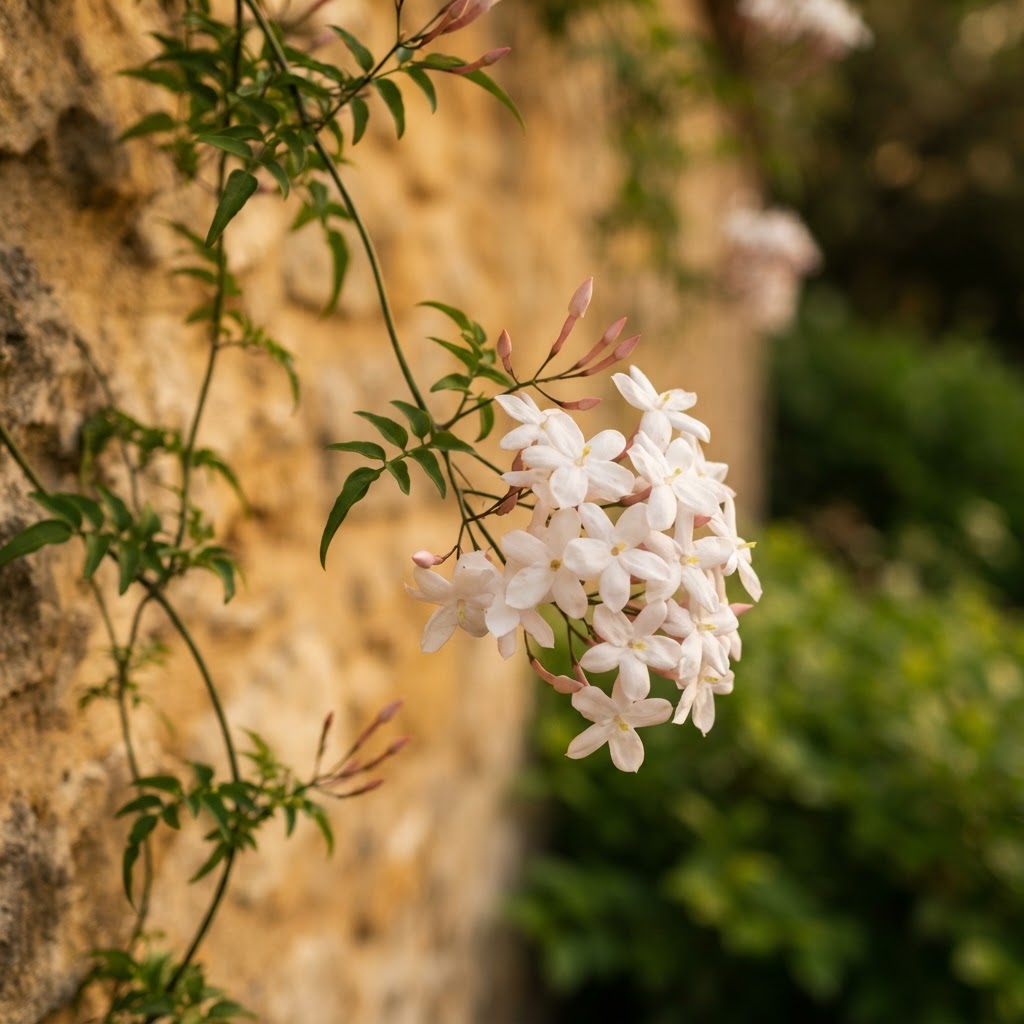
Jasmine
Also known as: Common Jasmine, Poet's Jasmine, Spanish Jasmine, Royal Jasmine, Sambac Jasmine, Night-Blooming Jasmine
Jasmine is the name given to several species of tender, twining, deciduous or evergreen climbers of the Oleaceae (olive) family, chiefly Jasminum officinale, the common or poet's jasmine, and Jasminum sambac, the sambac or Arabian jasmine. Native to the Himalayas, South and Southeast Asia, and regions of China and the Middle East, jasmine bears clusters of small, star-shaped, intensely fragrant white or pale pink flowers that open at dusk and perfume the warm night air. For centuries jasmine has been treasured across Asia and the Mediterranean as a sacred, ceremonial, and culinary flower—woven into garlands, distilled into precious attars, and layered into green and white teas to create some of the world's most beloved scented teas. Its fragrance is among the most prized in all perfumery and herbalism.
summer, fall
Intensely floral, sweet, and honeyed with a delicate, heady, and lingering aroma...
Jasminum officinale (also Jasminum sambac, Jasminum grandiflorum)
herb
Pairs Well With
Jasmine is used in minute quantities as a delicate, heady floral accent, prized for its intoxicating fragrance.
Fresh jasmine flowers are layered with green or white tea leaves to scent jasmine tea, one of the most popular scented teas in the world, the flowers later removed or left in small numbers.
The flowers infuse light syrups, honeys, and sugars, lending an exquisite floral sweetness to lemonades, iced teas, cocktails, and summer cordials.
Jasmine-scented waters and extracts are used in tiny amounts to flavor creams, custards, jellies, ice creams, and delicate pastries, often paired with almond, rose, or citrus.
In some Asian traditions, jasmine flowers are added to rice or used as a fragrant garnish, and sambac jasmine is used to scent certain confections and desserts.
Jasmine is best paired with green tea, white tea, honey, lemon, coconut, and soft fruits, and used very sparingly, as too much turns soapy and cloying.
Only food-grade, unsprayed jasmine flowers or prepared jasmine tea and extracts should be used in the kitchen.
Jasmine has been treasured for centuries in Asian, Middle Eastern, and Mediterranean herbal and perfumery tradition as a calming nervine, a sacred flower, and one of the most precious aromatic materials.
The flowers were traditionally infused to calm the nerves, ease anxiety and low mood, lift the spirits, and promote restful sleep and relaxation.
Jasmine was valued as a gentle aphrodisiac and mood-elevating herb, used in aromatherapy, massage oils, and baths to soothe tension and emotional strain.
It was a staple of fine perfumery across the Islamic world and Asia, distilled into precious attars, jasmine oils, and floral waters, and woven into garlands for weddings, temples, and ceremonial offerings.
In folk tradition, jasmine was a flower of love, purity, and devotion, planted near windows and doorways for its night fragrance and gathered at dusk when the scent is strongest.
Gather the flowers at dusk or early evening just as they begin to open, when the fragrance is at its peak, picking only fully formed, unsprayed blooms.
Use jasmine fresh; for tea, layer fresh flowers among dry green or white tea leaves and leave sealed overnight, refreshing the flowers over several nights for a deeper scent, then remove or leave a few blooms for garnish.
For syrups, honeys, and infusions, steep a small handful of fresh flowers in warm (not boiling) liquid for a short time, then strain, as heat can dull the delicate fragrance.
Jasmine pairs beautifully with honey, lemon, green and white tea, coconut, and soft stone fruit, and should be used in small amounts, balanced with sweet, citrus, or creamy partners.
Always use food-grade, pesticide-free jasmine flowers grown for culinary use; ornamental and florist jasmine is often treated and is not intended for consumption.
Food-grade jasmine flowers are generally considered safe in typical culinary and tea amounts for most adults.
Jasmine is potent and should be used sparingly; excessive amounts may cause headache, nausea, or digestive upset in sensitive individuals.
True jasmine (Jasminum species) should not be confused with night-blooming jasmine (Cestrum nocturnum) or other unrelated plants called jasmine, some of which are toxic; use only positively identified Jasminum species.
Some individuals may experience allergic reactions to jasmine flowers or pollen; discontinue use if irritation occurs.
Jasmine may have mild sedative effects; consult a healthcare provider before using jasmine medicinally alongside sedative medications or during pregnancy.
The concentrated essential oil is for external and aromatic use only and should not be ingested without professional guidance.
Always use only culinary-grade, unsprayed jasmine grown for food use.
Jasmine is among the most prized flowers in natural beauty and perfumery, treasured for its exquisite, heady fragrance and its soothing, mood-lifting properties.
Jasmine floral water and infused oils tone and soften the skin, balancing dryness and lending a delicate, lingering scent.
It is a classic addition to bath oils, soaks, and salts, calming the skin and easing tension, and is widely used in massage oils to soothe sore muscles and uplift the spirits.
Jasmine is a staple of fine natural perfumery, used to scent oils, balms, and creams with its rich, sweet, floral bouquet, and to deepen rose, neroli, and sandalwood blends.
Its gentle, aromatic quality makes it a folk favorite for hair oils and rinses, leaving the hair softly fragrant and the scalp conditioned.
Jasmine thrives in warm, sunny, humid climates across South and Southeast Asia, China, the Middle East, and the Mediterranean, favoring well-drained soil and a long, warm growing season.
The flowers open at dusk and release their strongest fragrance at night, an adaptation thought to attract nocturnal moths and other pollinators, and the plants support bees, butterflies, and beneficial insects by day.
In tradition, jasmine was a flower of love, purity, and the sacred: worn in garlands at Indian and Southeast Asian weddings, offered at temples, and used to scent the mosques and palaces of the Islamic world.
The patient layering of jasmine flowers into tea, and the slow distillation of its precious oil, are arts refined over centuries, a living thread of Asian and Mediterranean herbal, perfumery, and devotional heritage.
Available Near You
Enter your ZIP code to find farms with jasmine near you.
Recipes with Jasmine
Coming Soon