
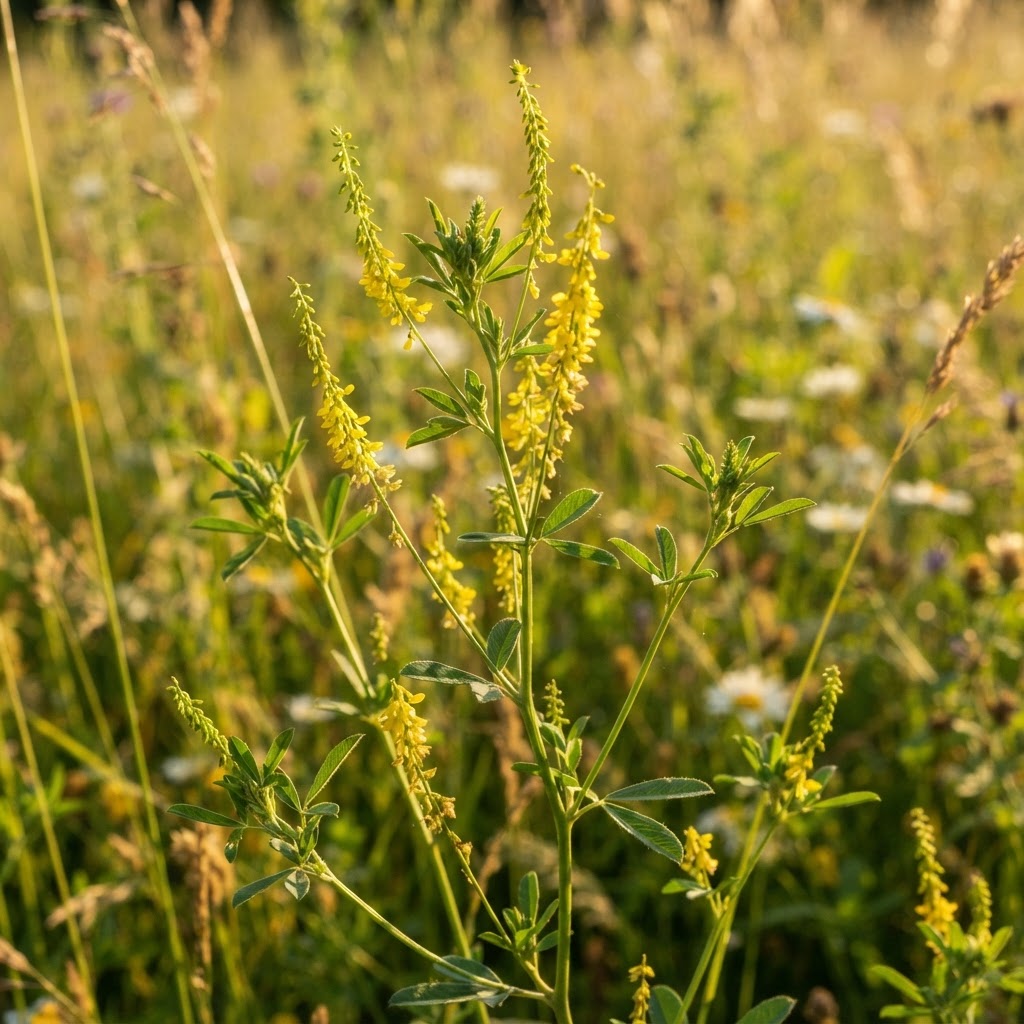
Melilot
Also known as: Sweet Clover, Yellow Sweet Clover, Yellow Melilot, King's Clover, Hart's Clover, Common Melilot, Mellilotus, Sweet Melilot, Wild Sweet Clover
Melilot, or Sweet Clover (Melilotus officinalis), is a tall, graceful biennial or annual herb of the Fabaceae (legume) family native to Europe and Asia and now widely naturalized across temperate meadows, pastures, and roadsides worldwide. Recognizable by its slender stems, trifoliate leaves, and airy spikes of small, bright yellow, pea-like flowers with a sweet, vanilla-hay scent, melilot has been gathered for centuries as a gentle aromatic, a forage and green-manure plant, and a traditional herb of comfort. Its characteristic sweet aroma comes from coumarin, the same compound that gives tonka bean and woodruff their warm, vanilla-hay fragrance, and the herb has long been prized for its calming, soothing, and gently restorative qualities.
spring, summer
Sweet, hay-like, warm, and softly vanilla-coumarin with a gentle, honeyed, dried...
Melilotus officinalis
herb
Pairs Well With
Melilot is used sparingly as a gentle aromatic and sweetener, lending a warm, vanilla-hay, coumarin sweetness to foods and beverages.
Dried melilot has been traditionally steeped in milk or cream to flavor custards, puddings, ice creams, and delicate desserts with a soft, almond-vanilla note.
The herb can infuse honey, syrups, and liqueurs, and is occasionally used to flavor country wines, cordials, and traditional herbal teas.
In parts of Europe, young melilot leaves and shoots were historically added to soups and stews as a mild, sweet, hay-like green.
Melilot pairs well with dairy, grains, honey, and soft fruits, and is best used lightly dried or infused rather than as a primary ingredient.
Melilot has a long history in European folk medicine as a gentle calming, soothing, and restorative herb.
The herb was traditionally used to ease restlessness, anxiety, and mild insomnia, and to promote relaxation and calm sleep.
It was valued as a mild digestive tonic for nervous or upset stomachs and to soothe mild digestive spasms.
Melilot was applied externally in traditional poultices and herbal baths to soothe tired, aching muscles, bruises, and swelling, and was considered a gentle lymphatic and circulatory herb.
In rural tradition, sweet clover was used as forage and green manure to enrich the soil, and its sweet aroma was cherished in hay for animal bedding and in household sachets to scent linens and ward off moths.
Gather the flowering tops and leaves in mid-summer when the blossoms are open and the scent is strongest, ideally on a dry morning.
Use melilot dried, as the coumarin-rich aroma develops and deepens with gentle drying, much like woodruff and tonka.
For infusions, steep a small amount of dried herb in warm (not boiling) milk, cream, or water to preserve the delicate vanilla-hay fragrance.
For syrups, honeys, and liqueurs, cover dried melilot in warm liquid and infuse for several days before straining.
To dry, spread the herb in a warm, airy, shaded spot and store in airtight jars away from light to preserve its sweet aroma.
Melilot pairs beautifully with dairy, honey, soft fruits, and other gentle herbs like woodruff, lemon balm, and chamomile.
Melilot is gentle in culinary and tea amounts but should be used in moderation, as its coumarin content can be harmful in very large doses.
Coumarin may interact with blood-thinning and anticoagulant medications; individuals on such medications should consult a healthcare provider before using melilot medicinally.
Because melilot resembles other clovers and some toxic legumes, gather only from positive identification and avoid plants showing mold, as spoiled sweet clover can develop dicoumarol, a compound that interferes with blood clotting.
Pregnant and breastfeeding women should use melilot only in food amounts and avoid medicinal doses.
Always source from clean, pesticide-free areas away from roadsides.
Melilot thrives in temperate meadows, pastures, wastelands, and roadsides across Europe, Asia, and naturalized regions worldwide, favoring sunny, open ground and well-drained soils.
As a legume, it enriches the soil by fixing nitrogen and is valued as green manure and forage, supporting bees and a wide range of pollinators with its nectar-rich yellow flowers.
In European folklore, sweet clover was a symbol of summer abundance and rural comfort, its warm, hay-like scent associated with haymaking, meadows, and the simple pleasures of the season.
The herb was traditionally gathered to scent linens, flavor milks and sweet treats, and soothe tired farmhands at the end of long harvest days.
Its enduring presence in meadow and hedgerow keeps melilot a gentle, aromatic thread of European country tradition and herbal heritage.
Available Near You
Enter your ZIP code to find farms with melilot near you.
Recipes with Melilot
Coming Soon