
Lady's Mantle
Also known as: Alchemilla, Bear's Foot, Lion's Foot, Stellaria, Dewcup, Nine Hooks, Our Lady's Mantle, Frauentiel
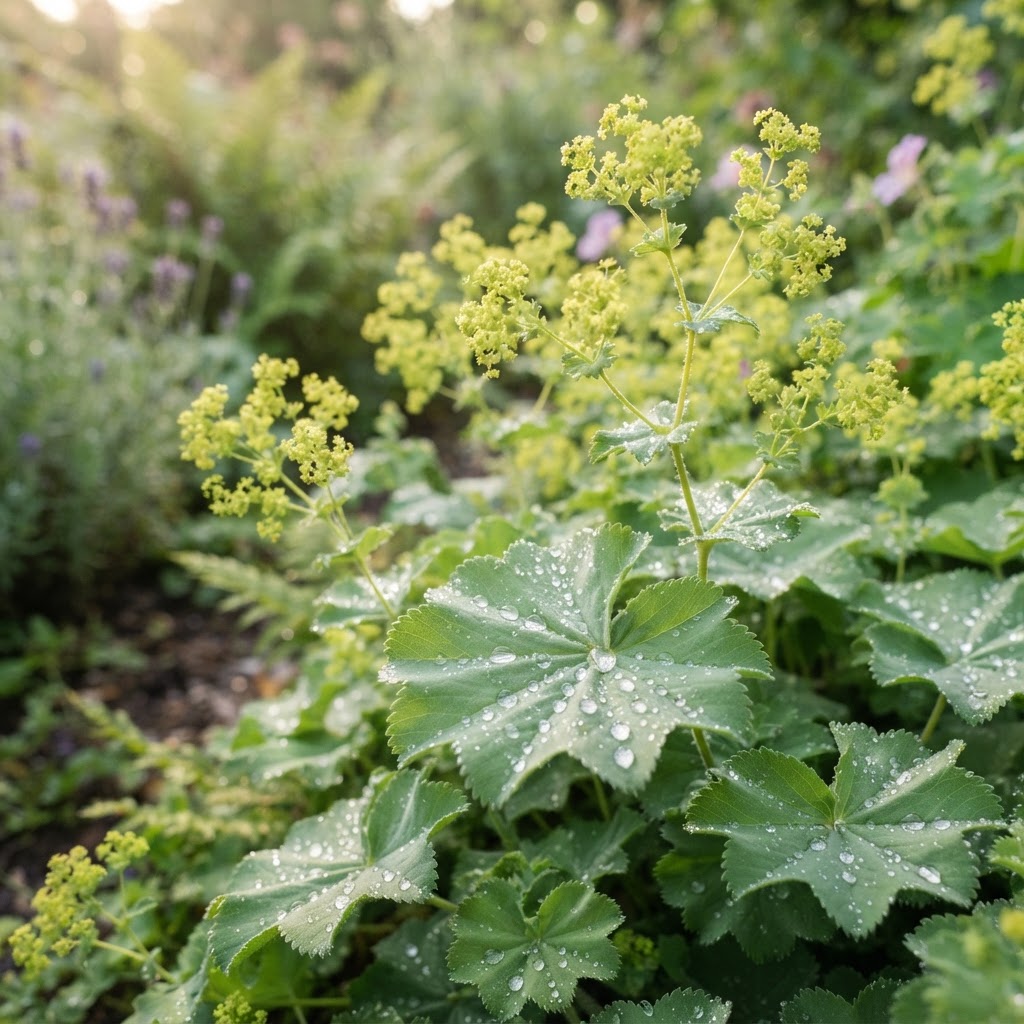
Lady's Mantle (Alchemilla vulgaris) is a low-growing, clump-forming perennial of the Rosaceae family, native to the cool, moist meadows and woodlands of Europe, Asia, and Greenland and long cultivated in cottage, physic, and apothecary gardens. It is beloved for its scalloped, fan-shaped leaves that catch and hold glistening drops of dew and rain in their pleats, and for its airy sprays of tiny yellow-green flowers in early summer. A plant of deep folkloric and medicinal significance, Lady's Mantle has been associated since medieval times with the Virgin Mary, women's healing, and alchemical transformation, and was treasured as a gentle astringent and tonic herb.
spring, summer
Delicate, mild, and slightly astringent with a faintly sweet, green, and herbace...
Alchemilla vulgaris
herb
Pairs Well With
Young, tender leaves are eaten raw in salads, where their mild, slightly astringent green flavor adds a delicate texture and taste.
Lady's Mantle leaves are brewed into a gentle, soothing herbal tea, often enjoyed for its soft, green, faintly sweet character.
Fresh leaves can be added to soups, omelets, and green sauces, and are sometimes used as a wrap or garnish.
The herb is used in traditional European cordials, bitters, and herbal tonics.
Its mild flavor pairs well with other soft herbs in salads and herb butters, and it can be used sparingly in cold summer drinks and infusions.
Lady's Mantle has been one of the most revered women's herbs in European herbalism for centuries, sacred to the Virgin Mary and associated with feminine healing, fertility, and protection.
Medieval herbalists and alchemists prized the plant, believing the dew collected in its leaves had magical and medicinal powers; the genus name Alchemilla reflects its association with alchemy.
It was a traditional remedy for women's health, used to ease menstrual discomfort, support childbirth and recovery, and tone the uterus, earning it the title 'a woman's best friend'.
The herb was also used as a gentle astringent for wounds, skin complaints, and digestive upsets, and as a general tonic and anti-inflammatory.
In folk tradition, Lady's Mantle was carried for protection and luck, and was believed to restore youth and vitality.
Harvest young leaves in spring and early summer before the flowers fully open, when they are most tender and mild.
Use the leaves fresh in salads, teas, and garnishes; older leaves can become tough and more astringent.
For tea, steep a small handful of fresh leaves or a teaspoon of dried leaves in hot water for several minutes.
Chop fresh leaves finely into salads, herb butters, omelets, and green soups.
To dry, spread leaves in a warm, airy, shaded spot and store in airtight jars away from light.
Lady's Mantle pairs well with other mild herbs such as chervil, salad burnet, and lemon balm, and complements delicate dishes where a gentle, astringent green note is welcome.
Lady's Mantle is generally safe in typical culinary and tea amounts, but medicinal use during pregnancy should be avoided or supervised by a qualified practitioner due to its traditional effects on the uterus.
People with allergies to plants in the rose family may rarely experience reactions.
The herb may interact with medications affecting blood clotting or blood sugar; consult a healthcare provider before therapeutic use.
As with all herbs with traditional women's-health uses, seek professional guidance before using medicinally during pregnancy, breastfeeding, or hormone-sensitive conditions.
Lady's Mantle thrives in cool, moist, partially shaded habitats, from mountain meadows and stream banks to woodland edges, and tolerates a wide range of soils across temperate Europe, Asia, and North America.
The plant is valued in ecological and permaculture gardens for its hardiness, attractive foliage, and usefulness as a ground cover that supports beneficial insects.
Its water-repellent leaves collect dew and raindrops in tiny pools, a phenomenon that captivated alchemists and folk healers, who considered the collected moisture a sacred, healing elixir.
Dedicated to the Virgin Mary in medieval Christian symbolism, the plant's mantle-like leaf shape inspired its common name and its association with protection, grace, and feminine power.
In folk tradition, Lady's Mantle was believed to restore lost youth, protect travelers, and aid women's health, and it remains one of the most iconic and storied herbs of the European apothecary and cottage garden.
Available Near You
Enter your ZIP code to find farms with lady's mantle near you.
Recipes with Lady's Mantle
Coming Soon