
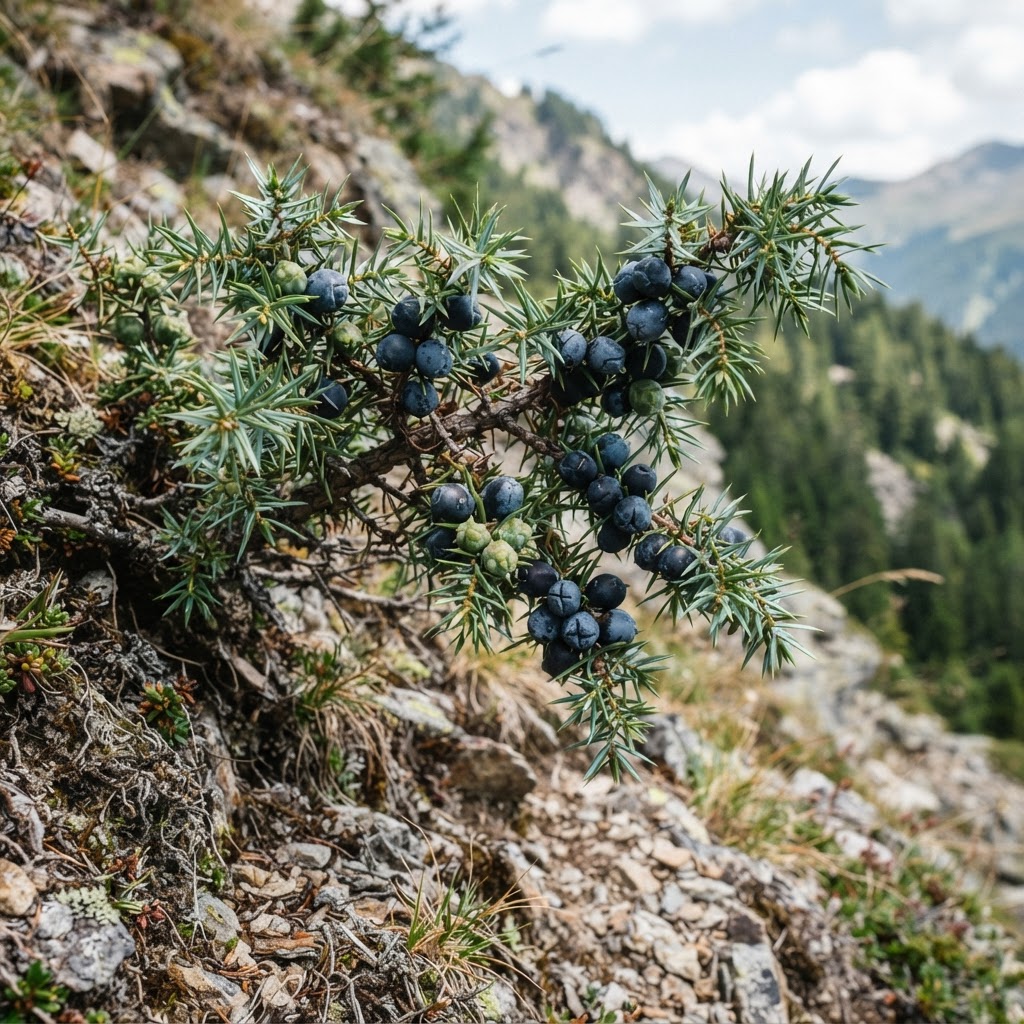
Juniper
Also known as: Common Juniper, Juniper Berry, Juniper Bush, Gin Berry, Mountain Juniper, Wacholder
Juniper (Juniperus communis) is an evergreen conifer of the Cupressaceae family, native to cool temperate regions of Europe, Asia, and North America and long valued as both a wild-harvested flavoring and a sacred, protective plant. Its needle-like, aromatic foliage and fleshy blue-black seed cones—commonly called 'berries'—are the part most used in the kitchen, lending their distinctive pine-resin, gin-like aroma to game, sauerkraut, marinades, and bitters. A member of the cypress family rather than a true herb, juniper has flavored food and drink, perfumed sacred spaces, and served as a medicinal remedy since ancient times.
fall, winter
Resinous, piney, woody, and peppery with bright citrus, gin-like notes and a war...
Juniperus communis
herb
Pairs Well With
Crushed juniper berries are a classic seasoning for game meats—venison, wild boar, rabbit, and duck—where their resinous aroma balances the richness and earthiness of the meat.
They are essential in traditional European sauerkraut, choucroute, and braised cabbage, where they add depth and aid digestion.
Juniper flavors pâtés, terrines, sausages, and cured meats, and is used in marinades, brines, and rubs for pork and poultry.
The berries are the defining flavor of gin and are also infused into bitters, liqueurs, and Scandinavian aquavit.
They season hearty stews, bean soups, and root vegetable dishes, and can be used sparingly in pickling and smoking.
Juniper has been used since antiquity across European, North African, and Native American traditions as a purifying, protective, and medicinal plant.
Branches and berries were burned as a cleansing incense to purify homes, temples, and sickrooms, a practice that continued in European folk medicine well into modern times.
In herbalism, juniper was a trusted diuretic and digestive remedy, used to stimulate appetite, soothe stomach upsets, and support the urinary tract.
Medieval and Renaissance physicians prescribed juniper for coughs, colds, and rheumatic pains, and the berries were chewed or infused as a tonic.
As the defining botanical of gin, juniper became embedded in European drinking culture, originating as a medicinal spirit in the Netherlands in the 16th century.
Use dried, fully ripe (dark blue-black) juniper berries; green berries are immature and overly harsh.
Crush the berries lightly with a mortar and pestle or the flat of a knife just before use to release their aromatic oils.
Add sparingly—two or three crushed berries are usually enough for a dish or marinade.
For marinades and brines, combine crushed berries with garlic, pepper, thyme, and bay for game and pork.
For sauerkraut and cabbage dishes, toss whole or crushed berries in with the cabbage before cooking.
Juniper can also be infused into spirits, vinegars, and syrups; for smoking, add berries to the wood chips for a piney, resinous aroma.
Store dried berries in an airtight jar away from light; they keep their aroma for many months.
Juniper is safe in typical culinary amounts, but medicinal doses of the berries or oil should be used only with expert guidance.
Juniper berries can irritate the kidneys in large or prolonged doses and are not recommended for people with kidney disease.
Pregnant and breastfeeding women should avoid medicinal doses; culinary use is generally considered safe in moderation.
Juniper may interact with diuretic medications and drugs metabolized by the liver; consult a healthcare provider before therapeutic use.
The essential oil is potent and should not be taken internally without professional supervision.
Certain ornamental juniper species produce berries that are not edible; use only Juniperus communis from reliable culinary sources.
Juniper is one of the most widespread conifers in the world, thriving from Arctic tundra to Mediterranean scrub and high mountain slopes, and tolerating poor, dry, exposed soils where few other plants survive.
Its dense, fragrant evergreen foliage provides shelter for birds and wildlife, and the berry-like cones are an important winter food source for thrushes, waxwings, and bears.
Juniper is exceptionally long-lived and resilient, some specimens enduring for centuries in harsh climates.
Throughout European and Native American folklore, juniper was a sacred, protective plant thought to ward off evil, illness, and witchcraft; branches were hung over doorways and burned in purification rites.
The Biblical 'juniper' under which Elijah rested is often identified with a desert shrub, but the common juniper's protective and sustaining symbolism endures across traditions.
Its dual identity as a wild, sacred plant and a beloved culinary and gin botanical gives juniper a unique place in both the kitchen and the mythic imagination.
Available Near You
Enter your ZIP code to find farms with juniper near you.
Recipes with Juniper
Coming Soon