
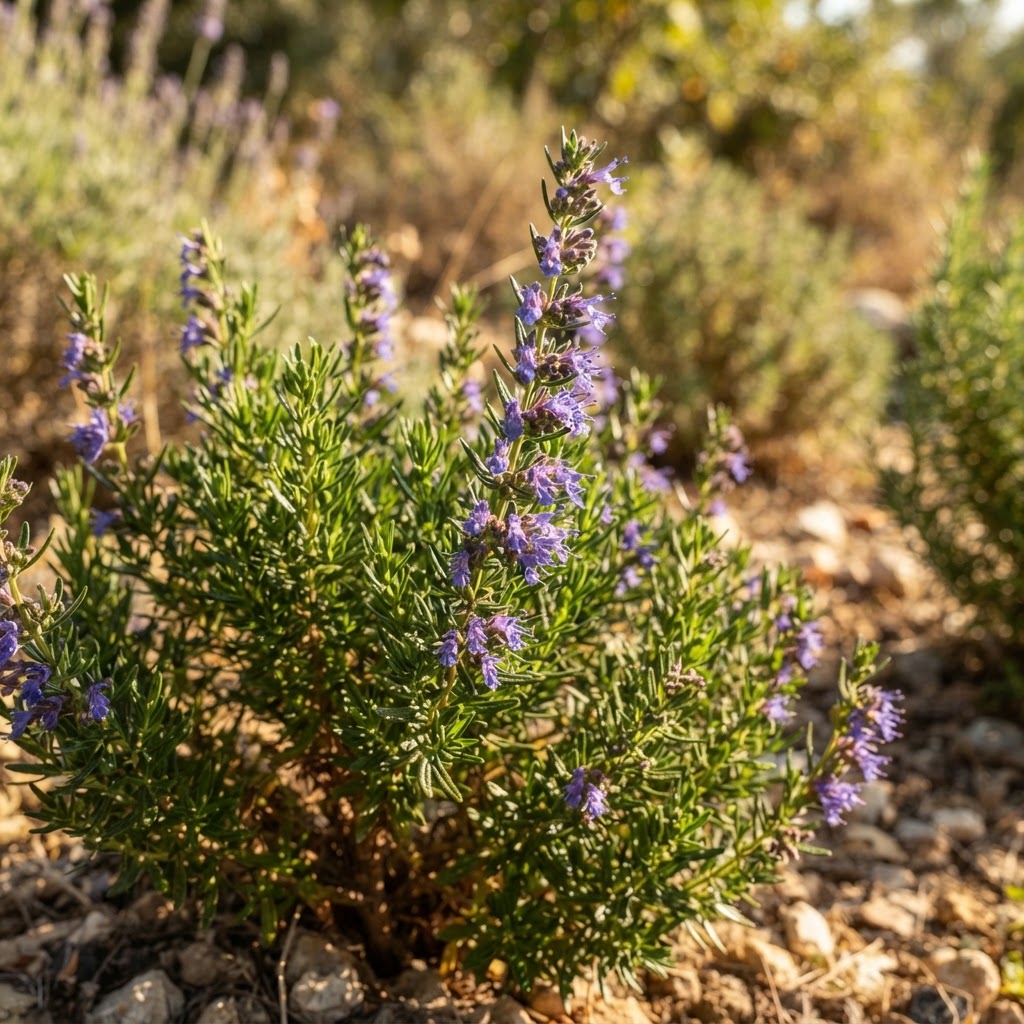
Hyssop
Also known as: Common Hyssop, Garden Hyssop, Herb Hyssop, Hyssopus, Yssop, Holy Herb, Bee Herb
Hyssop (Hyssopus officinalis) is a compact, semi-evergreen sub-shrub of the Lamiaceae family, native to the Mediterranean, southern Europe, and the Middle East and long cultivated in monastery, physic, and kitchen gardens. It forms bushy clumps of narrow, dark green, aromatic leaves and produces slender spikes of tubular flowers in shades of blue, violet, pink, or white through summer. A close relative of mint and sage, hyssop has been used since antiquity as a purifying, medicinal, and flavoring herb, mentioned in biblical and classical texts and prized for its strong, clean aroma and digestive virtues.
spring, summer, fall
Strongly aromatic with a warm, minty, camphoraceous, and slightly bitter, mint-s...
Hyssopus officinalis
herb
Pairs Well With
Hyssop is used sparingly for its strong, resinous, mint-sage aroma, as a little goes a long way.
Fresh or dried young leaves flavor green salads, fruit salads, and herb blends, where they add a bright, aromatic bite.
Hyssop is a traditional flavoring for hearty soups, stews, bean dishes, and stuffings, especially with fatty meats such as pork, goose, and game.
It pairs well with root vegetables, lentils, and braised dishes, where its bitter-aromatic warmth cuts richness.
Hyssop infuses liqueurs and bitters, notably Chartreuse and absinthe, and is brewed into herbal teas and tisanes.
It can season vinegars, oils, and marinades, and is occasionally used with fruit-based desserts and syrups for an aromatic lift.
Hyssop has been a sacred and medicinal herb across European and Near Eastern traditions for thousands of years, mentioned in the Bible and by Greek and Roman herbalists.
The plant was used in ritual purification, sprinkling ceremonies, and cleansing practices, lending it the epithet 'holy herb'.
In European herbalism, hyssop tea was a trusted remedy for coughs, colds, sore throats, chest congestion, and digestive upsets, valued as an expectorant and gentle warming tonic.
Monastery gardens grew hyssop as a staple of the physic garden, and it was carried and planted for protection, healing, and to ward off illness.
Its strong aromatic oils made it a common strewing herb and a ingredient in medicinal cordials and tonics.
Harvest young leaves and flowering tops before the plant flowers fully for the best flavor, and use them fresh or dried.
Use hyssop sparingly; its camphoraceous, slightly bitter character can overpower a dish.
Strip the small leaves from the woody stems and chop finely before adding to salads, soups, stews, and stuffings.
For teas, steep a small sprig or a teaspoon of dried leaves in hot water for several minutes.
To dry, hang small bunches in a warm, airy, shaded spot, then store in airtight jars away from light.
Hyssop's strong flavor pairs well with savory, robust dishes, fatty meats, beans, lentils, and other Mediterranean herbs such as thyme, rosemary, and sage.
Hyssop is safe in typical culinary amounts, but the essential oil is potent and should not be used internally without expert guidance.
Hyssop oil contains pinocamphone, which can cause convulsions in high doses; avoid medicinal doses of the oil, especially in children, pregnant women, and people with epilepsy.
Pregnant and breastfeeding women should use hyssop only in culinary amounts.
Hyssop may interact with anticonvulsant and antihypertensive medications; consult a healthcare provider before therapeutic use.
People allergic to plants in the mint family may rarely experience reactions.
Hyssop thrives in dry, sunny, well-drained spots and is native to rocky hillsides and scrubby meadows of the Mediterranean and southern Europe.
It is a hardy, drought-tolerant sub-shrub that resists deer and poor soils and makes a useful, long-lived addition to herb and cottage gardens.
The nectar-rich flowers attract bees, butterflies, and hummingbirds throughout summer, earning it the name 'bee herb'.
Hyssop has deep biblical and ritual significance, used in purification rites and described in the Psalms as a symbol of cleansing and renewal.
In medieval Europe it was planted in monastery gardens and at thresholds for protection and healing, and was believed to ward off evil and disease.
Its long, faithful service as both a sacred purifying herb and a practical kitchen-physic plant makes it one of the most storied herbs of the Western tradition.
Available Near You
Enter your ZIP code to find farms with hyssop near you.
Recipes with Hyssop
Coming Soon