
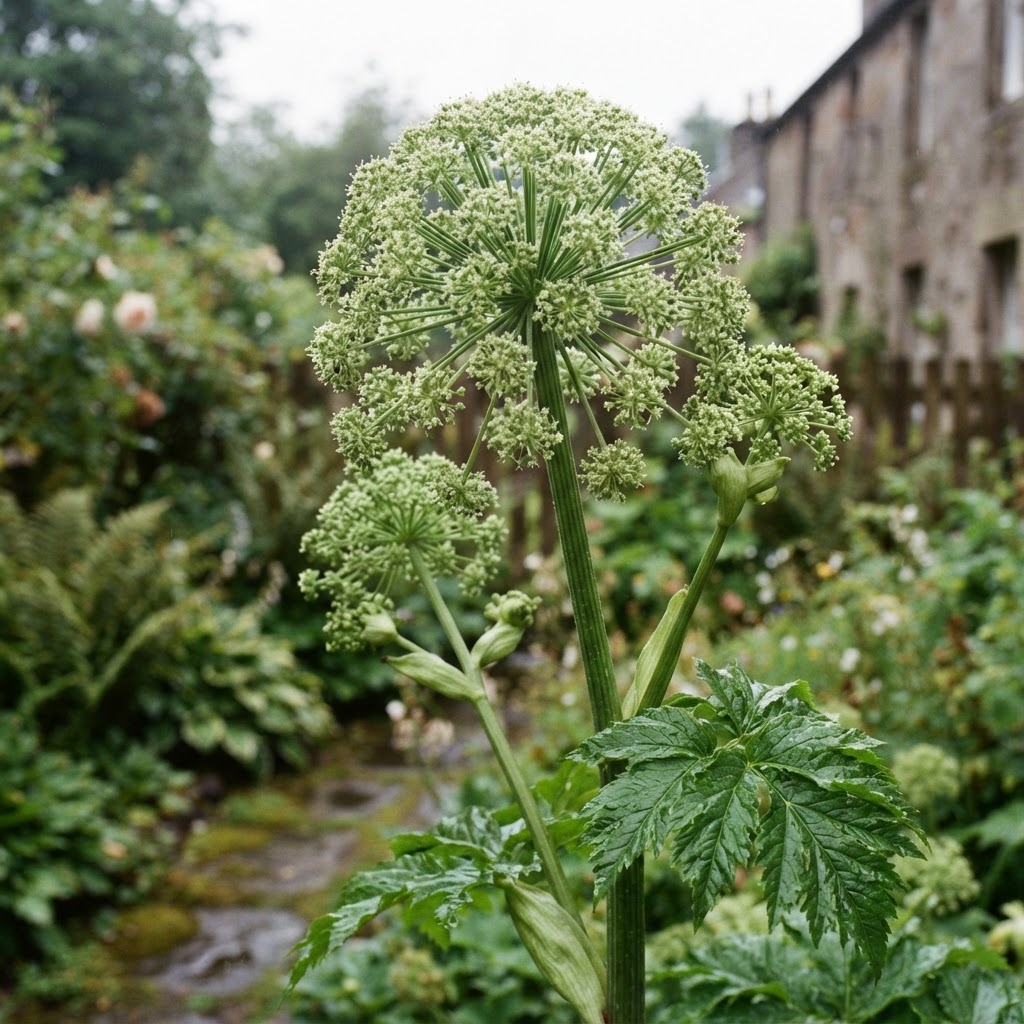
Angelica
Also known as: Garden Angelica, Wild Celery, Holy Ghost, Root of the Holy Ghost, Norwegian Angelica, Archangel, Wild Parsnip
Angelica (Angelica archangelica) is a tall, stately biennial or short-lived perennial of the Apiaceae family, native to the cool, damp regions of northern Europe and Russia and long cultivated in monastery and cottage gardens. It forms a robust rosette of large, divided, glossy green leaves and sends up impressive hollow stems up to two meters tall, topped by large globe-like umbels of tiny greenish-white flowers in its second year. Once called 'root of the Holy Ghost' for its angelic associations, angelica has been valued for centuries as a flavoring, a confection, and a powerful medicinal and protective herb across Scandinavian, Celtic, and continental European traditions.
spring, summer
Aromatic, warm, and bittersweet with notes of celery, juniper, licorice, and ear...
Angelica archangelica
herb
Pairs Well With
The young, tender stems of angelica are the most familiar culinary part, traditionally candied and used as a vivid green decoration for cakes, puddings, and festive breads.
Candied angelica is folded into fruitcakes, trifle, and panettone and used as a garnish for desserts and ice creams.
The fresh stems and leaves flavor jams, preserves, stewed fruits, and compotes, where they complement rhubarb, plums, and berries.
Angelica is a key botanical in many traditional liqueurs and spirits, including gin, Chartreuse, Bénédictine, vermouth, and aquavit, contributing a warm, musky depth.
The seeds flavor baked goods and infuse syrups and cordials, while the leaves are sometimes brewed into tisanes.
Angelica has been a revered medicinal and protective herb in European folk tradition since the Middle Ages, especially in northern Europe.
The root was made into infusions, tinctures, and cordials to stimulate digestion, warm the body, ease coughs and colds, and relieve flatulence and cramps.
In Scandinavian and Celtic tradition, angelica was carried or hung in homes to ward off evil, illness, and witchcraft, and was gathered ritually on the eve of midsummer.
The plant's Latin name honors the Archangel Michael, who, according to legend, revealed its healing powers, and it was dedicated to protection and purification.
Angelica root was a staple of monastery gardens and old apothecaries, valued as a gentle tonic, a digestive aid, and a warming cordial herb.
Use young, tender stems and leaves; older stems become tough, fibrous, and strongly flavored.
To candy angelica, peel and cut young stems into strips, blanch them to reduce bitterness, then simmer in increasingly strong sugar syrups over several days until translucent and bright green.
Fresh leaves and stems can be added sparingly to jams, stewed fruits, and liqueur infusions.
The dried root is used in small amounts for tisanes and bitters; steep gently to avoid excess bitterness.
Angelica's flavor is strong, so use modest quantities, often as a background or aromatic note alongside sweeter or fruitier ingredients.
Pair angelica with rhubarb, plums, berries, honey, citrus, and other sweet, aromatic herbs.
Angelica is safe in typical culinary amounts, but the fresh plant contains furanocoumarins that can cause photosensitivity and skin reactions in some people.
Avoid prolonged sun exposure after handling fresh angelica or applying it to the skin.
Pregnant women should avoid angelica, as it has traditional emmenagogue effects and may stimulate the uterus.
Large medicinal doses of the root may affect blood pressure, heart rate, and bleeding and may interact with anticoagulants and diabetes medications; consult a healthcare provider before therapeutic use.
Foragers must be careful: angelica closely resembles several highly toxic members of the Apiaceae family, such as water hemlock; grow or source from trusted suppliers rather than wild-harvest unless expert.
Angelica thrives in cool, damp, northern climates and is found along stream banks, in moist meadows, and in the shaded margins of woodlands across northern Europe and into Russia.
It is a generous garden plant where conditions suit it, producing a tall, dramatic flowering stem in its second year before setting seed and dying.
The large umbels attract bees, hoverflies, and many beneficial insects in midsummer.
Angelica has deep roots in the folklore of Scandinavia and the Celtic fringes, where it was gathered on Midsummer's Eve for protective and healing powers and was considered among the most sacred of plants.
In Lapland and northern Norway, angelica was once a vital food and medicine for Sami peoples, who ate the stems as a vegetable and used the root as a remedy.
Its tall, angelic presence and warm, protective scent have made it a treasured plant of monastery, physic, and cottage gardens for over a thousand years.
Available Near You
Enter your ZIP code to find farms with angelica near you.
Recipes with Angelica
Coming Soon