
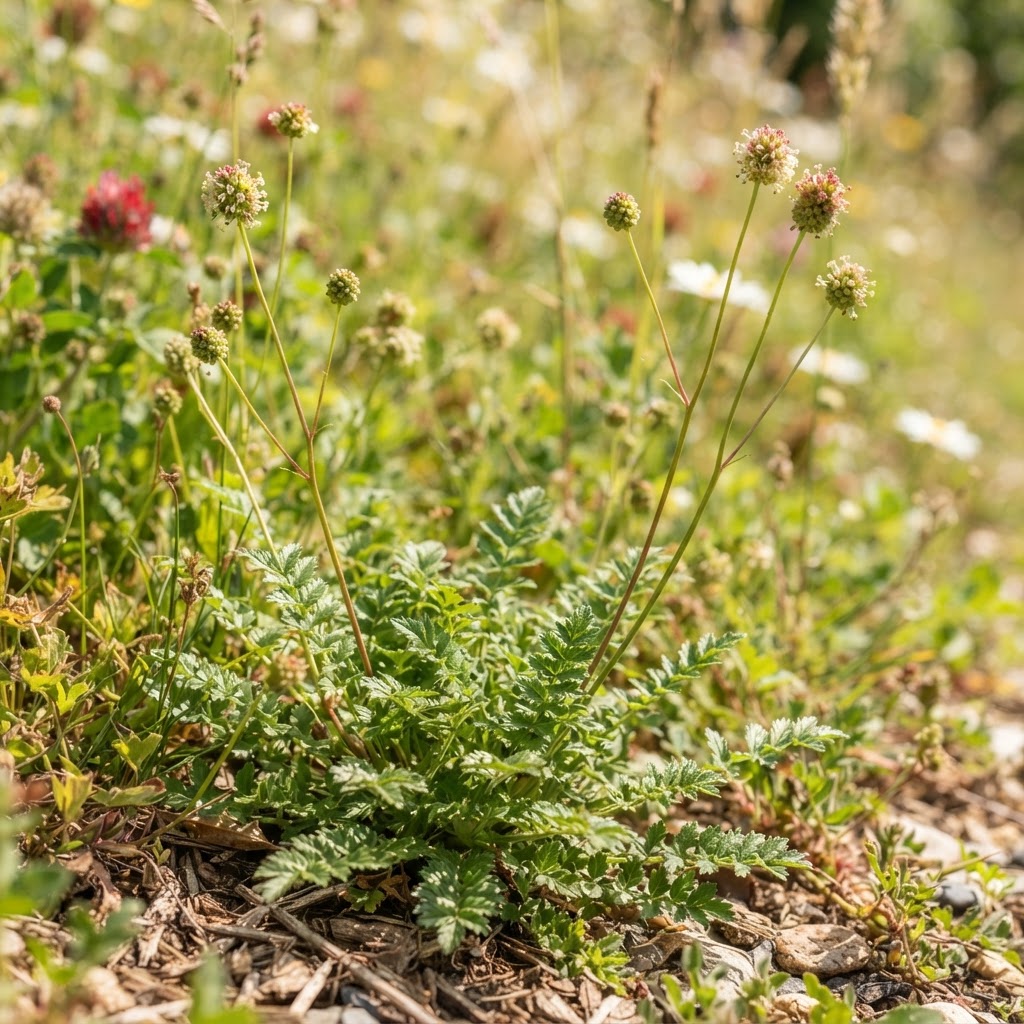
Salad Burnet
Also known as: Burnet, Garden Burnet, Pimpernel, Small Burnet, Salad Pimpernel, Burnet Saxifrage, Sanguisorba
Salad burnet (Sanguisorba minor) is a low-growing evergreen perennial of the Rosaceae family, native to Europe, western Asia, and North Africa and naturalized across temperate regions. It forms a basal rosette of delicate, pinnate, fern-like leaves composed of many small toothed leaflets, and sends up slender stems topped with small, dense, rounded flower heads of greenish to reddish-pink blooms. Once a staple of Tudor and medieval kitchen gardens, salad burnet has been used for centuries as a refreshing, cucumber-flavored herb for salads, drinks, and vinegars, and is enjoying a quiet revival among herb enthusiasts and foragers.
spring, summer, fall
Fresh, clean, and mildly nutty with a distinct cool cucumber-cantaloupe note and...
Sanguisorba minor
herb
Pairs Well With
Salad burnet is best used fresh and raw, where its cool cucumber-melon flavor shines.
Young leaves are tossed into green salads, herb salads, and mesclun mixes, where they bring a refreshing, clean taste.
The leaves are a traditional addition to chilled drinks such as claret cup, cold fruit punches, lemonades, and herbal infusions, lending a cucumber-cool note.
Chopped burnet flavors vinegars, butters, cream cheeses, dips, and sauces, and is a classic garnish for chilled soups like cucumber or vichyssoise.
It can be added to omelets, sandwiches, and soft cheeses for a light herbal lift.
Burnet is best added at the end of cooking, as heat diminishes its delicate flavor.
Salad burnet has been grown in European kitchen gardens since at least the Middle Ages, prized for both its culinary and medicinal virtues.
The genus name Sanguisorba, meaning 'blood absorber', reflects its long traditional use as a wound herb and astringent to stop bleeding and soothe skin.
Medieval and Renaissance herbalists used burnet tea for digestive upsets, sore throats, and minor wounds, and valued the plant as a cooling, tonic herb.
It was a common ingredient in medieval and Tudor salads and was believed to protect against plague and fever, earning it a place in monastery and cottage gardens.
In folk tradition, burnet was planted near doorways to ward off illness and was associated with protection and healing.
Pick young, tender leaves in spring and early summer; older leaves become tough and bitter.
Use salad burnet raw for the best flavor, as cooking destroys much of its delicate aroma.
Snip the leaflets from the stems and add to salads, drinks, and cold dishes just before serving.
For vinegars and infused waters, steep fresh leaves briefly and strain.
Salad burnet is evergreen in mild climates and can be harvested year-round in cool seasons; pick only what you need, as the leaves do not dry or freeze well.
Pair burnet with cucumber, lemon, yogurt, soft cheeses, mint, and other tender salad herbs.
Salad burnet is very safe as a culinary herb and has been eaten widely for centuries.
As a medicinal herb, high doses of its tannins may be astringent; use in moderation.
People allergic to plants in the Rosaceae family (roses, strawberries, almonds) may rarely experience reactions.
Pregnant and breastfeeding women should use burnet in culinary amounts, as therapeutic uses are not well studied.
When foraging, pick only from clean, unsprayed areas and confirm identification, as it can superficially resemble other rosaceae meadow plants.
Salad burnet thrives in dry, calcareous meadows, grasslands, and open woodlands across Europe and western Asia, and tolerates drought and poor soils well.
Its evergreen rosettes provide cool-season foliage in mild climates and make it a useful winter herb in cottage gardens.
The small, rounded flower heads attract bees, butterflies, and beneficial insects through summer.
In medieval Europe, burnet was planted in monastery and physic gardens and was a common green herb for salads and strewing herbs to freshen rooms.
The plant's common name 'burnet' may derive from the French 'brunette' for its brownish-pink flowers, or from 'burn' for its traditional use on wounds and burns.
Salad burnet is a modest, generous herb of old gardens, emblematic of the simple, sustaining pleasures of the kitchen-physic garden.
Available Near You
Enter your ZIP code to find farms with salad burnet near you.
Recipes with Salad Burnet
Coming Soon