
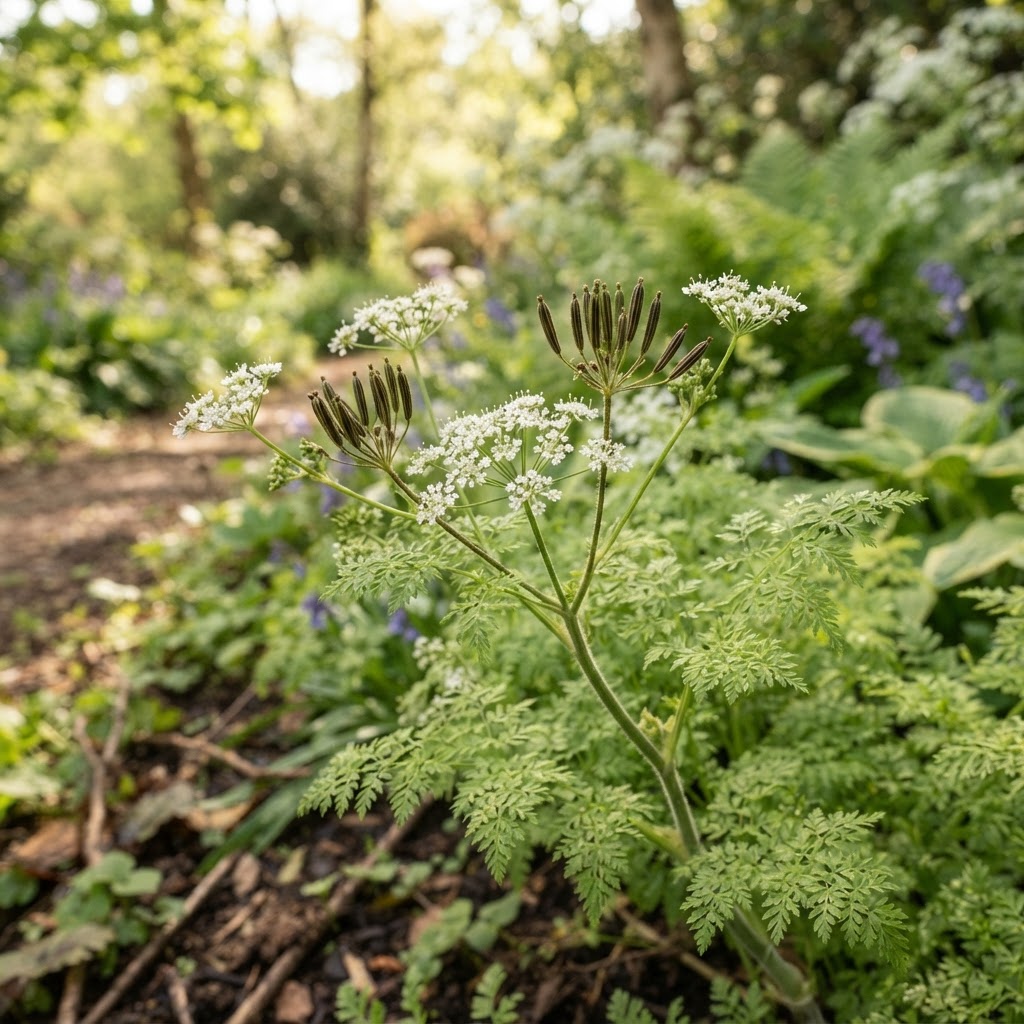
Sweet Cicely
Also known as: Garden Myrrh, Sweet Chervil, Spanish Myrrh, Cicely, Shepherd's Needle, Cow Chervil, Anise Chervil
Sweet cicely (Myrrhis odorata) is a graceful perennial of the Apiaceae family, native to the woodlands and meadows of central and southern Europe and naturalized across the temperate Northern Hemisphere. It forms airy clumps of soft, fern-like, light green leaves crowned by umbels of small white flowers, followed by long, slender seeds that ripen from green to dark brown. Every part of the plant is edible and carries a sweet anise fragrance. Long grown in cottage gardens and monastery gardens, sweet cicely was traditionally used to sweeten tart fruits and reduce the need for sugar, and it remains a cherished, if underused, herb of the cool-season kitchen.
spring, early_summer, summer
Sweet, delicate, and aromatic with a clear anise-licorice note and a gentle, ref...
Myrrhis odorata
herb
Pairs Well With
Sweet cicely is a natural sweetener in the kitchen, its anise-scented leaves reducing the need for added sugar in tart fruit dishes.
Chopped fresh leaves are stirred into fruit compotes, stewed rhubarb, gooseberry dishes, and apple pies to soften their acidity and add a gentle, sweet warmth.
Whole leaves make a fragrant garnish for salads, desserts, and drinks, and are infused into custards, panna cotta, sorbets, and ice creams.
The young green seeds are eaten fresh as a sweet snack, tossed into fruit salads, or candied as a confection.
The roots can be boiled or roasted as a vegetable, with a warm, sweet, parsnip-like flavor, and the leaves flavor soups, omelets, and herb butters.
Sweet cicely pairs beautifully with tart fruits, dairy, and mild fish.
Sweet cicely has a long history in European cottage and monastic gardens, where it was grown both as a sweet kitchen herb and a gentle remedy.
Traditional herbalists used sweet cicely as a mild digestive, carminative, and warming tonic, taken as a tea, syrup, or infusion to soothe the stomach and ease bloating.
It was valued as a sweetener and flavoring in cordials and tonics, and was sometimes called 'garden myrrh' for its fragrant, resinous character.
Folk medicine used sweet cicely for coughs, colds, and minor digestive complaints, and as a gentle appetite stimulant.
In northern and central European traditions, sweet cicely was a familiar spring herb for cleansing and renewal after winter.
Use fresh leaves, as they lose most of their aroma when dried; pick young leaves in spring and early summer for the sweetest flavor.
Chop or tear leaves and add at the end of cooking to preserve their delicate anise fragrance, or stir into fruit and desserts raw.
Green, unripe seeds are the sweetest and most intensely flavored; use them fresh in salads or candy them in sugar syrup.
Mature brown seeds can be dried and ground as a sweet spice for baking and desserts.
Harvest roots in autumn or early spring, peel and boil or roast them like parsnips.
Store sweet cicely leaves briefly in the refrigerator wrapped in damp cloth; for longer keeping, infuse into syrups, vinegars, or sugar.
Sweet cicely is very safe as a culinary herb and has been eaten widely for generations.
Foragers must be cautious, as it resembles several toxic members of the Apiaceae family, including hemlock and fool's parsley; always confirm identification before harvesting wild plants.
People allergic to anise, fennel, carrot, or other members of the Apiaceae family may rarely experience reactions.
No significant drug interactions are known for culinary amounts; therapeutic doses are not well studied, so use in moderation.
When foraging, harvest only from clean, unsprayed areas and avoid plants near roads or agricultural runoff.
Sweet cicely is a woodland-edge and meadow herb of cool, damp temperate climates, thriving in partial shade and rich soil.
Its airy white umbel flowers are beloved by pollinators, attracting bees, hoverflies, and beneficial insects through late spring and summer.
The plant self-seeds freely and can naturalize in cottage and wildlife gardens, forming soft, fragrant stands beneath trees and along hedgerows.
Sweet cicely has been a companion to European cottage gardens for centuries, prized for both its usefulness and its beauty.
Its common names, including garden myrrh and sweet chervil, reflect the way it was woven into both medicine and cookery.
The genus name Myrrhis comes from the Greek for myrrh, a nod to the herb's fragrant, resinous aroma, while 'sweet cicely' evokes a gentle, comforting presence in the garden and kitchen.
Available Near You
Enter your ZIP code to find farms with sweet cicely near you.
Recipes with Sweet Cicely
Coming Soon