
Yarrow
Also known as: Common Yarrow, Milfoil, Bloodwort, Nosebleed, Staunchweed, Soldier's Woundwort, Thousand-leaf, Thousand-seal, Sanguinary, Woundwort, Devil's Nettle
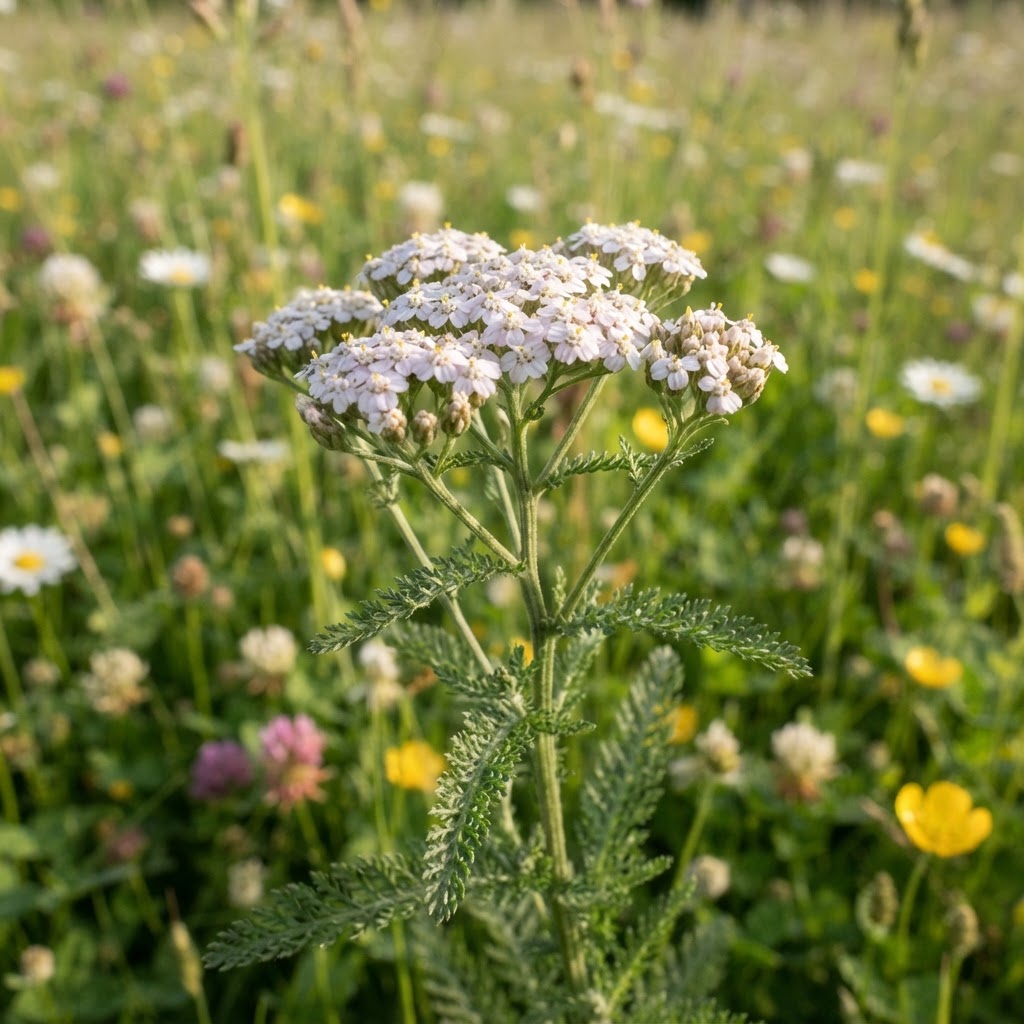
Yarrow (Achillea millefolium) is a hardy, drought-tolerant perennial of the Asteraceae family, native to temperate regions of the Northern Hemisphere and long valued in European, Asian, and Native American herbal traditions. It grows as an upright plant with feathery, finely divided, fern-like leaves and flat-topped clusters of small, daisy-like flowers, most commonly white or pale pink. The plant has a long, storied history as a wound-healing and protective herb, used since antiquity by soldiers, herbalists, and folk healers. Yarrow remains one of the most versatile and widely recognized medicinal herbs in cottage gardens, meadows, and wild places.
summer, fall
Aromatic, herbaceous, and slightly bitter with astringent, peppery notes; the sc...
Achillea millefolium
herb
Pairs Well With
Yarrow is used sparingly in the kitchen due to its strong, bitter flavor.
Young, tender yarrow leaves are added in small amounts to salads, soups, and stews for an aromatic, peppery bite.
Leaves can be used as a flavoring for herbal butters, vinegars, and infused oils, often combined with milder herbs.
Yarrow flowers and leaves are steeped to make herbal teas, sometimes blended with mint or chamomile to soften the bitterness.
In traditional European and Nordic cooking, yarrow was occasionally used to flavor beer and bitter herbal liqueurs before hops became widespread.
Small amounts of dried yarrow are sometimes used in seasoning blends, though its bitterness limits its culinary use.
Yarrow has been used since ancient times as a wound-healing, astringent, and anti-inflammatory herb; its Latin name, Achillea, honors the Greek hero Achilles, who was said to use it to treat soldiers' wounds at Troy.
In European and Native American herbalism, yarrow was a remedy for bleeding, fevers, colds, digestive complaints, and menstrual issues, taken as tea, tincture, or poultice.
Folk traditions used yarrow as a protective charm, hung in houses and worn as an amulet against illness, bad luck, and evil spirits.
In Chinese medicine, yarrow stalks were traditionally used for divination in the I Ching, while the plant itself was used for bleeding and wounds.
Modern herbalism continues to value yarrow as a gentle styptic, fever remedy, and women's herb.
Use young yarrow leaves and flowers, as older leaves become tough and very bitter.
For teas, steep 1 teaspoon of dried yarrow (or a small handful of fresh) in hot water for 5 to 10 minutes; blend with mint, chamomile, or honey to soften bitterness.
In cooking, chop a few young leaves finely and add to salads, soups, or herb butters; always start with small amounts and taste before adding more.
To make yarrow vinegar or infused oil, pack fresh leaves and flowers into a jar, cover with vinegar or oil, and steep for two to four weeks before straining.
Dry yarrow by hanging small bundles in a warm, airy, shaded place; store dried leaves and flowers in airtight containers away from light.
Yarrow is generally safe in small culinary amounts, but its strong bitter compounds mean it should be used sparingly.
Some people are sensitive to plants in the Asteraceae family (daisies, ragweed, chrysanthemums) and may experience allergic skin reactions.
Pregnant and breastfeeding women should avoid yarrow, as it can stimulate the uterus and may affect menstruation.
Yarrow may interact with blood-thinning medications and should be avoided by people with bleeding disorders or before surgery.
People allergic to aspirin should use yarrow with caution, as it contains similar salicylate compounds.
Extended or heavy use is not recommended without professional guidance.
Yarrow thrives in meadows, pastures, roadsides, and grassy slopes across temperate regions of the Northern Hemisphere and is a familiar plant of cottage gardens, wildflower meadows, and disturbed ground.
Its flat-topped clusters of small white or pink flowers bloom from early summer to autumn and attract bees, butterflies, hoverflies, and many beneficial insects, making it a valued plant for pollinators.
The finely divided, feathery leaves give yarrow its species name, millefolium, meaning thousand-leaf.
In European folklore, yarrow was a herb of protection, courage, and healing, used in love charms, wedding bouquets, and divination.
Its long use as a battlefield wound herb earned it the name soldier's woundwort and staunchweed.
Available Near You
Enter your ZIP code to find farms with yarrow near you.
Recipes with Yarrow
Coming Soon