
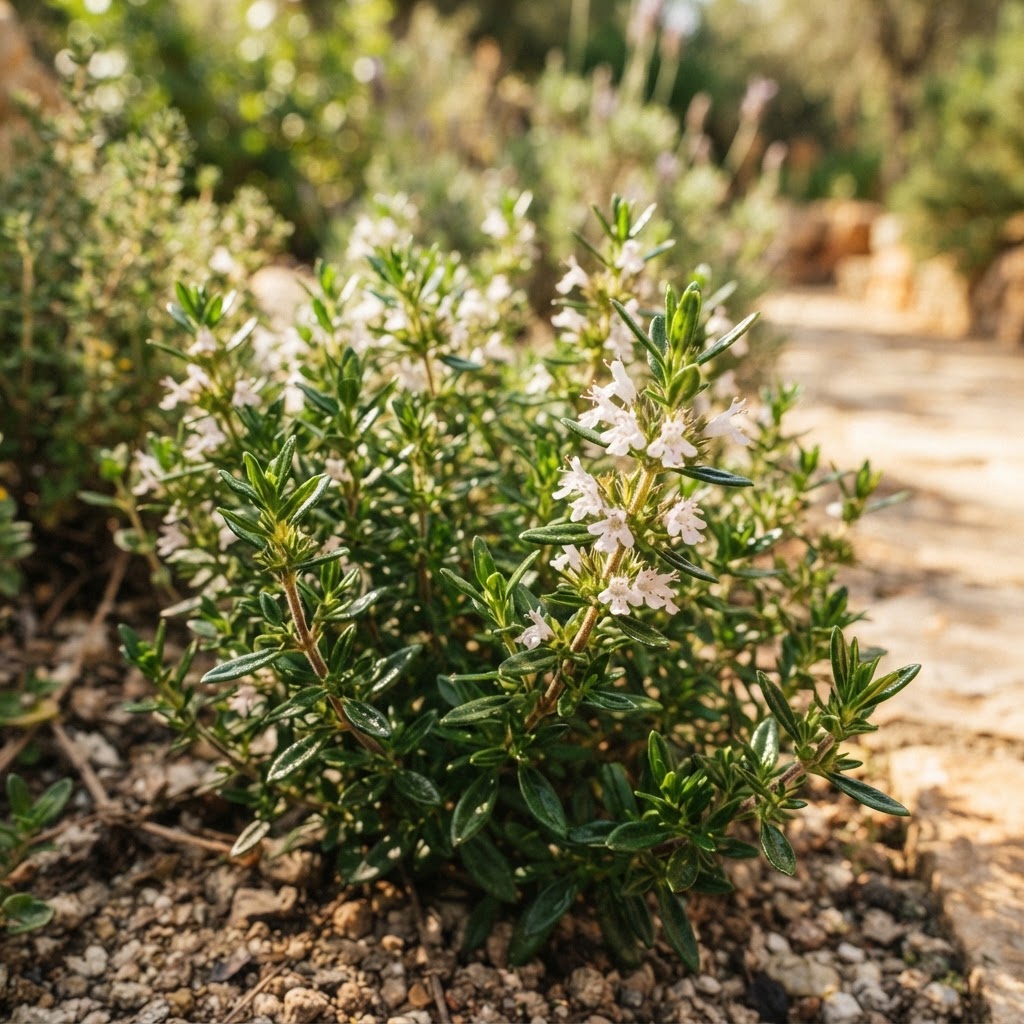
Savory
Also known as: Summer Savory, Winter Savory, Satureja, Bohnenkraut, Sarriette, Santoreggia, Sarritilla
Savory refers to two closely related aromatic herbs of the Lamiaceae family, summer savory (Satureja hortensis), an annual, and winter savory (Satureja montana), a hardy perennial, both native to the Mediterranean and long used across European cooking. The plants form small bushes with narrow, glossy leaves and tiny white or pale pink flowers, and their leaves have a warm, peppery, piney aroma often likened to a cross between thyme, mint, and marjoram. Savory is a classic bean and lentil herb in Mediterranean and Eastern European cooking, and gives its name to the word "savory" itself, reflecting its long association with flavorful, satisfying food.
summer
Piney, peppery, and warmly aromatic with a savory, slightly thyme-like bite and ...
Satureja hortensis (summer savory), Satureja montana (winter savory)
herb
Pairs Well With
Savory is a traditional seasoning for beans, lentils, and peas, prized for both its flavor and its reputation for reducing the gas associated with legumes, hence its German name Bohnenkraut, meaning bean herb.
It is used to season sausages, pâtés, and meatloaf across Eastern and Southern Europe, and is a key ingredient in many herb blends for pork and poultry.
Savory flavors hearty stews, soups, and ragouts, particularly those with beans, cabbage, or root vegetables.
Fresh or dried leaves are used in stuffings, marinades, and vinegar, and as a garnish for roasted meats and vegetables.
Summer savory is used fresh in salads and herb butters, while winter savory is better suited to long-cooked dishes.
Savory has been used since ancient Roman times as both a culinary and medicinal herb, praised by Virgil and Pliny for its peppery flavor and warming, digestive properties.
In European folk tradition, savory was a staple of bean and lentil cookery, added to help digestion and reduce flatulence, and was widely grown in cottage and kitchen gardens.
Savory was used medicinally as a warming, carminative, and antiseptic herb for digestion, sore throats, and bee stings.
In Bulgaria and the Balkans, savory (chubritsa) is a defining herb of the national seasoning sharena sol, a colorful salt blend, and is used lavishly with grilled meats and bean dishes.
Modern interest centers on its classic role in bean cookery and its warm, peppery aroma in European herb blends.
Summer savory is best used fresh or added near the end of cooking to preserve its delicate aroma, while winter savory can be added earlier and withstands longer cooking.
Strip the small leaves from the stems and chop finely, or add whole sprigs to stews and remove before serving.
For dried savory, crumble the leaves between the fingers to release their aroma before adding.
Use savory in bean and lentil dishes at a generous pinch per pot, and in stuffings and sausage with garlic, thyme, and parsley.
Savory pairs well with butter, olive oil, garlic, onions, and tomato, and is excellent infused in vinegar.
Culinary amounts of savory are generally very well tolerated for most adults, and it has a long history of safe use as a food herb.
Savory has not been associated with significant side effects at culinary doses, though concentrated medicinal use of the essential oil should be approached with caution.
Pregnant and breastfeeding women can enjoy savory in normal culinary amounts; medicinal use should be avoided without professional advice.
People allergic to plants in the mint family may rarely react to savory.
Gather wild savory cautiously and only when certain of identification.
Savory thrives in well-drained, sunny, often rocky soil across the Mediterranean and temperate Europe, with summer savory grown as a quick annual and winter savory as a hardy, long-lived perennial.
The herb's name gave rise to the English word savory, reflecting its ancient association with flavorful, appetizing food.
In European folk tradition, savory was considered an aphrodisiac, and the Romans used it in love potions and savory dishes.
In cottage gardens, savory was a companion plant for beans, believed to improve their growth and flavor, and was also planted near beehives as a bee plant.
Its warm, peppery aroma made it a favorite in bean and lentil cookery, where it was valued for both taste and digestion.
Available Near You
Enter your ZIP code to find farms with savory near you.
Recipes with Savory
Coming Soon