
Elder
Also known as: Elderberry, Elderflower, European Elder, Black Elder, European Elderberry, Ellhorn, Pipe Tree, Bore Tree, Lady Ellhorn
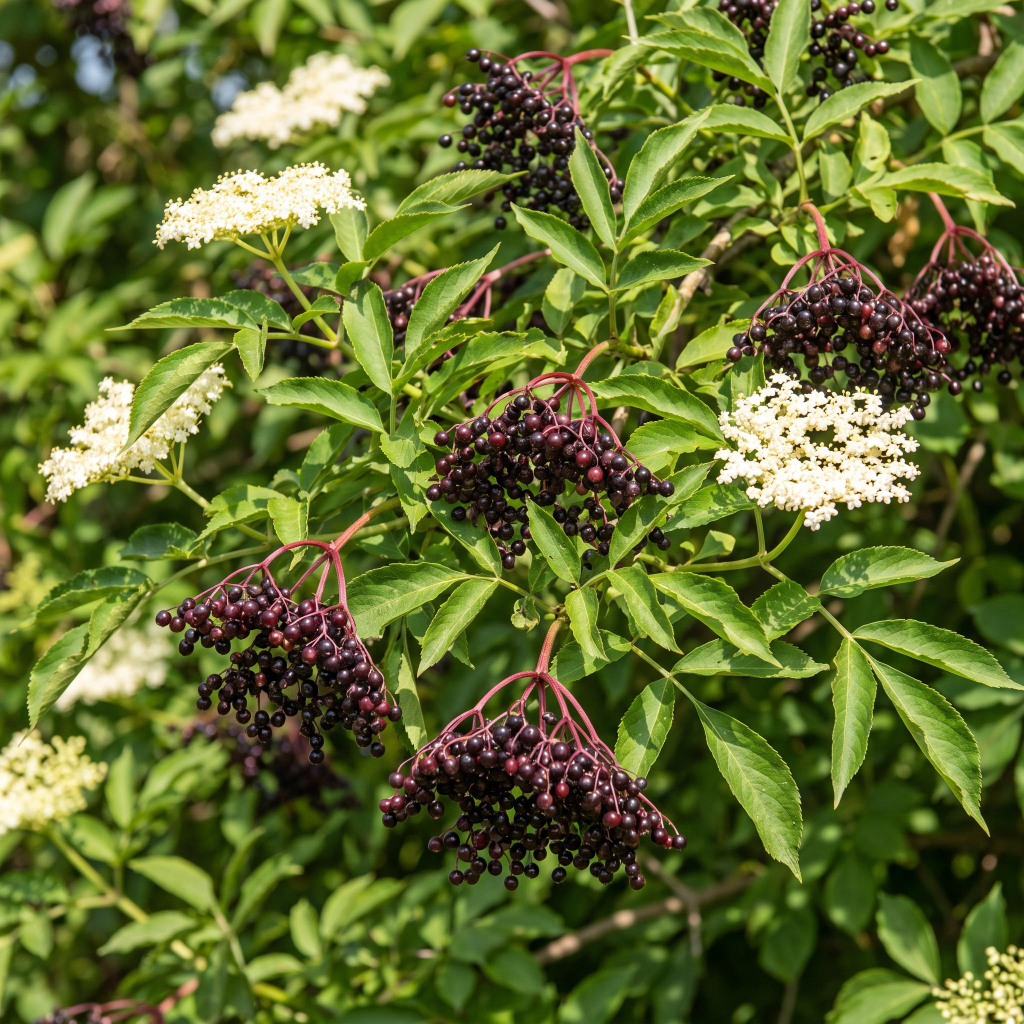
Elder is a large, fast-growing shrub or small tree of the honeysuckle family native to Europe, North Africa, and parts of Asia, long naturalized in hedgerows, woodland edges, and cottage gardens. In early summer it bears broad, flat clusters of tiny, creamy-white, sweetly scented flowers, followed in late summer by glossy dark-purple berries. Both flowers and berries have a deep place in European food and folk medicine, the flowers for cordials, fritters, and sparkling country drinks, the berries for syrups, jams, and winter tonics.
spring, summer, fall
Flowers are sweetly floral, muscat-like, and lightly honeyed with a faintly gree...
Sambucus nigra
herb
Pairs Well With
Elderflowers brew into delicate cordials, sparkling 'elderflower champagne,' lemonades, sorbets, jellies, and fritters, and infuse panna cotta, marshmallows, and syrups.
Elderberries are cooked down into rich syrups, jams, jellies, fruit leathers, and winter wellness tonics, and used to color and flavor wine, mead, and vinegar.
Whole flower heads are dipped in light batter and fried as elderflower fritters, a classic early-summer treat.
Elderflowers pair especially well with lemon, gooseberries, and white wine; berries with apples, cinnamon, cloves, and black pepper.
All berry preparations must be cooked, as raw elderberries can cause nausea and are unpalatably tart.
Elder has been called 'the medicine chest of the common people' in European herbalism, used from antiquity for colds, fevers, and as a general household remedy.
Elderflower tea was a traditional diaphoretic to bring on a sweat in the early stages of a cold, and a soothing wash for skin and eyes.
Elderberry syrup and wine were long valued as winter tonics to support the immune system and soothe coughs.
In folk magic, elder was considered a protective tree, planted near the home to ward off evil, and it was bad luck to cut one down without permission from the 'Elder Mother.'
Modern interest focuses on elderberry syrup for immune support and elderflower for soothing, relaxing, cooling drinks.
Harvest flowers on a dry morning when most buds are just open, snipping whole umbels with a little stalk; shake out insects and use fresh or freeze, as dried flowers lose their perfume quickly.
For cordial, steep heads in a hot syrup of sugar, water, and sliced lemon (and a little citric acid) for 24 to 48 hours, then strain and bottle; dilute with water, sparkling water, or wine to serve.
For elderflower fritters, dip fresh heads in a light batter and shallow-fry until golden, dust with sugar, and eat warm.
Harvest berries in late summer when fully dark and drooping; strip from stems with a fork, then cook with a little water and sugar into syrup, jam, or jelly.
Store cordials and syrups in sterilized bottles; freeze flowers or keep finished syrup chilled and use within a few months.
Only the ripe, cooked berries and the flowers are edible; raw or under-ripe berries can cause nausea, vomiting, and diarrhea, so always cook berries fully.
Stems, leaves, bark, and roots contain cyanogenic glycosides and are toxic, so carefully strip berries and keep stems out of food.
Pregnant and breastfeeding women and young children should use elder mainly in ordinary food amounts and avoid strong medicinal preparations without professional advice.
When foraging, be certain of identification, as other similar dark berries can be mistaken for elder, and harvest from clean sites away from roads and spraying.
As with any herb, introduce cautiously if allergic to plants in the honeysuckle family.
Elder thrives in hedgerows, woodland edges, and damp waste ground across temperate Europe, its flowers a vital early-summer nectar source for bees, butterflies, and hoverflies, and its berries a key autumn food for birds.
Few plants are as woven into European folklore: elder was seen as a sacred, protective tree, home to the Elder Mother or Hylde-Moer, and it was both protected and a little feared.
Branches were hung over doorways and livestock byres to ward off evil, and crosses of elder were planted on new graves for protection.
Cottage traditions kept an elder close to the house for good luck, while cutting one down was thought to bring misfortune.
In wildlife and cottage gardens, elder is valued as a tough, fast-growing, pollinator-friendly hedgerow plant and a seasonal harvest of flowers and berries.
Available Near You
Enter your ZIP code to find farms with elder near you.
Recipes with Elder
Coming Soon