
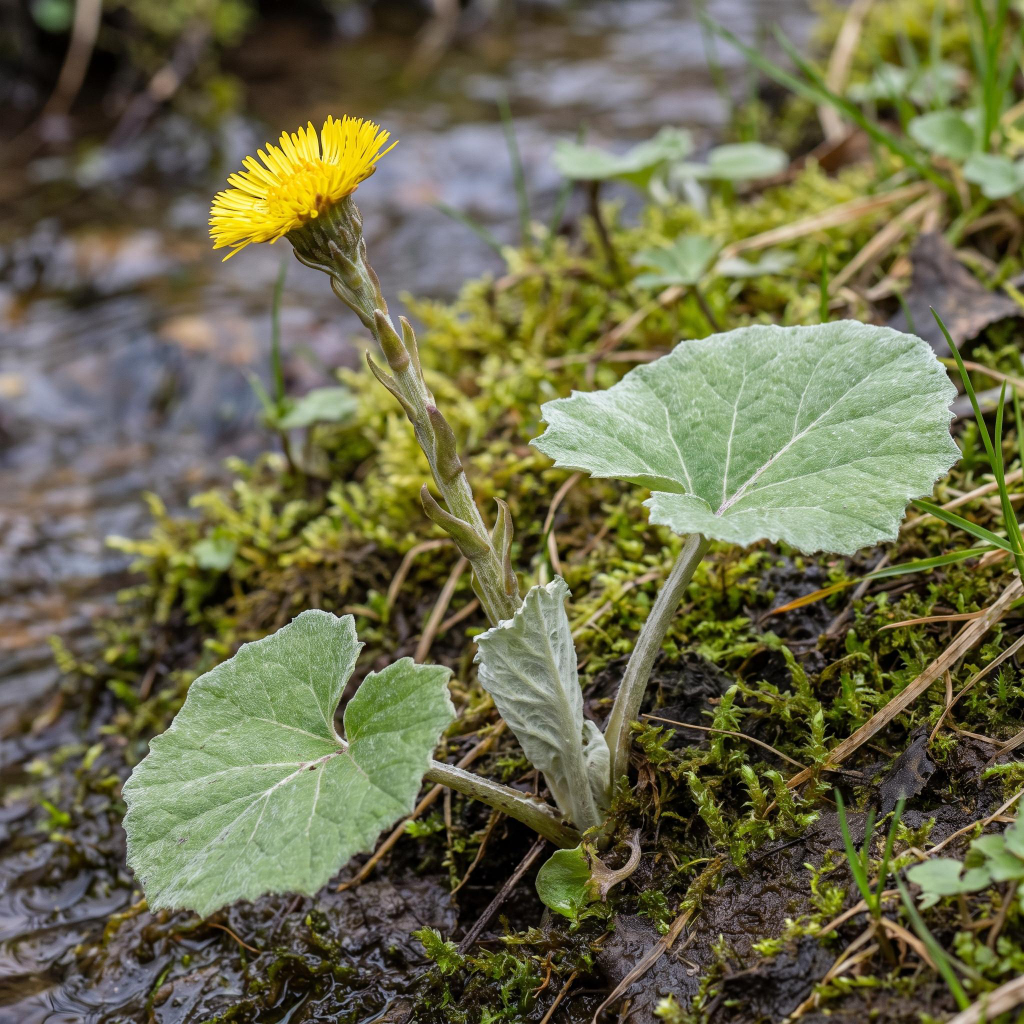
Coltsfoot
Also known as: Coughwort, Son-Before-Father, Filius ante patrem, Horsehoof, Bull's Foot, Donnhoot
Coltsfoot is a low-growing perennial of the daisy family native to Europe and parts of Asia and North Africa, long naturalized across damp meadows, stream banks, and disturbed ground. Its most famous feature is that the bright yellow flowers open in early spring before the leaves appear, giving the plant its old name 'son-before-the-father.' Once one of the most popular cough remedies in European herbalism, the hoof-shaped leaves are still gathered for soothing throat and respiratory teas, though modern use is cautious owing to naturally occurring liver-affecting compounds.
spring, summer
Faintly sweet, slightly bitter, and mucilaginous with a mild, licorice-honey und...
Tussilago farfara
herb
Pairs Well With
Coltsfoot is used almost entirely as a gentle throat and respiratory herb rather than a kitchen seasoning.
The dried leaves brew into a soft, slightly sweet, mucilaginous tea sipped to soothe the throat and chest.
Historically, the flowers and leaves were candied or made into a syrup and 'coltsfoot rock' lozenges for coughs and sore throats.
In some European traditions, the downy leaf was burned and the smoke inhaled as an old folk remedy for coughs and asthma.
Today it is mostly found in small-batch herbal tea and throat-care blends, often combined with other soothing herbs to balance its slight bitterness.
Coltsfoot has been one of Europe's signature cough and lung herbs since antiquity, used in Greek, Roman, and medieval herbalism for dry coughs, asthma, bronchitis, and sore throats.
The botanical name Tussilago comes from the Latin tussis, meaning cough, reflecting its primary traditional role.
Candied coltsfoot and coltsfoot syrup were common pharmacy remedies in 18th- and 19th-century Europe for chest complaints.
The plant also had a folk reputation as a poultice herb for skin sores, inflammations, and insect bites, and the leaves were smoked as a 'balm for the lungs' in folk practice.
Modern Western herbalists use coltsfoot cautiously and for short periods only, valuing its soothing action while respecting its safety considerations.
Harvest leaves in late spring to early summer once fully grown, choosing clean, undamaged leaves away from polluted roadsides or sprayed land; dry them quickly in a warm, airy, shaded spot.
For tea, steep 1 teaspoon of dried leaf in freshly boiled water for 8 to 10 minutes, covered, then strain; keep to a few cups a day for short periods.
For syrup, simmer strained coltsfoot tea with an equal weight of honey or sugar until thickened, then store in a clean jar.
To blend, pair coltsfoot with licorice root, thyme, marshmallow leaf, or mullein for respiratory support, or with honey and lemon to soften its mild bitterness.
Store dried leaf airtight, away from light and heat, and use within about a year.
Coltsfoot contains naturally occurring pyrrolizidine alkaloids that can affect the liver with heavy or prolonged use, so it should be used only occasionally, in small amounts, and for short periods, not as a daily herb.
Pregnant and breastfeeding women, young children, and people with liver disease should avoid coltsfoot altogether.
Do not exceed tea-strength servings or use it for more than about 4 to 6 weeks per year without professional guidance; consult a qualified herbalist or healthcare provider before use.
Harvest only from clean, unpolluted sites, as coltsfoot can take up heavy metals and roadside contaminants.
As with any herb, introduce cautiously if allergic to plants in the daisy family.
Coltsfoot flourishes on disturbed ground, riverbanks, and damp clay soils, its early yellow flowers a welcome first sign of spring and an important early nectar source for bees and pollinators.
The strange habit of flowering before the leaves appear gave the plant its old name 'son-before-the-father' and a rich place in European folklore, where it was seen as a symbol of renewal and healing.
Its hoof-shaped leaves were thought to resemble a colt's foot, hence the common name, and were sewn into charms for protection and recovery.
In cottage gardens and monasteries, coltsfoot was grown near the door as a household cough remedy, and candied leaves were kept in the pantry through winter.
In wildlife and naturalized gardens, coltsfoot is valued as an early-spring pollinator plant and a tough groundcover on difficult, damp soils.
Available Near You
Enter your ZIP code to find farms with coltsfoot near you.
Recipes with Coltsfoot
Coming Soon