
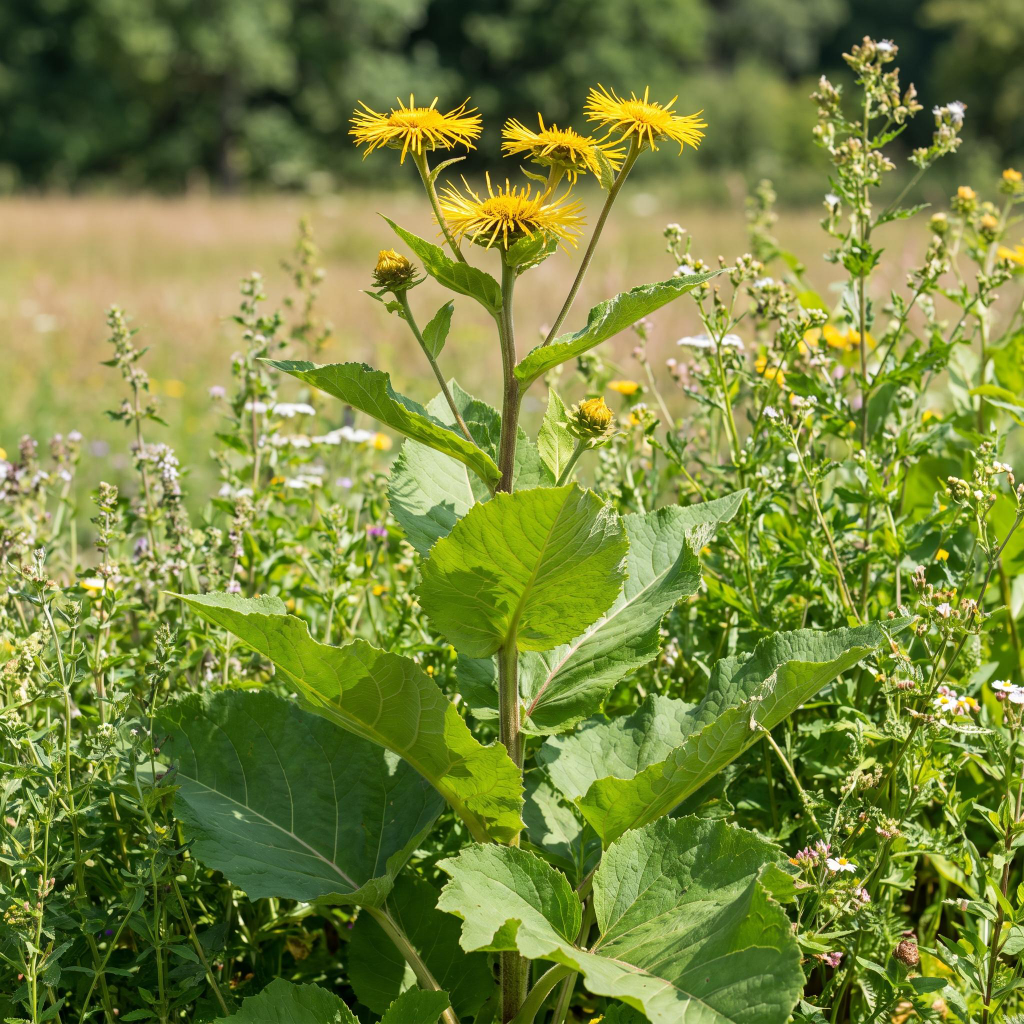
Elecampane
Also known as: Horseheal, Wild Sunflower, Elf Dock, Velvet Dock, Scabwort, Inula
Elecampane is a tall, robust perennial of the daisy family, reaching up to 2 meters, with large fuzzy leaves and bright yellow sunflower-like blooms. Native to Europe and Asia and long naturalized in cottage gardens, it has been prized since antiquity for its aromatic root, used in syrups, candies, and respiratory remedies. Today it remains a valued herb in traditional Western herbalism and a striking ornamental in the perennial border.
spring, summer, fall
Warm, camphoraceous, and bittersweet with notes of bitter almond, violet, and a ...
Inula helenium
herb
Pairs Well With
Elecampane's culinary use centers on its aromatic root, historically candied or made into syrups, lozenges, and digestive cordials.
Candied elecampane ('elecampane candy') was a popular 19th-century confection, made by simmering sliced root in sugar syrup until tender and translucent.
Small amounts of dried root can infuse honey, vinegar, or digestif liqueurs with a warm, bittersweet aroma.
Young spring leaves were occasionally used sparingly in salads, but the plant is primarily a medicinal-aromatic rather than a everyday vegetable.
In modern kitchens, elecampane appears mainly in small-batch herbal syrups, bitters, and historic confectionery rather than routine cooking.
Elecampane has been a respiratory remedy since Greco-Roman times; Dioscorides and Pliny recorded it for coughs, chest complaints, and digestive ills, and its species name 'helenium' is fabled to spring from Helen of Troy, who was said to carry a sprig when she was carried off.
In medieval European monasteries, elecampane root was candied into 'stomach sweets' eaten after meals to ease digestion and sweeten the breath.
Anglo-Saxon and Welsh herbal texts listed it among the most important wound and lung herbs, often combined with licorice, ginger, or honey.
Folk practice in Britain and Ireland brewed elecampane ale and wine as tonics for convalescents.
Modern herbalists continue to use elecampane as a warming expectorant for chronic coughs and as a gentle digestive bitter.
Dig roots in autumn of the plant's second or third year, when aromatic compounds peak; scrub, peel, and slice thinly.
To candy elecampane, blanch slices to reduce bitterness, then simmer gently in a rich sugar syrup until translucent; drain and dry on a rack, optionally dusting with more sugar.
For an infused honey or syrup, gently warm (do not boil) honey with a few pieces of dried root for several hours, then strain.
To make a tincture, pack a jar with dried sliced root and cover with vodka or brandy; steep 4 to 6 weeks, shaking occasionally, then strain.
Use dried root sparingly — a small piece is strongly flavored; store airtight away from light.
Elecampane is generally safe in small, culinary or medicinal quantities for adults, but the fresh root can irritate sensitive skin on contact.
Large or prolonged doses may cause nausea, vomiting, or diarrhea due to its sesquiterpene lactones; keep to short courses (a few weeks at a time).
Pregnant and breastfeeding women, young children, and people with kidney disease or known allergies to plants in the daisy family should avoid elecampane.
Because it can lower blood sugar, people on diabetes medication should monitor levels and consult a healthcare provider.
Elecampane may interact with sedatives and blood pressure medications; consult a qualified herbalist or healthcare provider before extended use.
The genus name 'Inula' and the plant's tall yellow sunflower-like heads link it to meadow and pasture ecology, where it attracts bees, butterflies, and other pollinators through late summer.
Medieval legend held that elecampane sprang from the tears of Helen of Troy, and it was planted near cottage doors as a charm for protection and healing.
In French folk tradition it was 'l'aunée,' gathered at midsummer and revered for chest ailments, while English country healers candied the root into 'elecampane candy' sold at fairs.
In permaculture and cottage gardens, elecampane is grown as a beneficial-insect plant and a mineral accumulator, its deep roots drawing up nutrients and adding structure to heavy soils.
As a hardy, drought-tolerant perennial, it suits wildlife borders and low-maintenance medicinal gardens.
Available Near You
Enter your ZIP code to find farms with elecampane near you.
Recipes with Elecampane
Coming Soon